
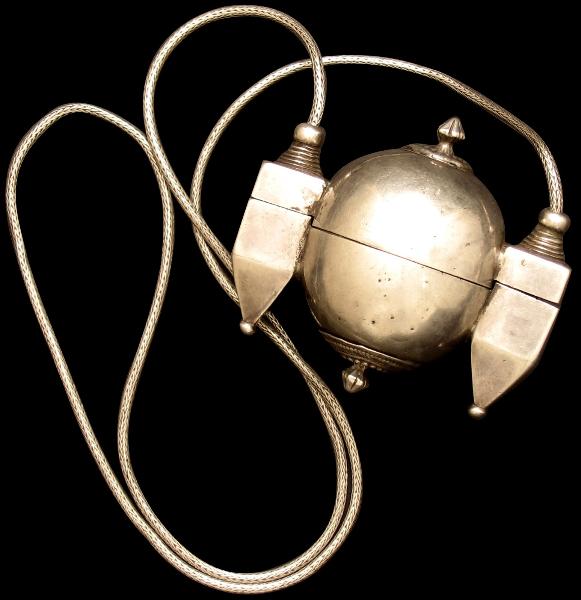
Silver Lingam Lingayat Boxes, India
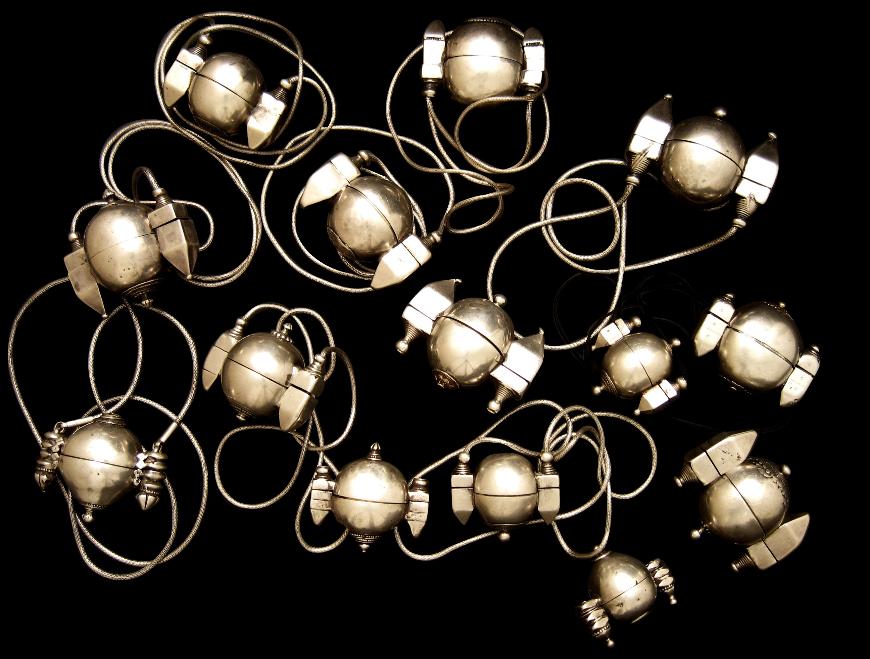
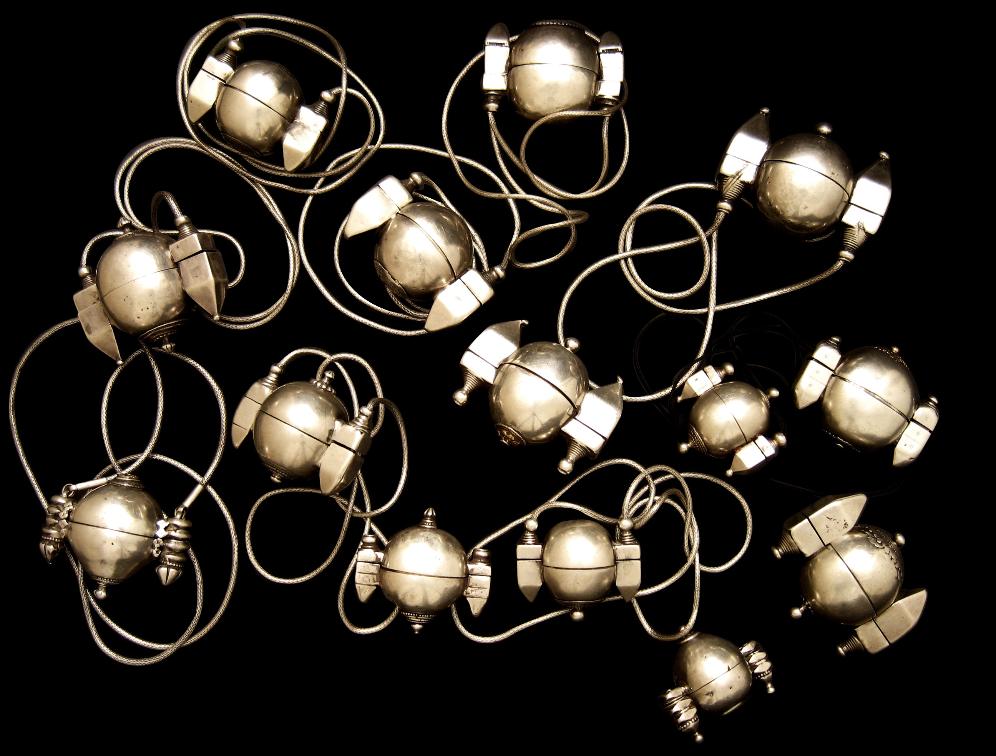
Collection of 14 Silver Lingam Boxes (Ayigalu)
South India
18th-19th centuries
various sizes, combined weight: 1,200g
Silver lingam boxes such as these, some of which are suspended from necklaces of pure silver plaited wire, were worn by wealthier lay members of the Lingayat sect. (Poorer adherents wore wooden lingam boxes.) Each is of trefoil form with a lobed body. Some have tops and bases that are embellished with floral and other medallions in relief, some of these have been parcel gilded. The central sphere of each amulet box is flanked by two projecting rectangular sides with conical lower sections. Chains are strung through two outer finials and with which each amulet box can be suspended from the neck.
Each box once carried a
jangama lingam. The lingams comprise a small piece of stone carved by specialist carvers that is then covered in a dark, protective compound called kauthi. This comprises a mix of lac, clay, sacred cow dung ashes, and marking-nut tree fruit juice or black antimony powder (also used as an eyeliner cosmetic.)
The Lingayat sect became prominent in the twelfth century as a reaction to Brahmanism. Many Lingayats today live in Karnataka, Maharashtra and Tamil Nadhu. The sect rejects the supremacy of the Brahmans; denies polytheism and acknowledges Shiva as the one true god thus rejecting Brahma and Vishnu. It rejects caste distinctions, rebirth, pilgrimages, temple worship and sacrifice; does not burn its dead but buries them; does not allow child marriage, and does allow widows to remarry.
The Lingayats believe movable lingams to be the only true symbol of Shiva. Individuals are initiated into the sect as they enter adulthood. A consecrated lingam uniquely created for each initiate is presented by a community guru amid prayers and ritual. The lingam is created only for the individual and must be protected and guarded, hence the need for a protective box as shown here. All Lingayats carry their personal lingam with them at all times. After death they are buried in a sitting position with the lingam in the left hand.
References
Blurton, T.R., Hindu Art, The British Museum Press, 1992.
Utracht, O.,
Traditional Jewelry of India, Thames & Hudson, 1997.
Inventory no.: 250
SOLD

A Lingayat sect member wearing a lingam box or related form.