Enquiry about object: 10581
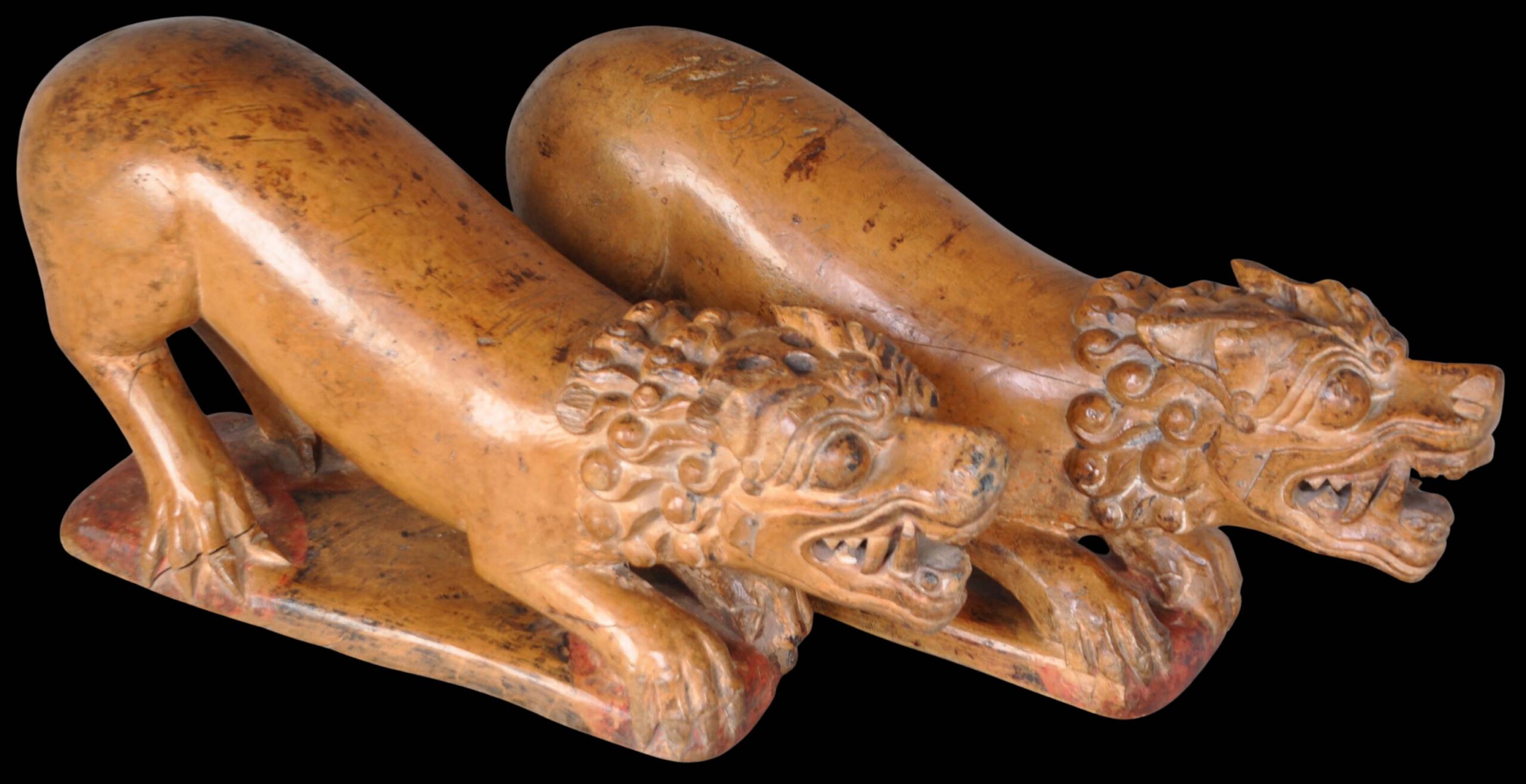
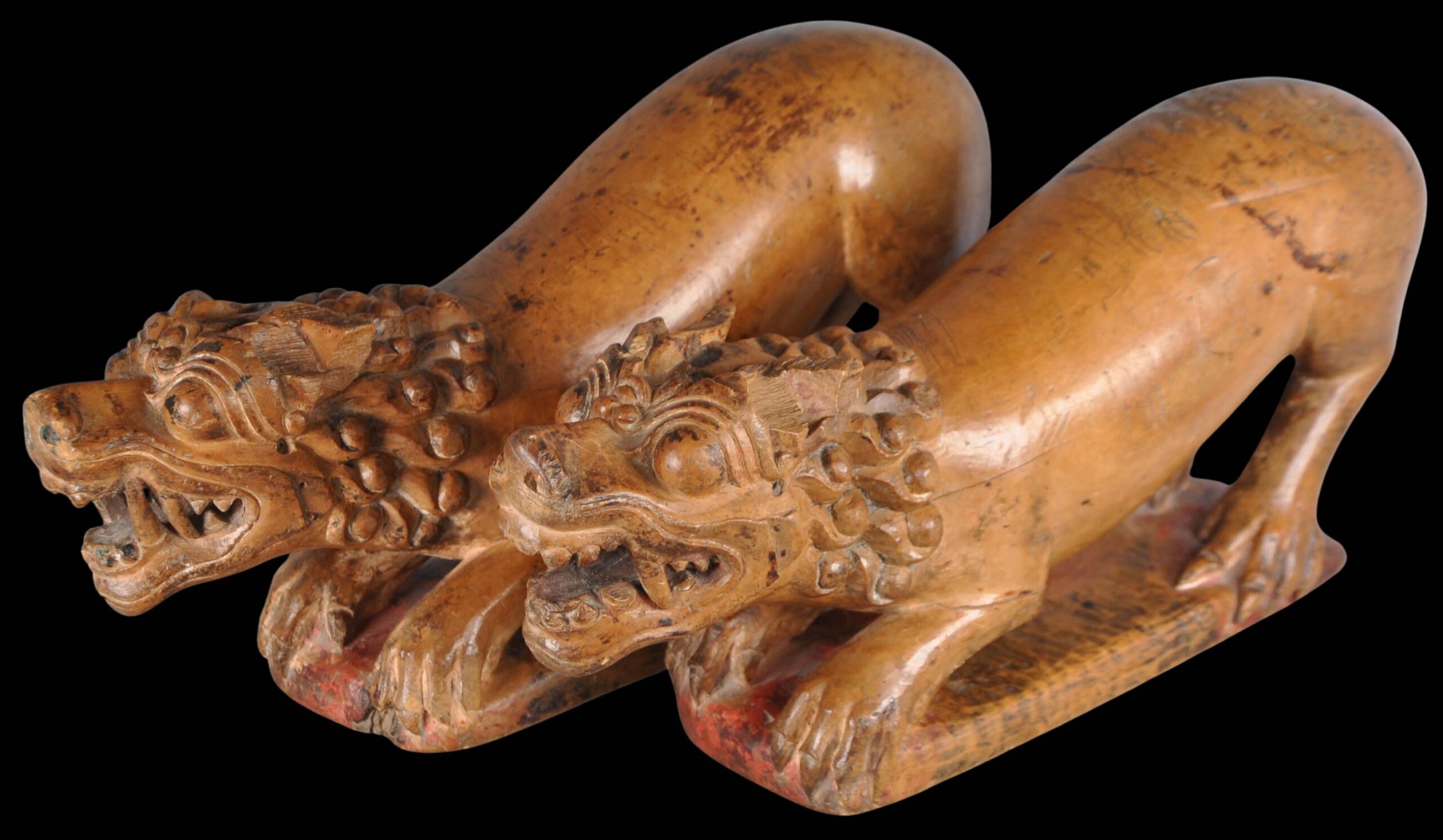
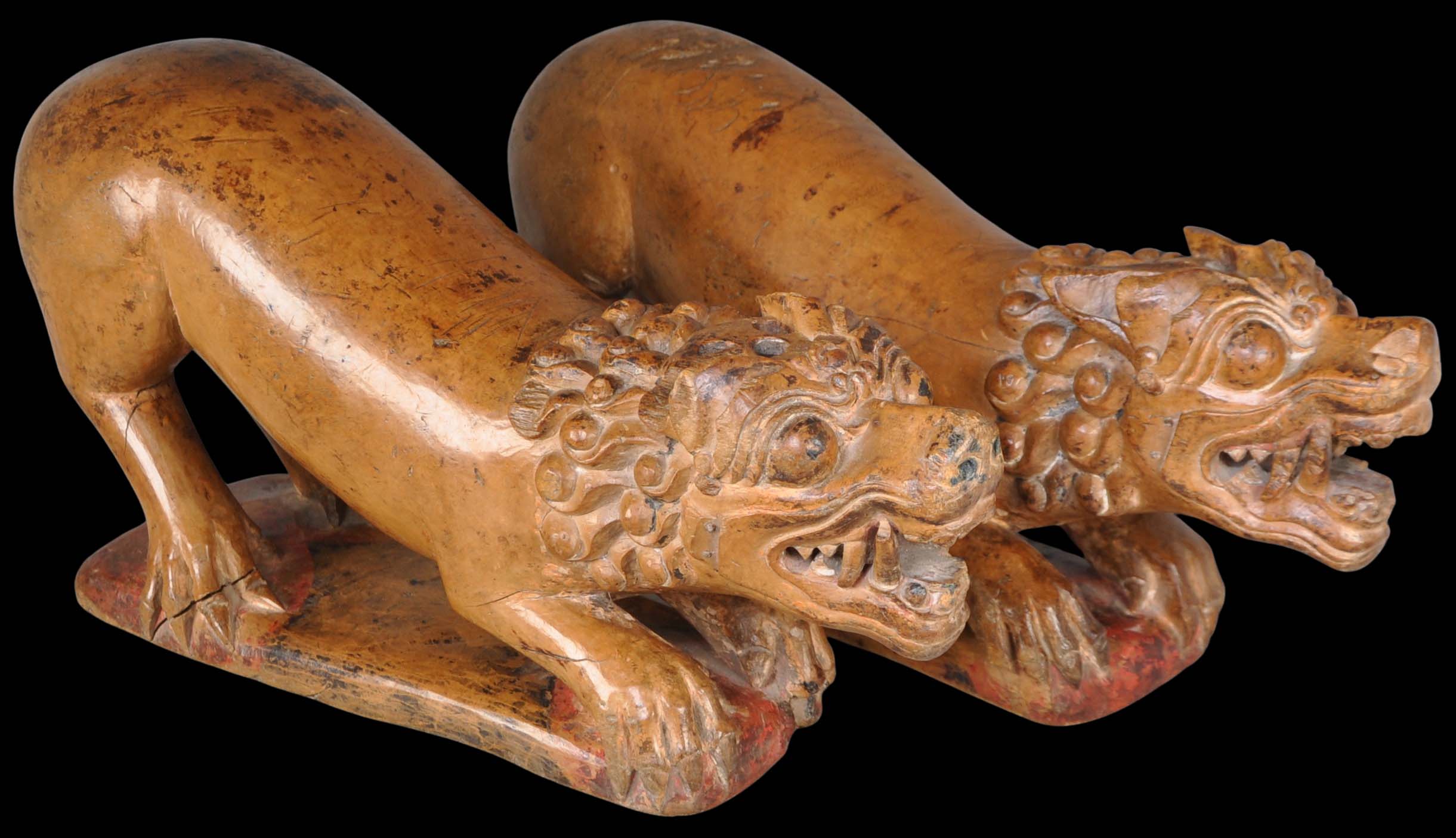
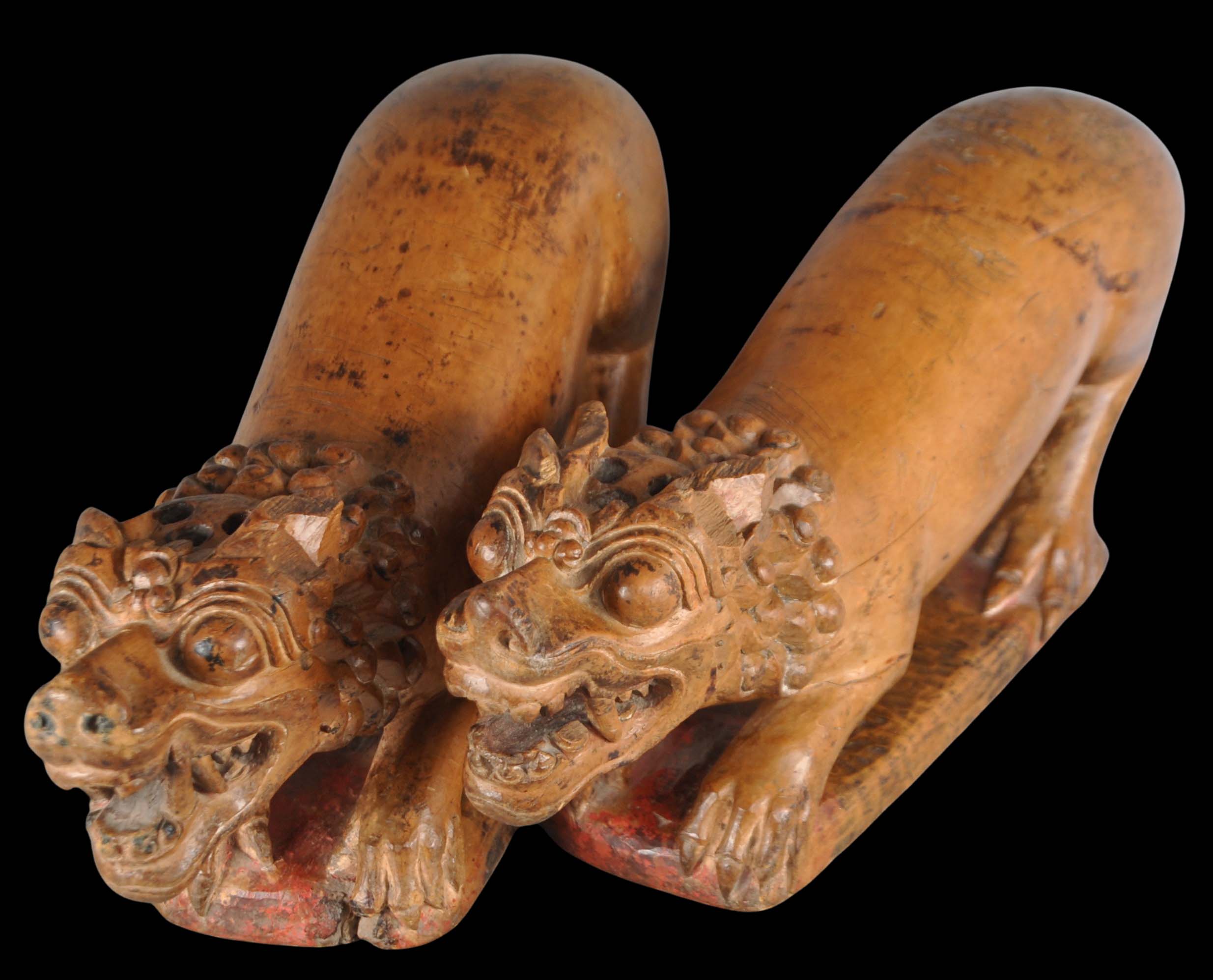
Pair of Wooden Balinese Ritual Lion Deity Seats (Palinggih Singa)
Klungkung, south Bali, Indonesia 19th century or earlier
length: approximately 32.9cm, height: approximately 17cm, width: approximately 10cm, combined weight: 2,232g
Provenance
UK art market
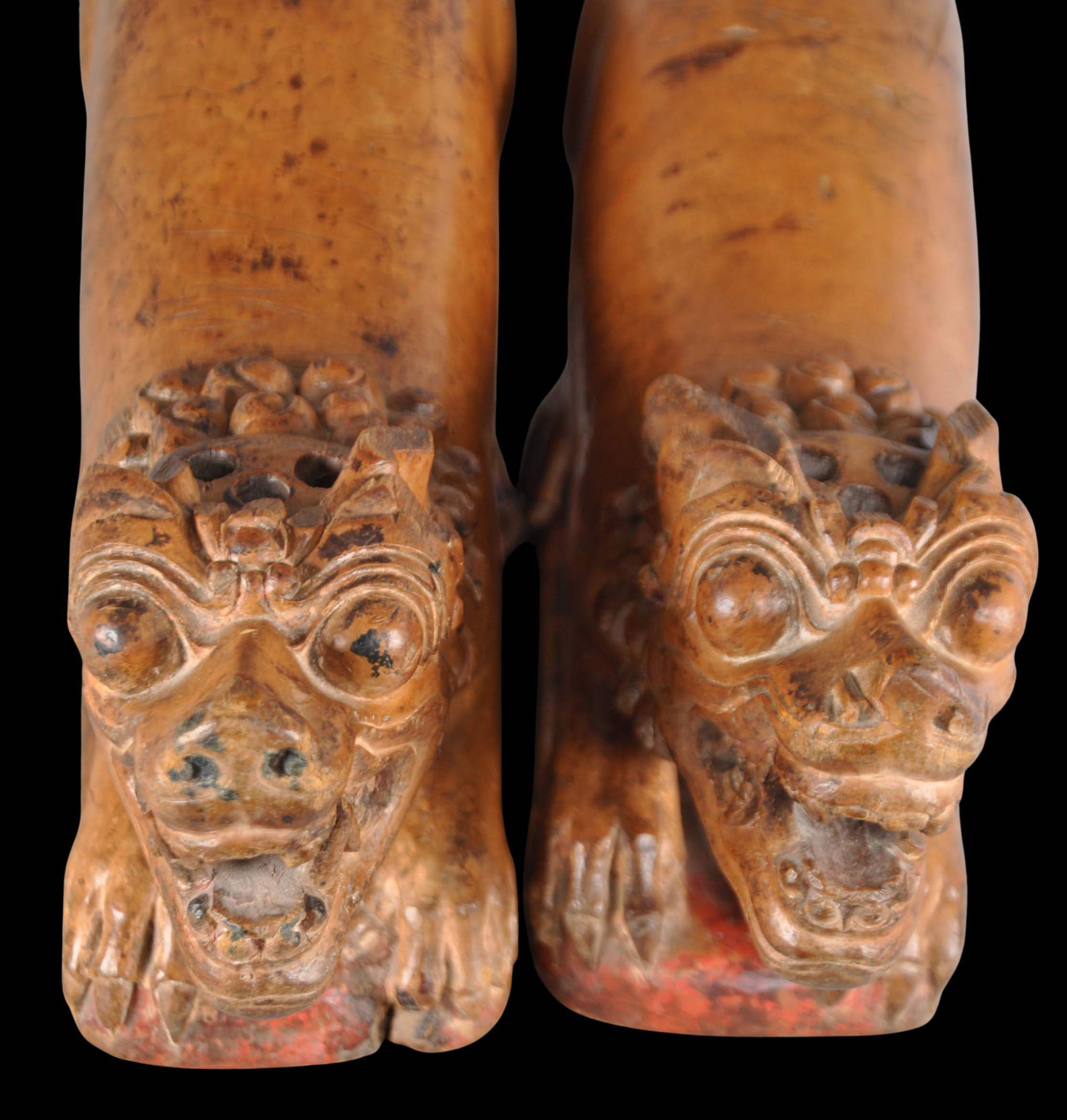
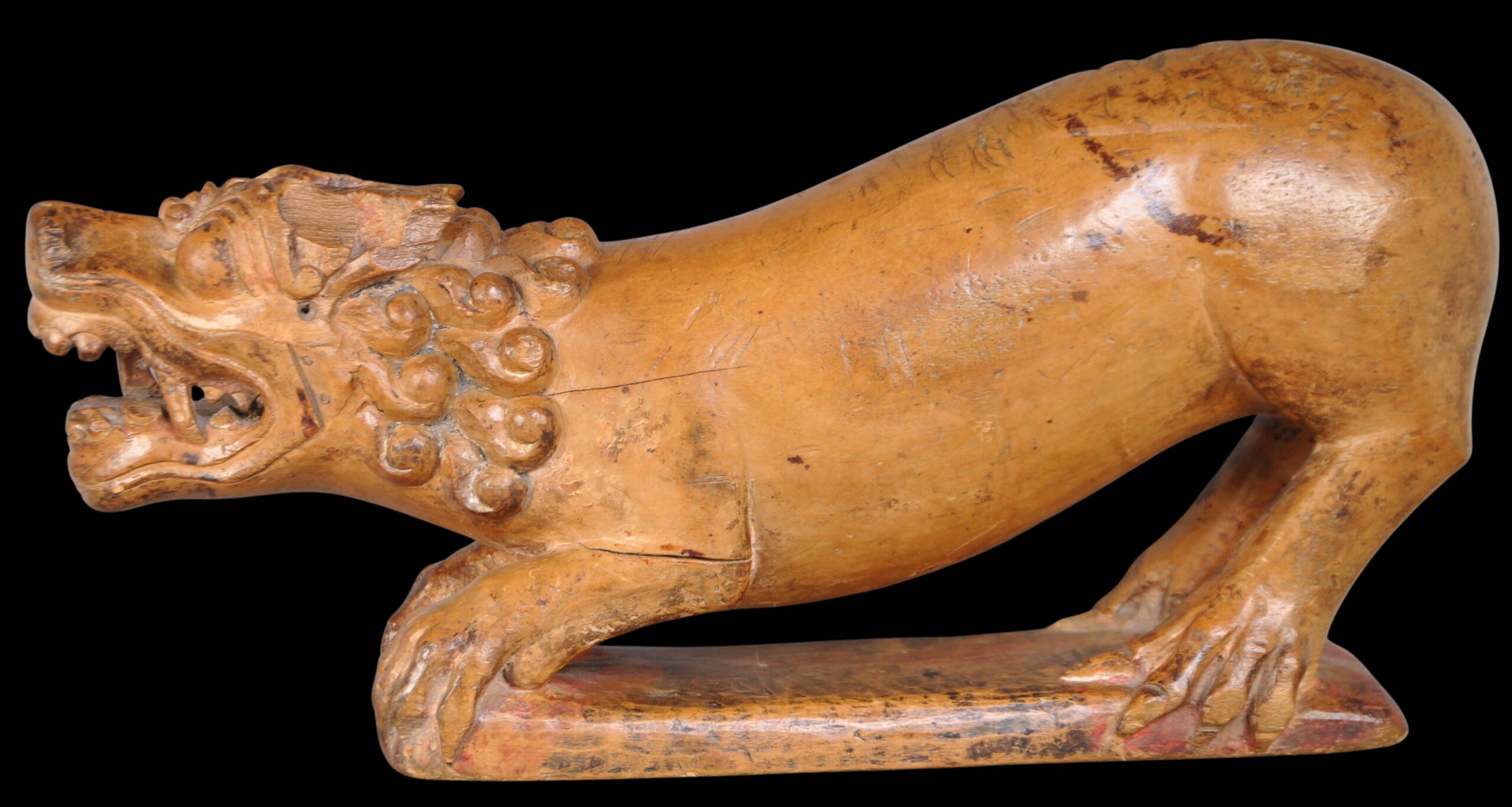
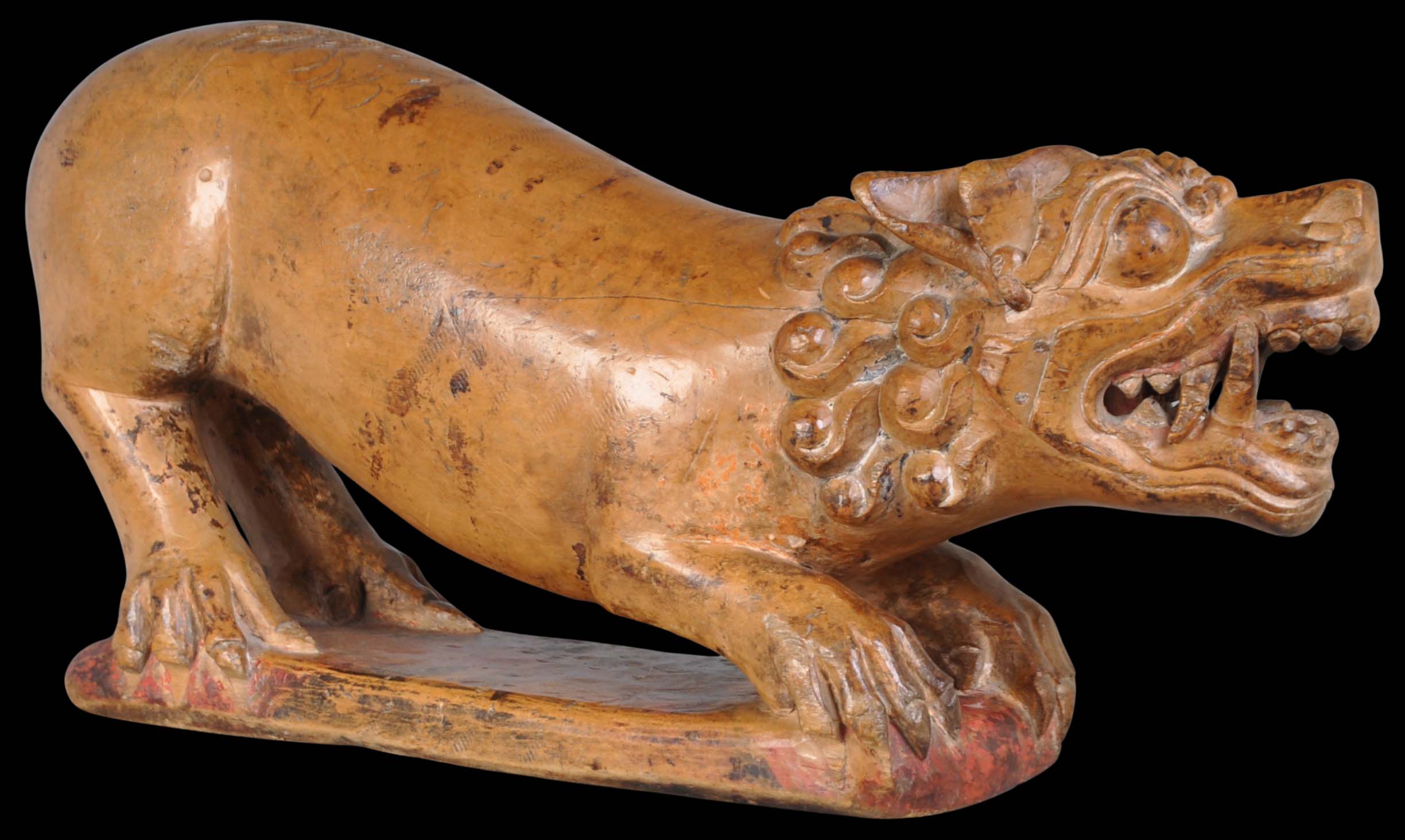
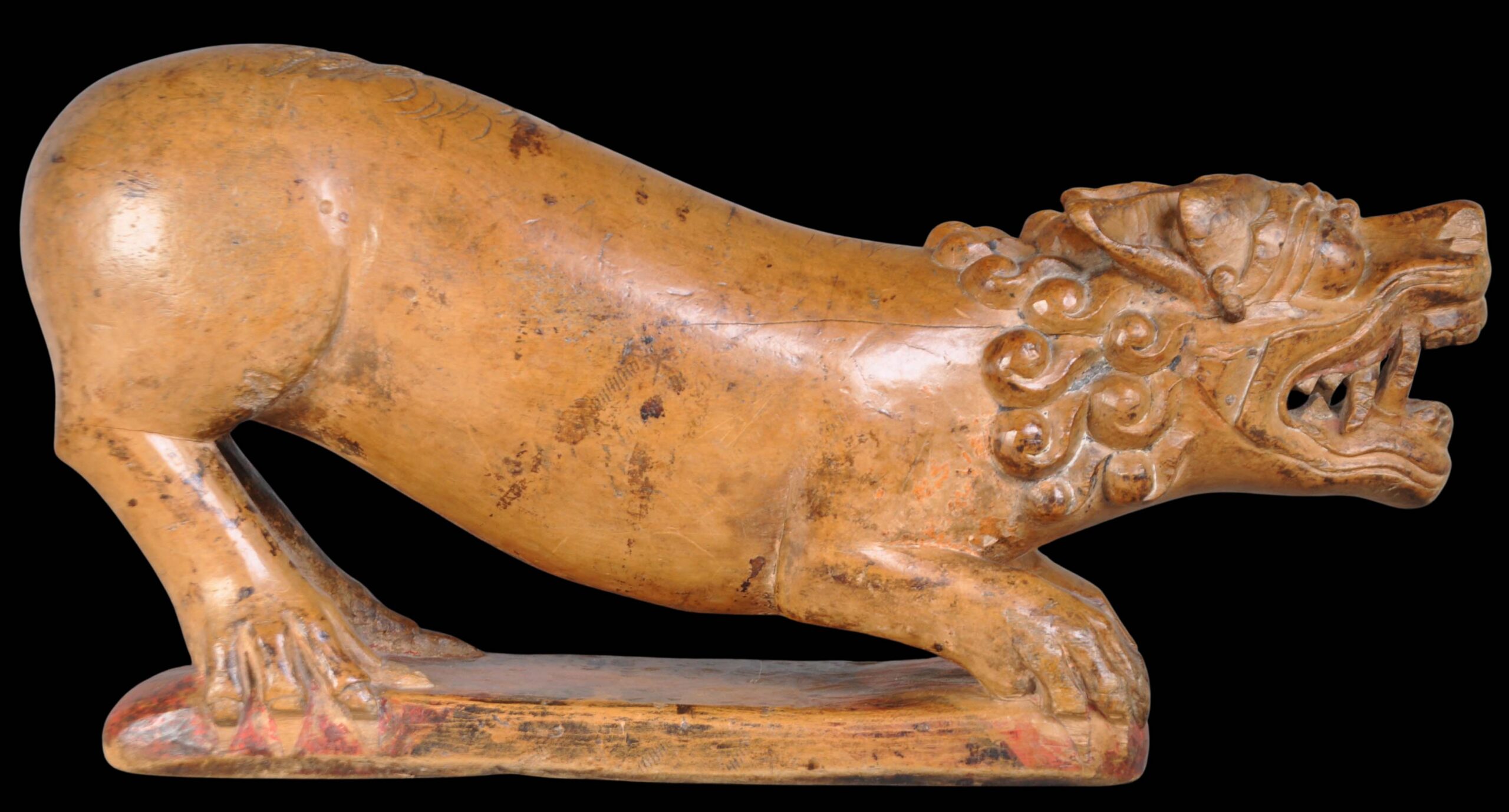
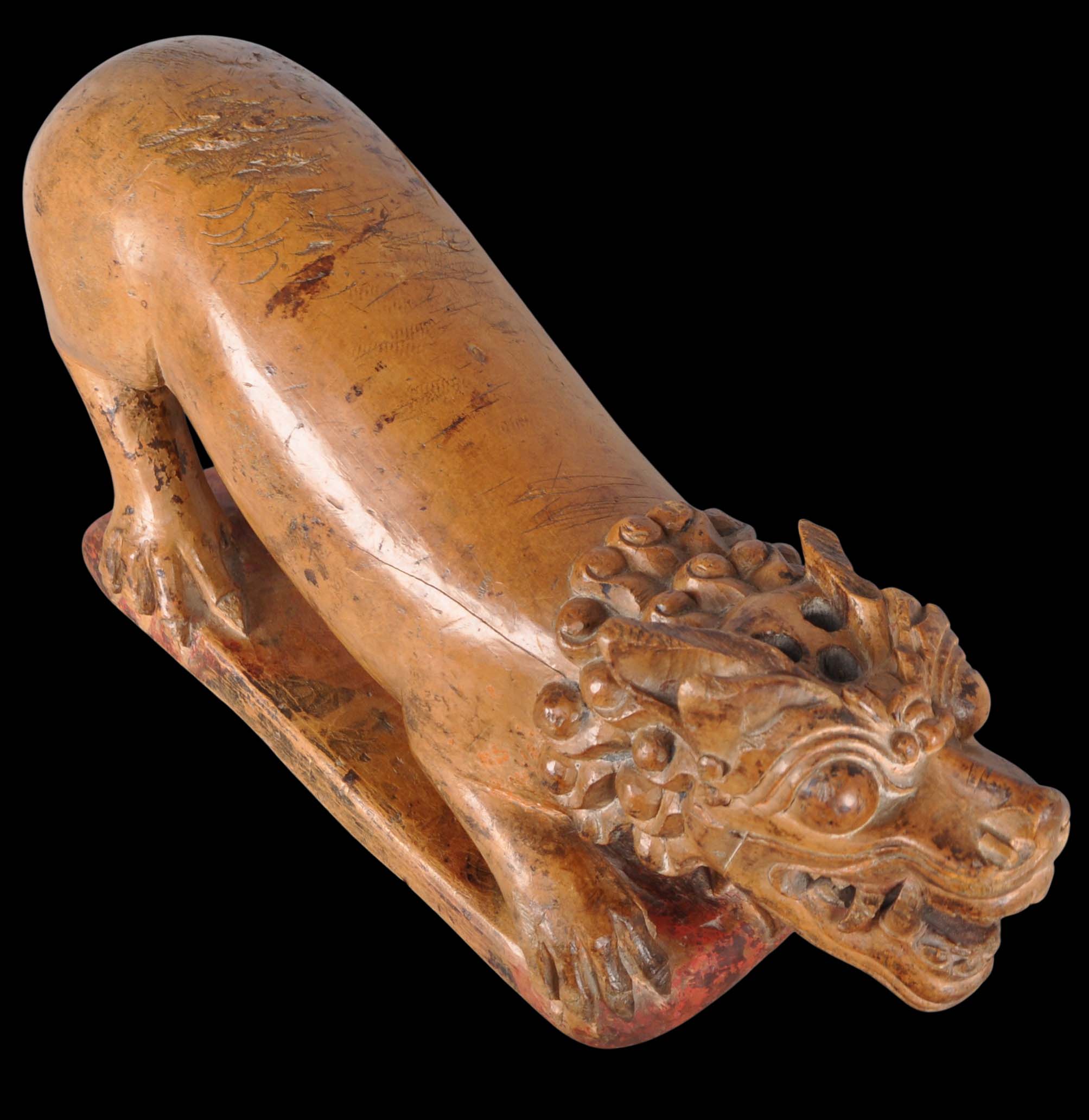
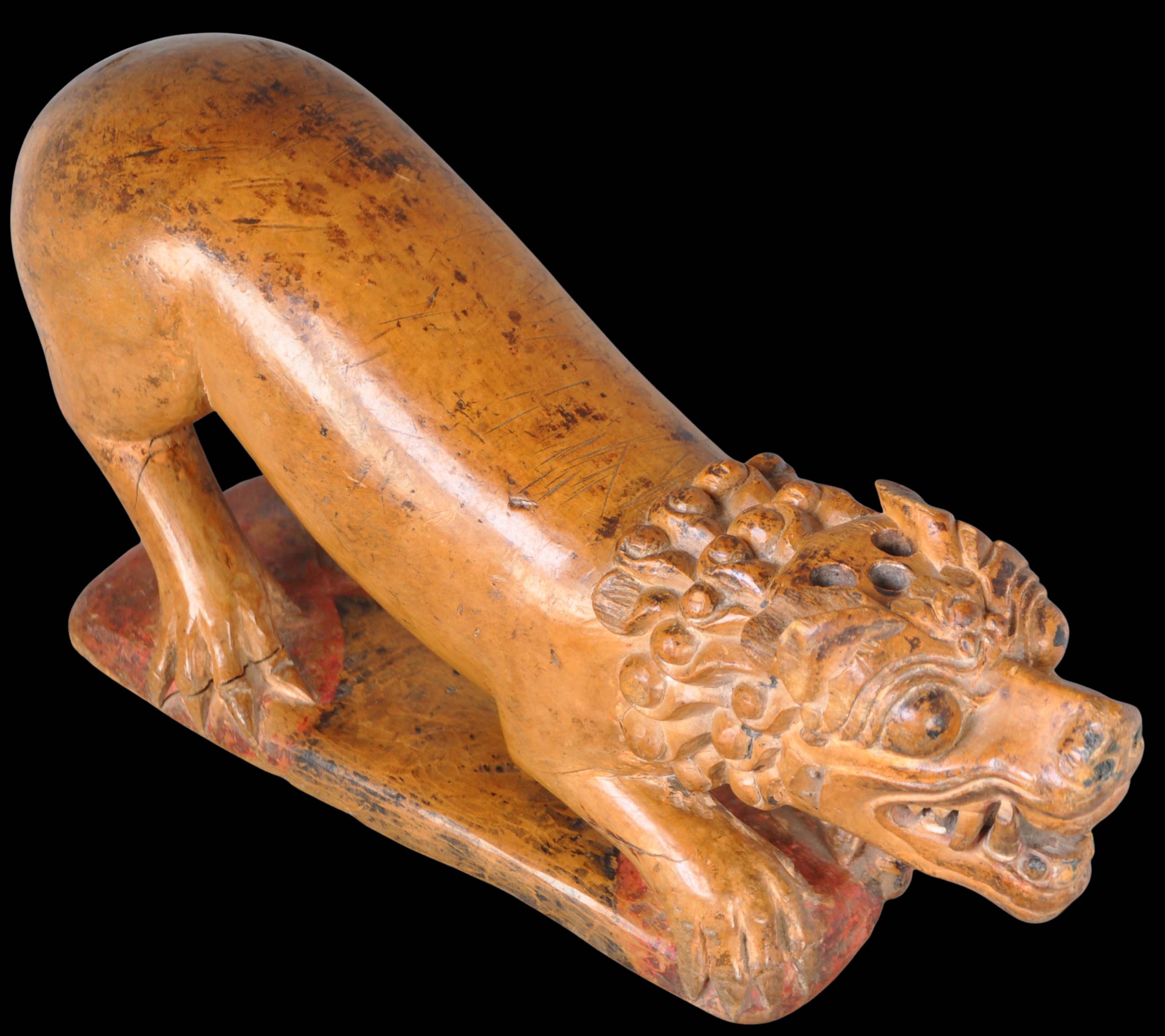
Each of this remarkable pair of lion images – possibly connected to the palace of Klungkung – is carved from a single piece of light-coloured wood with traces of polychrome, and was intended as a vehicle for an images of a god.
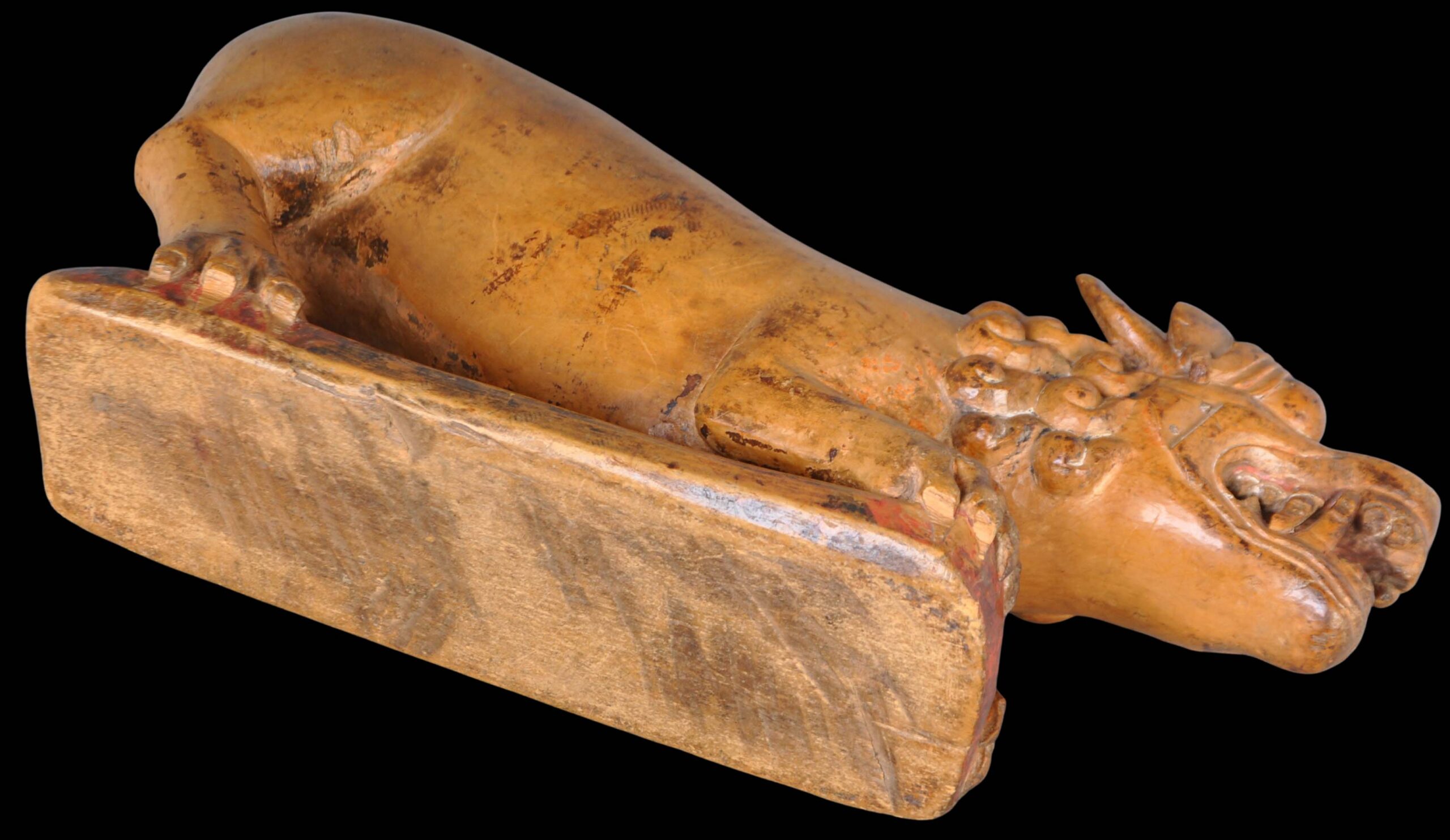
Each lion or singa has three round holes drilled to the top of the head which is where the image of the god is likely to have been secured. The images of the gods would be fastened to the lions and then taken in procession to a temple. One lion would have been for the main god and the other for his or her consort – possibly the two were Dewi Sri (the rice goddess) and her consort Rambut Sedana (the god of wealth). Usually, this pair would be shown side by side.
There are losses to the extremities of the carving, but both have the most wonderful patina, and indeed, originally both were painted but the painting has largely worn away from use, leaving the wood with a beautiful honeyed hue.
The lions have superbly rendered bodies, elongated and crouching. The heads are raised, the mouths are agape and fangs are revealed. The eyes bulge and the manes are beautifully carved.
Square cavities where a tail might be expected are in each. Either these were for tails to be fitted, or the cavity is for insertion of a small offering.
Carved animal images that served this purpose were known (in Balinese) variously as palinggih, pacanangan, pelinggihan, patarana or kendaraan dewa (in Indonesian).
The lions, in terms of their quality and form, relate well to a famous singa image carved in ivory that is believed to have come from the palace of Klungkung in south Bali, illustrated in Reichle (2010, p. 179), and now in Amsterdam’s Rijksmuseum. That box was collected by the Dutch artist W.O.J. Nieuwenkamp (1874-1950) in 1925 in Bali from a curio market. The palace of Klungkung was the site of a puputan (‘fight to the finish’) whereby the Raja of Klungkung and his retinue and soldiers fought Dutch solders and then committed ritual suicide in 1908 after which the palace was looted by the Dutch.
The pair are great survivors. Their age is very clear and it is remarkable that they have survived as a pair. Each has a wonderful patina, despite the various losses from age and ritual use.
References
Maxwell, R. et al, Bali: Island of the Gods, National Gallery of Australia, 2014.
Ramseyer, U., The Art and Culture of Bali, Oxford University Press, 1977.
Reichle, N. (ed.), Bali: Art, Ritual & Performance, Asian Art Museum, 2010.
Wentholt, A., Nusantara: Highlights from Museum Nusantara Delft, C. Zwartenkot Art Books, 2014.