Enquiry about object: 10577
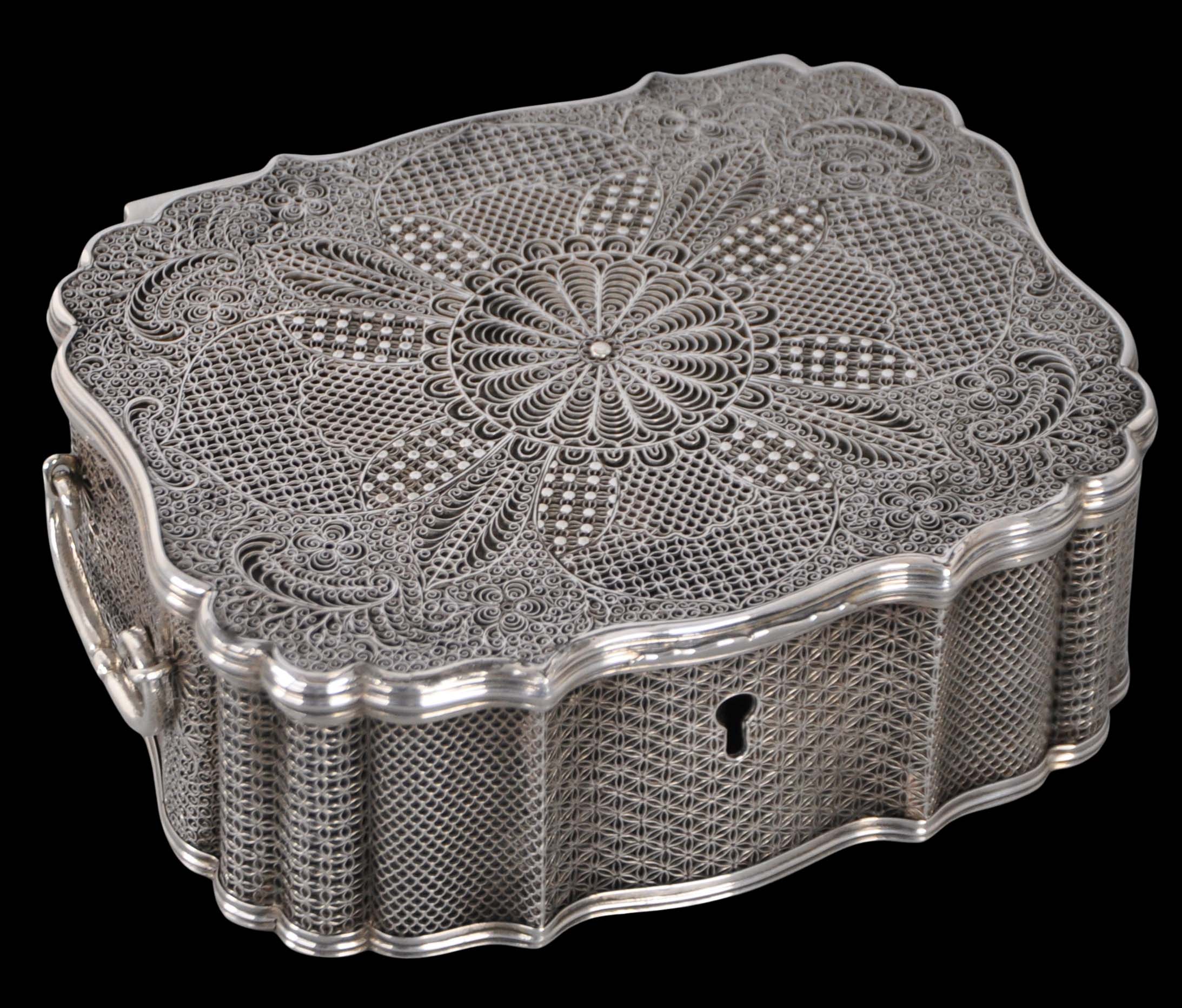
Batavian Silver Filigree Box
Batavia, Dutch East Indies (Indonesia), or Manila, Philippines circa 1750
height: 5.1cm, width: 13.5cm, depth: 10.8cm, weight: 372g
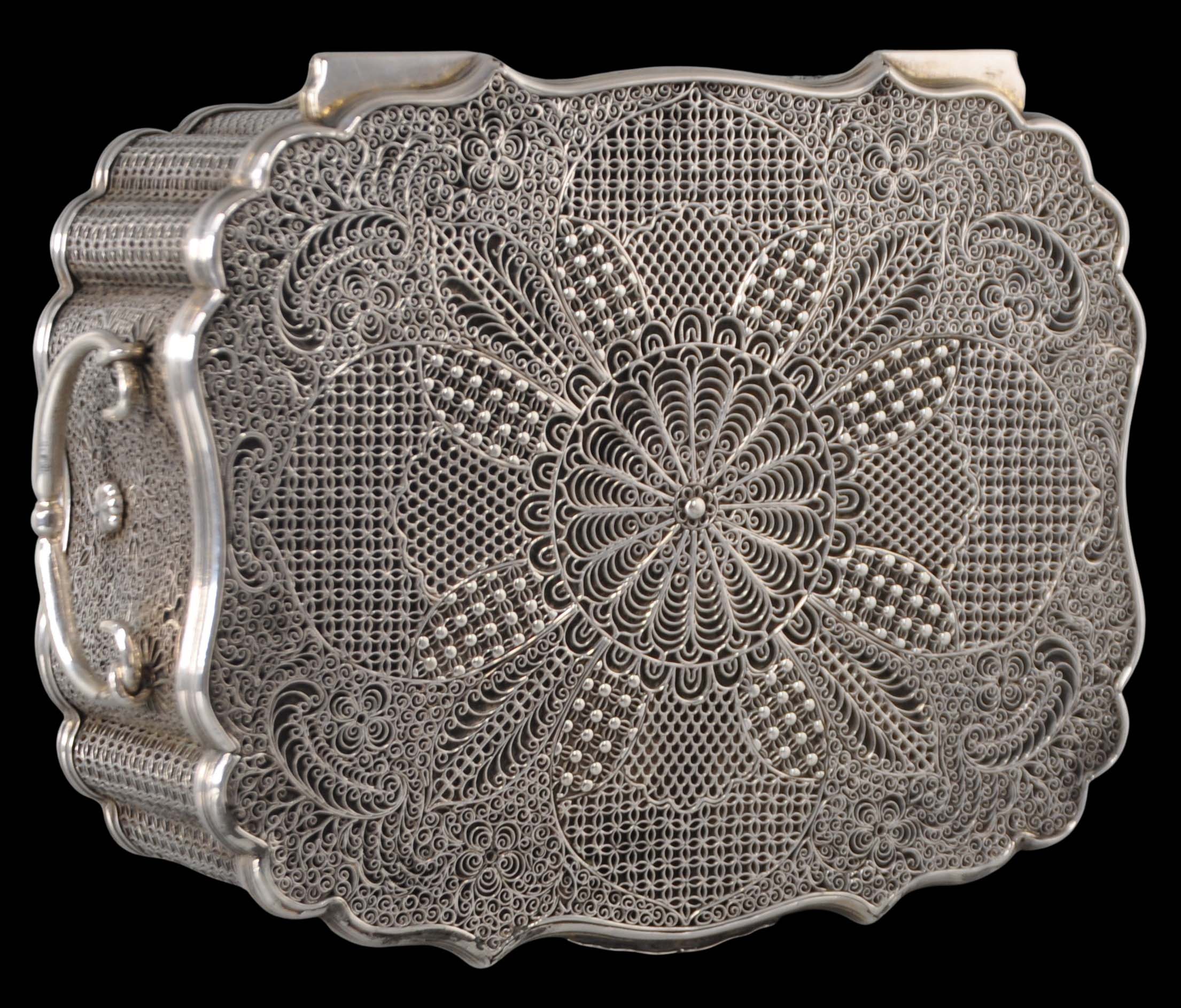
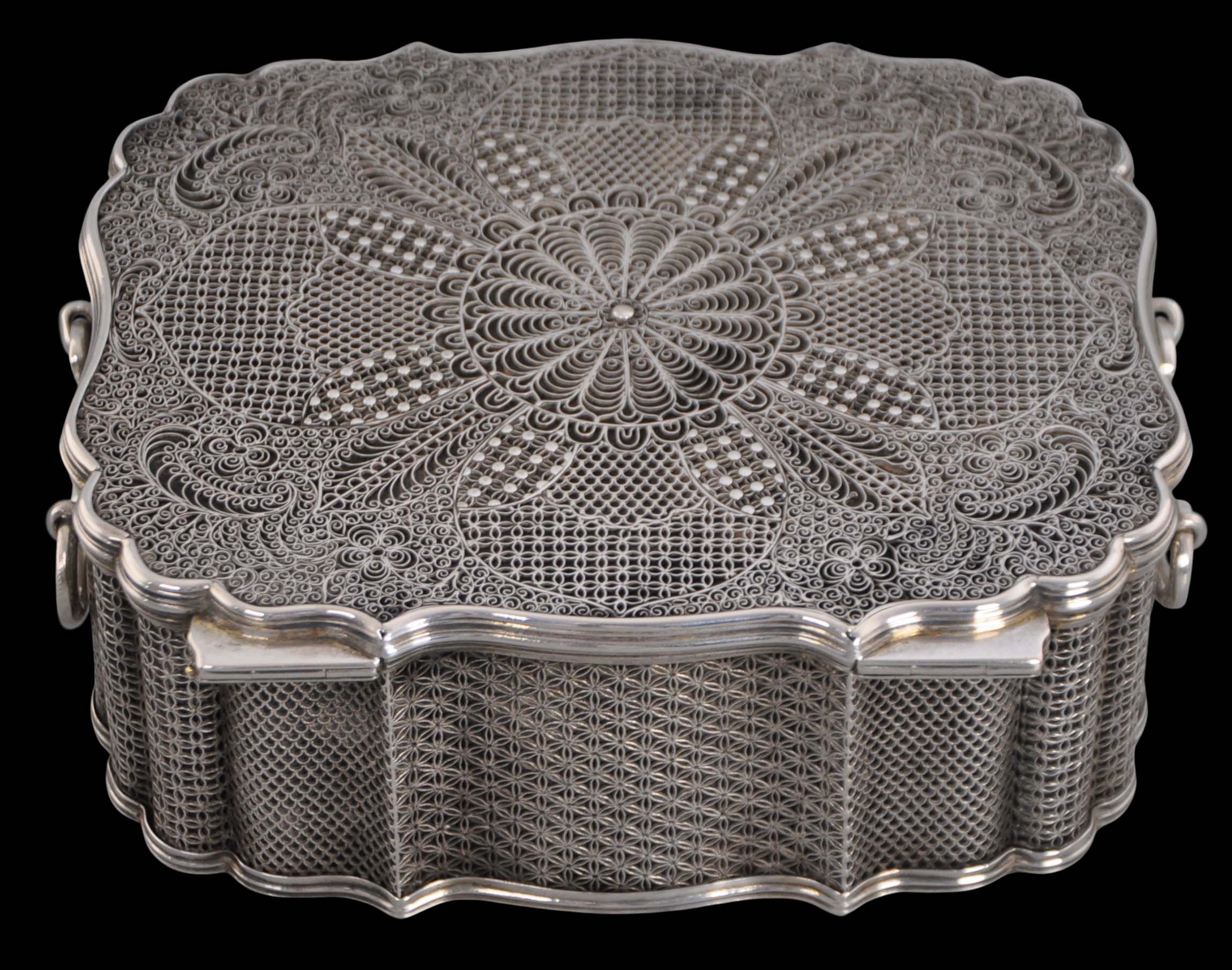
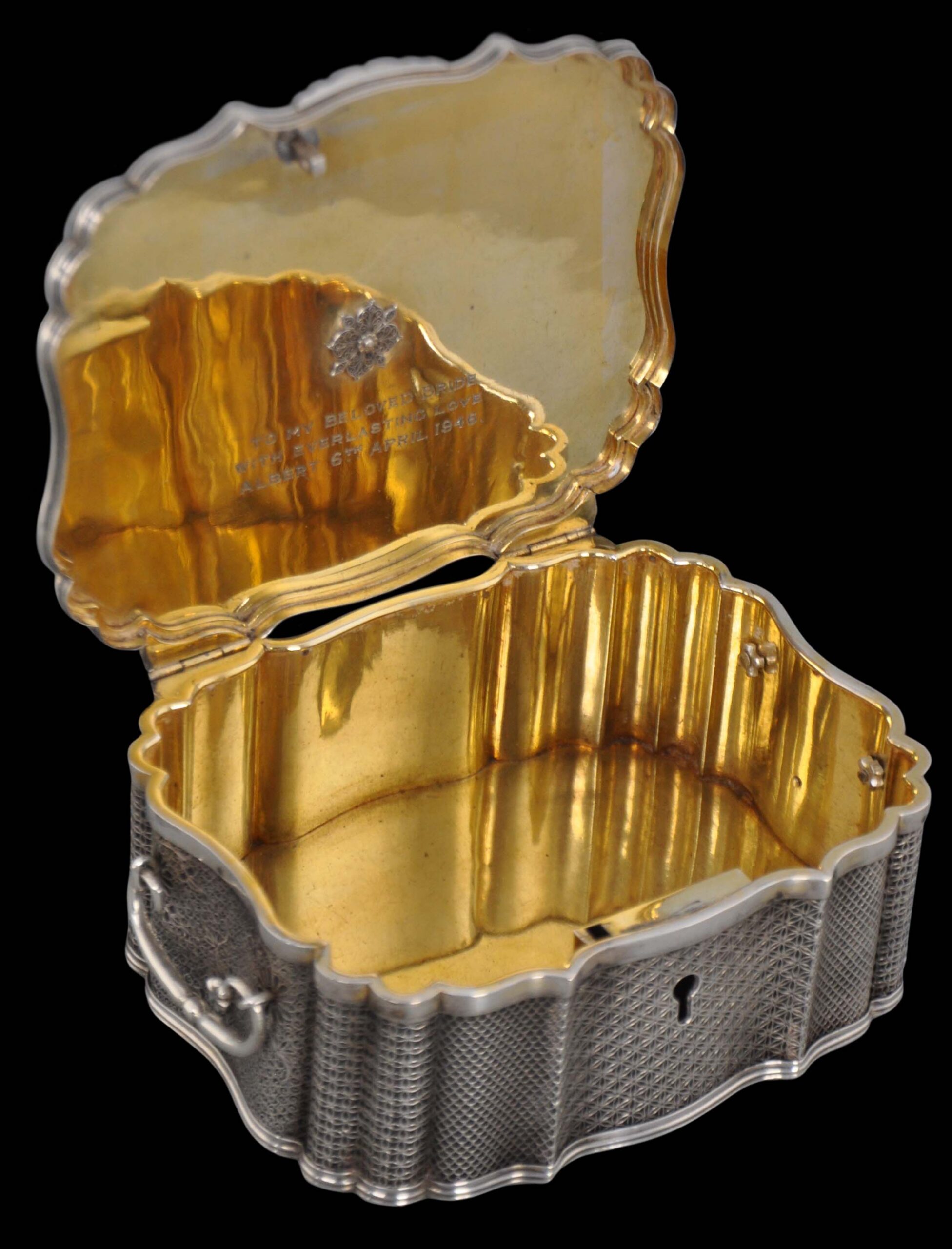
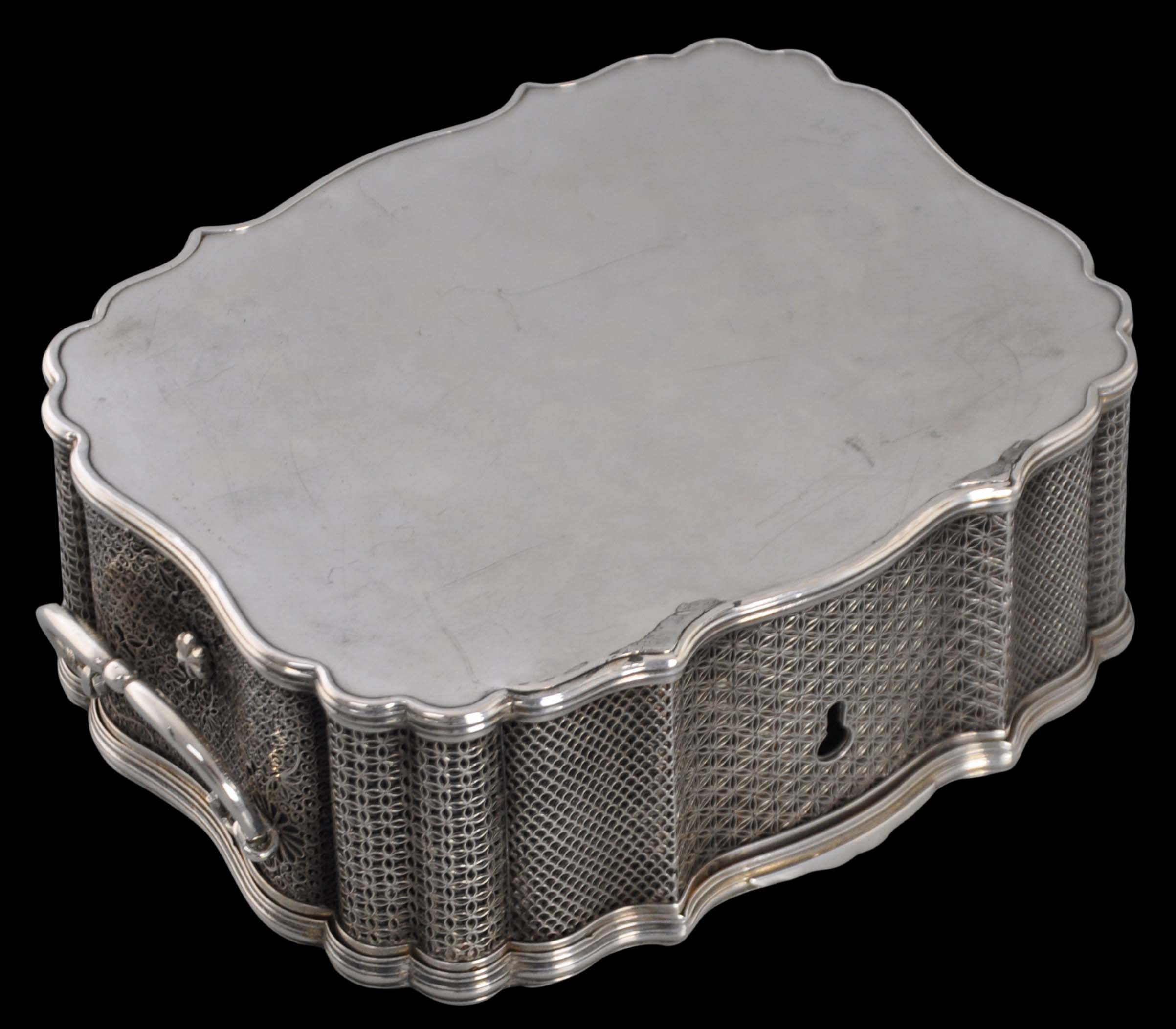
This superb box with scalloped edges comprises a body of silver-gilt sheet, covered by a net of fine silver filigree in the form of leaf and floral flourishes. It is in outstanding condition.
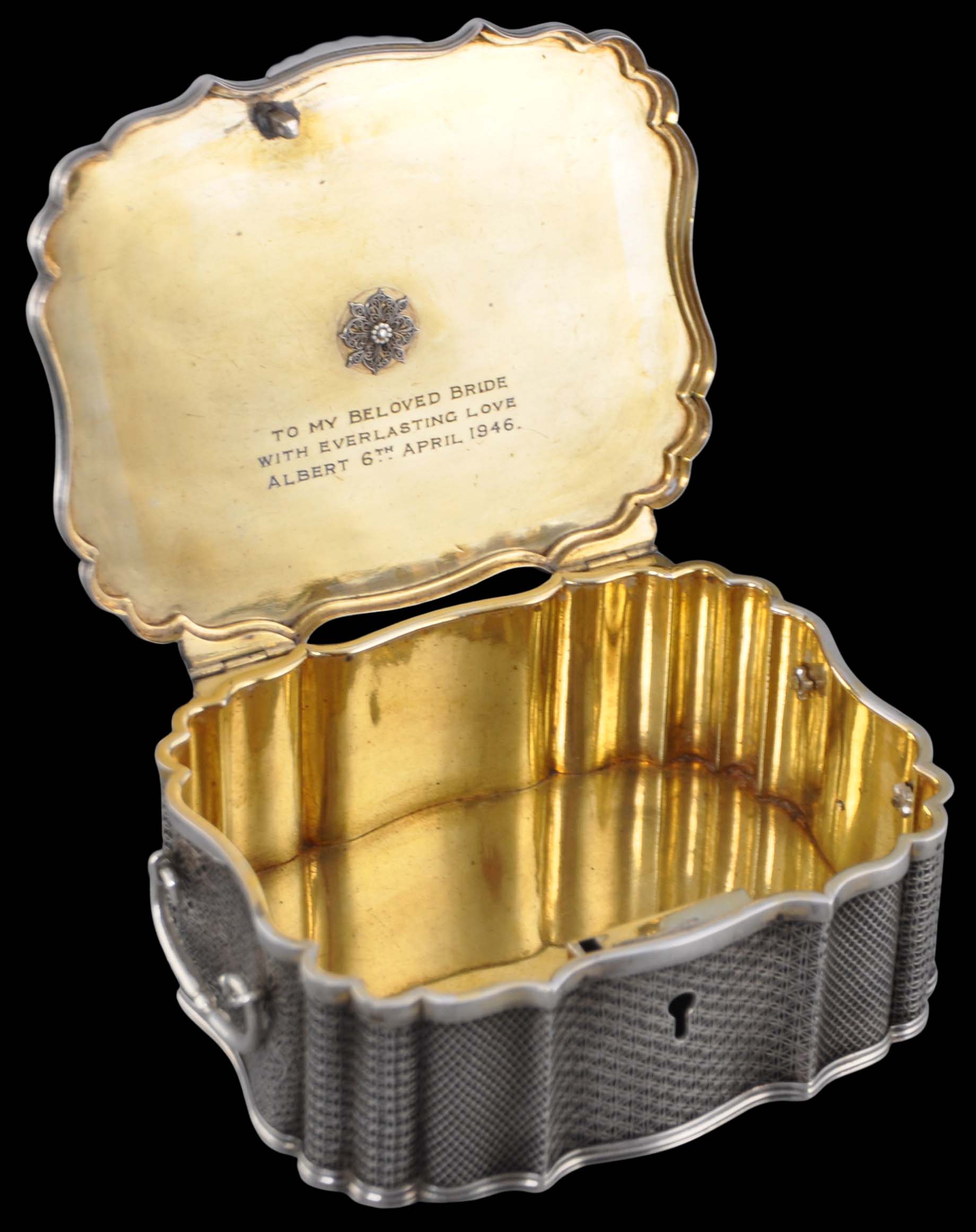
The filigree is not soldered to the silver sheet below but is fixed to the edges of the box. The exterior retains traces of gilding, and the interior is fully gilded.
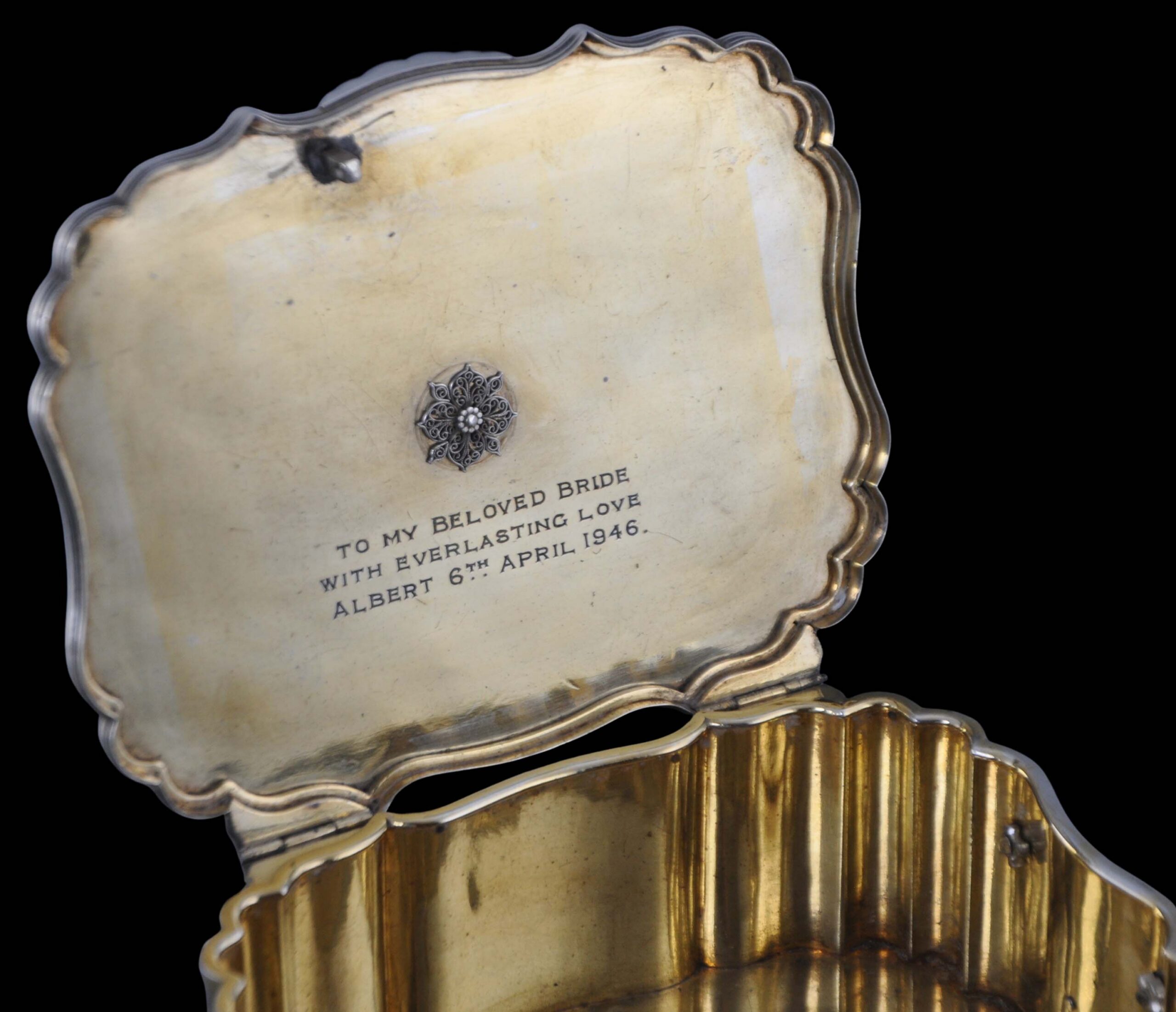
The interior is engraved with the inscription ‘To my beloved bide with everlasting love Albert, 6th April 1946’, beneath an original silver filigree rosette. Such inscriptions are not unusual on fine examples of much earlier silverwork. In Britain, in the aftermath of the Second World War, luxury goods were in short supply, so existing goods were re-purposed and re-gifted.
The cover is hinged and there is a lock (no key).
There are no maker’s or other marks. This example sits on its flat vase; there are no feet, and it does not appear that it ever had any.
It is usually assumed that such boxes were made in China. This might be true. But there is evidence that they might also be from Batavia. Indeed, such boxes became known as ‘Batavia boxes’. Certainly filigree work of this type was undertaken in Batavia and Sumatra in the 18th century. Also Morales (2004, p. 305) illustrates a church altar cruet set (vinajeras) attributed to mid-18th century Philippines manufacture which has almost identical filigree work over a plain surface.
Seven such boxes are in the toilet set of Catherine the Great of Russia. These are in the Hermitage Museum today and are ascribed to China, 1740-1750. The attribution to China seems to have originated with an inventory list of the Winter Palace of 1789 which lists the set as being ‘Chinese’.
The taste for ‘things Chinese’ was well developed in Russia by the eighteenth century. Merchants and embassies were requested to source items for the Russian court that were Chinese or at least had the appearance of being Chinese.
Russia did not have its own East India Company equivalent. It traded with China by land or ordered goods from the East India companies of other European nations, most particularly the VOC of the Dutch. It is quite possible that Chinese-looking items ordered from the VOC were assumed in Russia to have their origins in China rather than Batavia or Indonesia.
A box of similar form and decoration which is attributed to the third quarter of the eighteenth century Batavia is illustrated in Voskuil-Groenewegen (1998, p. 66). Similar pieces from another toiletry set from the Prussian and Germany royal von Hohenzollern family and in the David Chan Collection are illustrated in Chan (2005). These are attributed to the mid-18th century.
Overall, this is a box of the finest quality as evidenced by other extant examples having European royalty provenance. It is a superb example of Batavian or Chinese eighteenth century silverwork.
References
Chan, DPL, Chinese Export Silver: The Chan Collection, published in conjunction with the Asian Civilisations Museum, Singapore, 2005.
Morales, A.J. et al, Filipinas: Puerta de Oriente de Legazpi a Malaspina, SEACEX, 2004.
Piotrovsky, M. et al, Silver: Wonders from the East – Filigree of the Tsars, Lund Humphries/Hermitage Amsterdam, 2006.
Voskuil-Groenewegen, S.M. et al, Zilver uit de tijd van de Verenigde Oostindische Compagnie, Waanders Uitgevers, 1998.