Enquiry about object: 10264
Naga Double Brass Necklace
Konyak Naga People, Burma/India 19th century
circumference: approximately 64cm, length of pendant: 10cm, weight: 94g
Provenance
UK art market
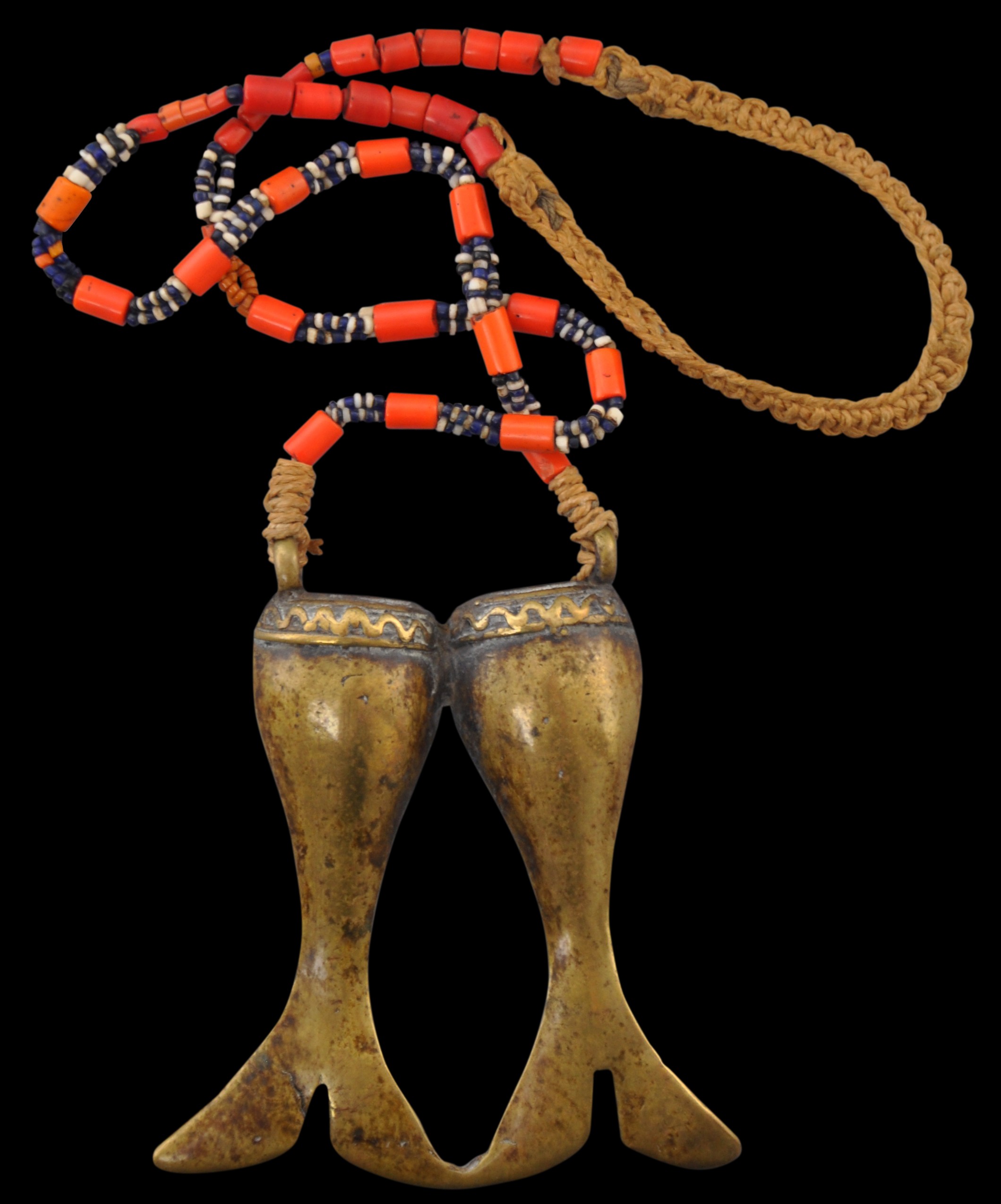
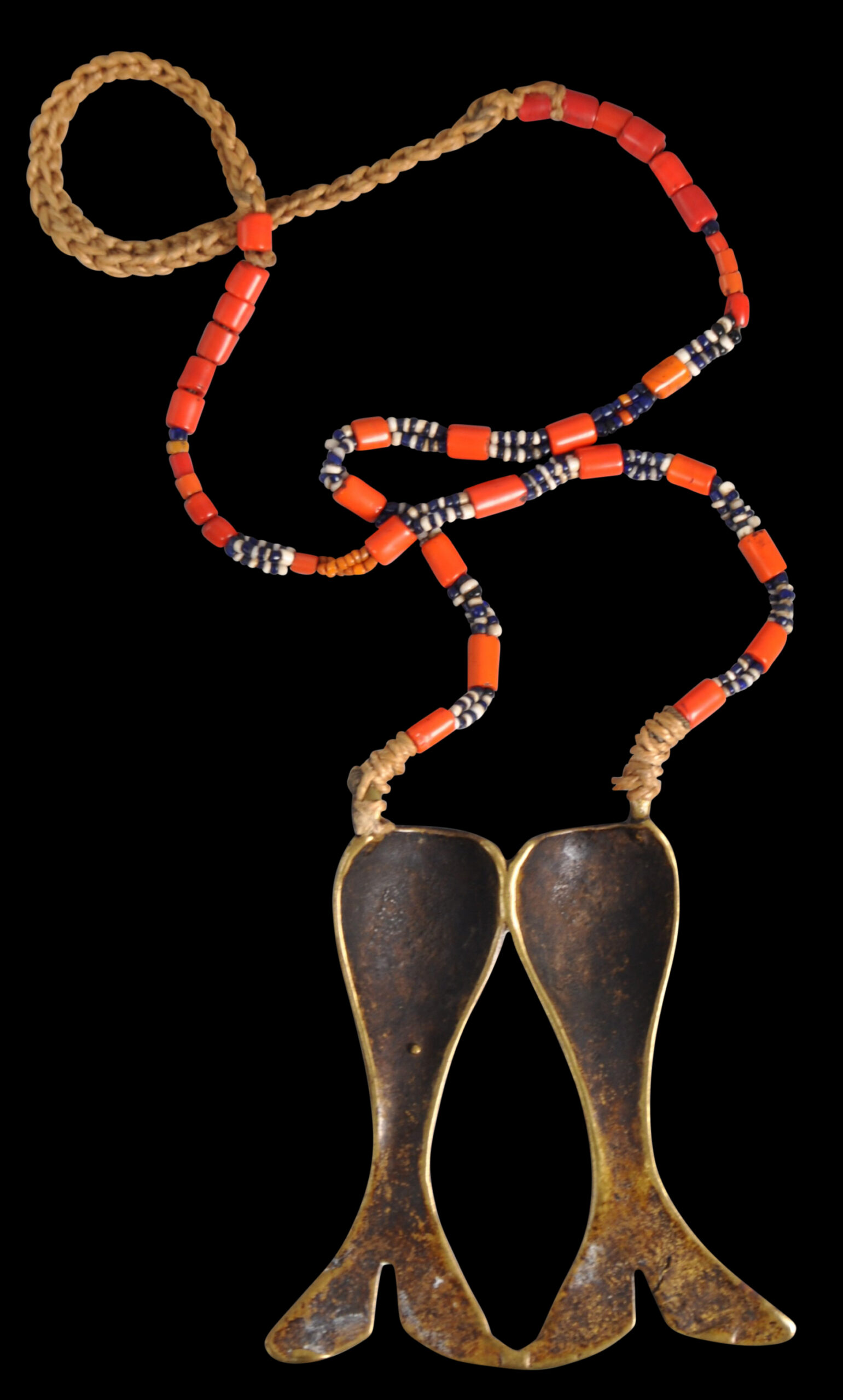
This highly decorative and wearable, cast brass chest ornament is from the Konyak Naga people. Unusually, it comprises two co-joined elements.
Each element is in the form of a segment of conch or chank shell. (Conch or chank shell segments are important components of Naga jewellery.)
The top of each element has been cast with an upper scrolling border, as well as two loops for suspension.
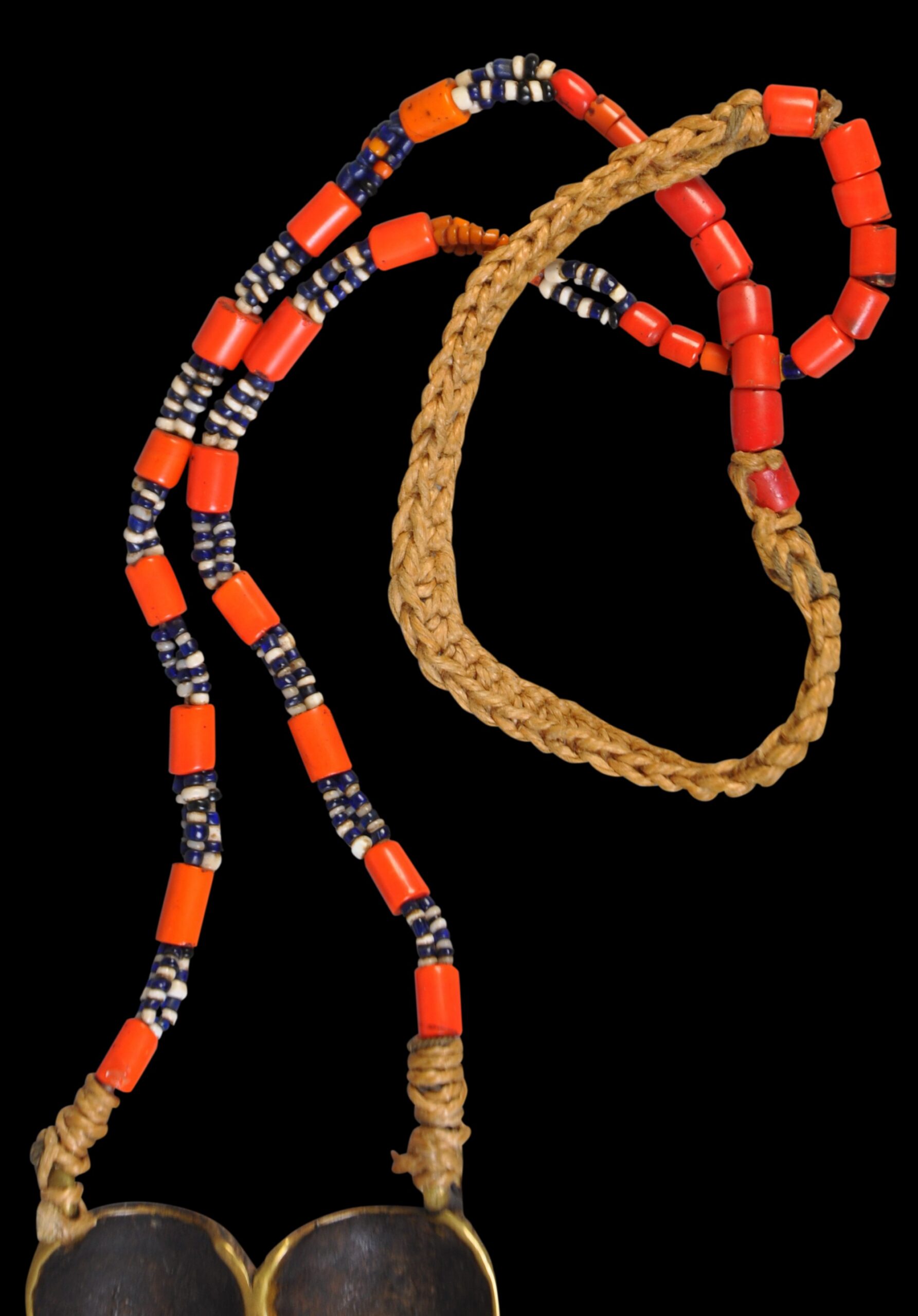
The ornament is suspended from a necklace of red-orange barrel-shaped glass trade beads of irregular size, and grain-like cream and blue glass trade beads. The beads are strung on a natural twine, the upper section of which has been appealingly braided.
Such items were male prestige ornaments, and might have been worn by warriors who had successfully taken heads.
See related examples in Jacobs (1990, p. 257).
The example here has an excellent patina and obvious age, as demonstrated by the smoothness of the contours and the soft, mellow colour of the brass.
References
Barbier, J.P., Art of Nagaland: The Barbier-Muller Collection Geneva, Los Angeles County Museum of Art, 1984.
Borel, F., The Splendour of Ethnic Jewelry: From the Colette and Jean-Pierre Ghysels Collection, Thames & Hudson, 1994.
Giehmann, M., Naga Treasures: Tribal Adornment from the Nagas – India and Myanmar, 2021.
Daalder, T., Ethnic Jewellery and Adornment: Australia, Oceania, Asia, Africa, Ethnic Art Press/Macmillan, 2009.
Jacobs, J., The Nagas: Hill Peoples of Northeast India, Thames & Hudson, 1990.
Schmitt, K., ‘The language of Naga ornament: Beads, Bones and Hornbill feathers’, Arts of Asia, July-August 2004.