6114
Enquiry about object: 6114
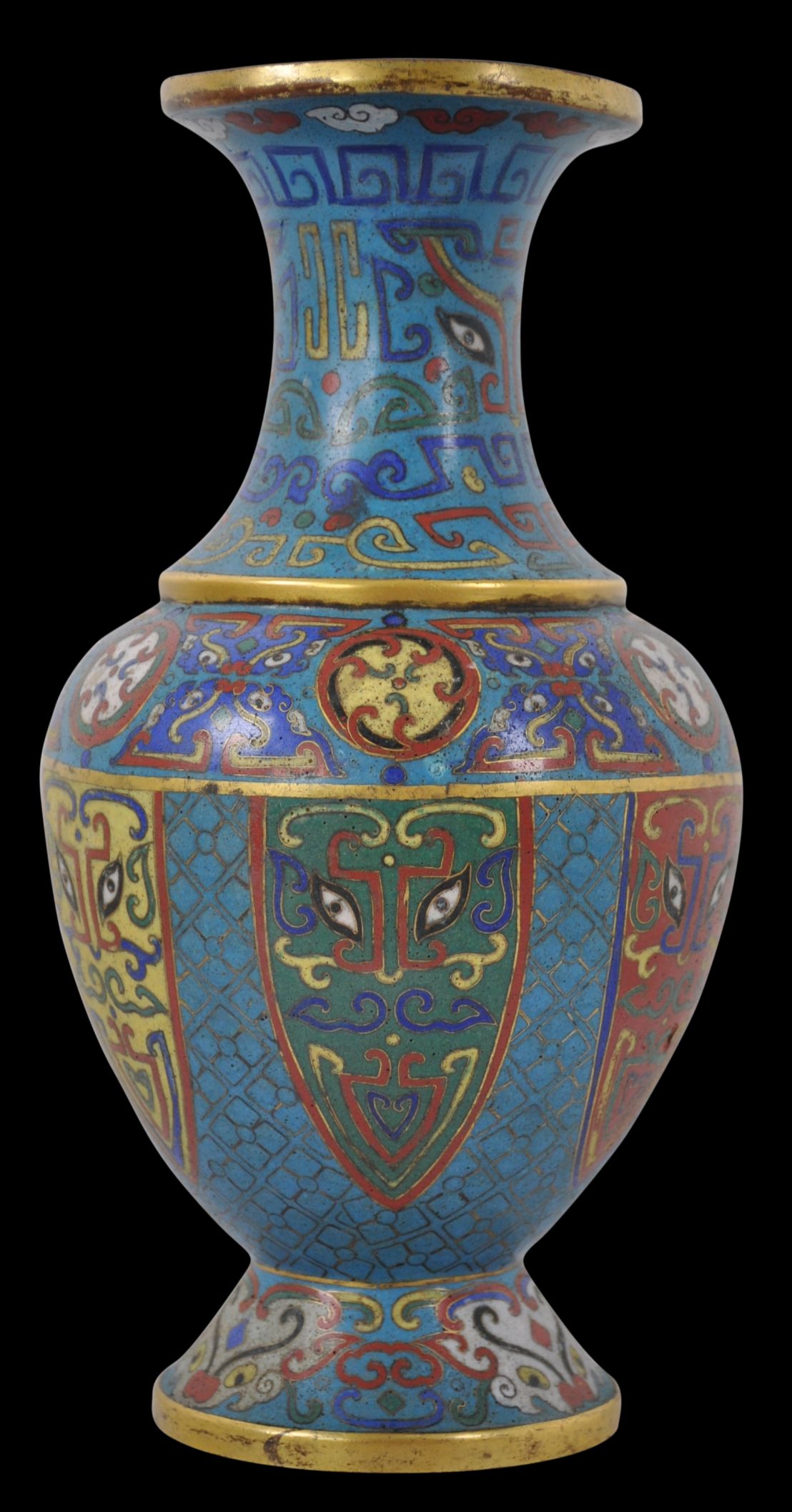
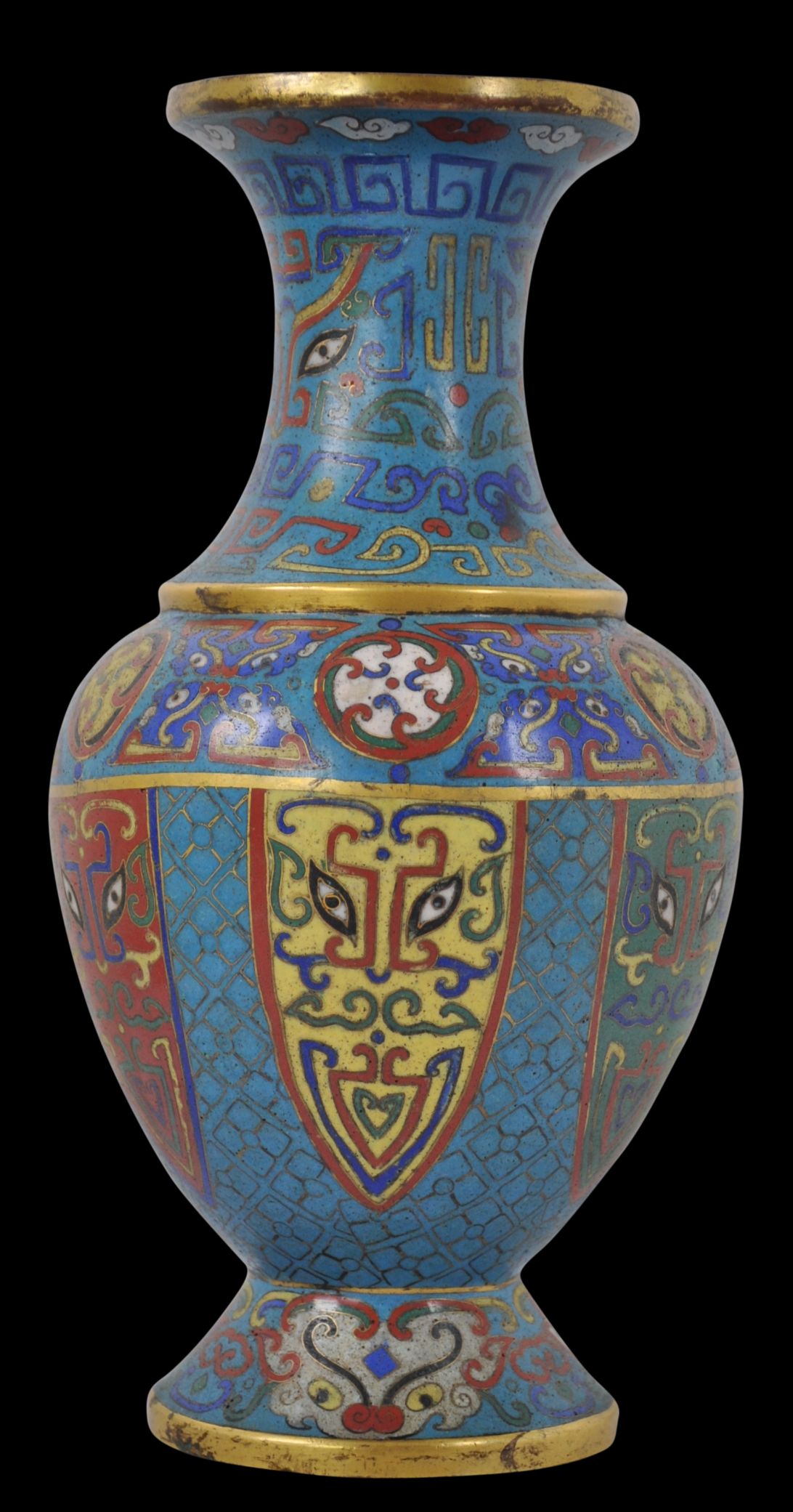
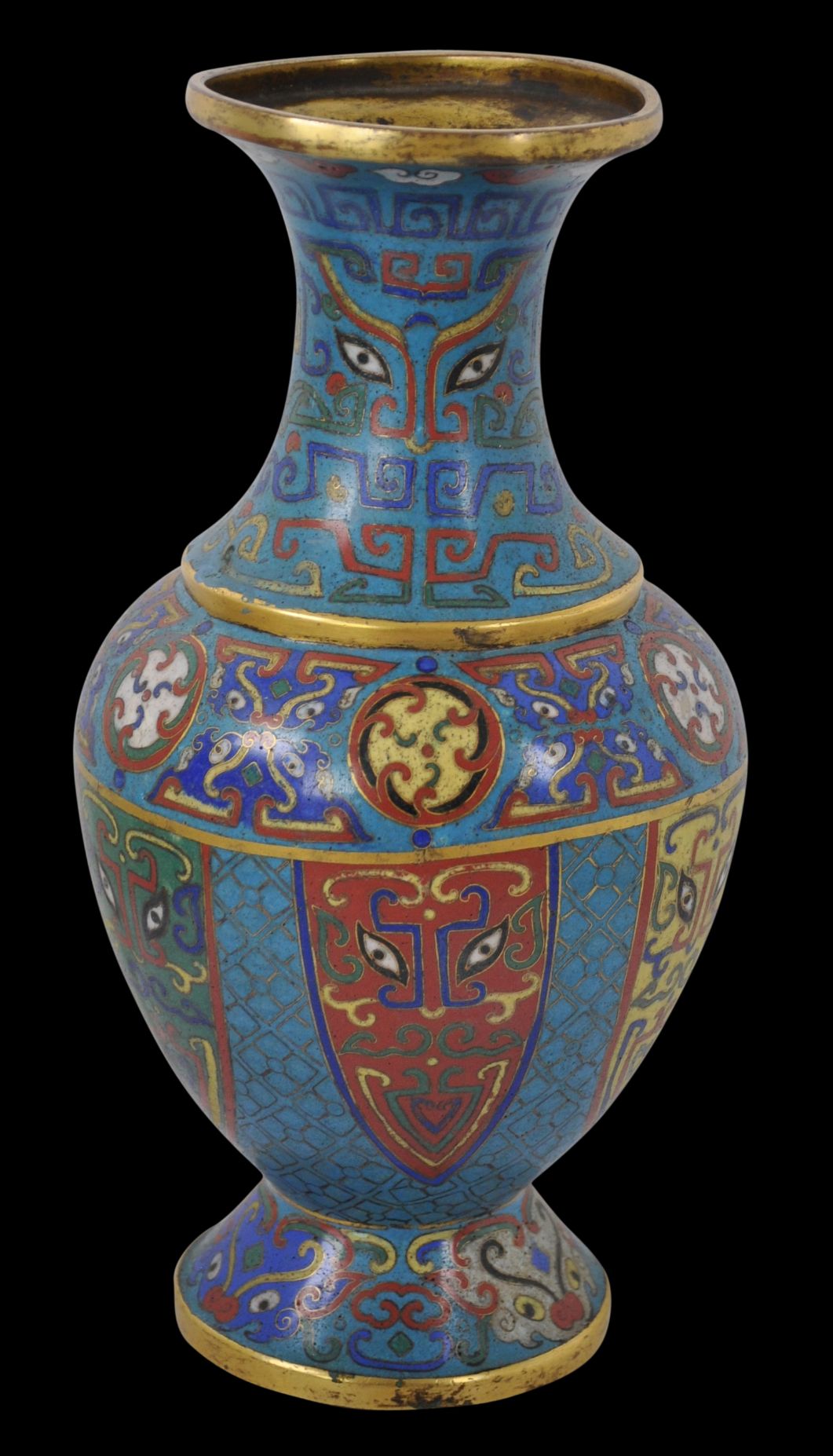
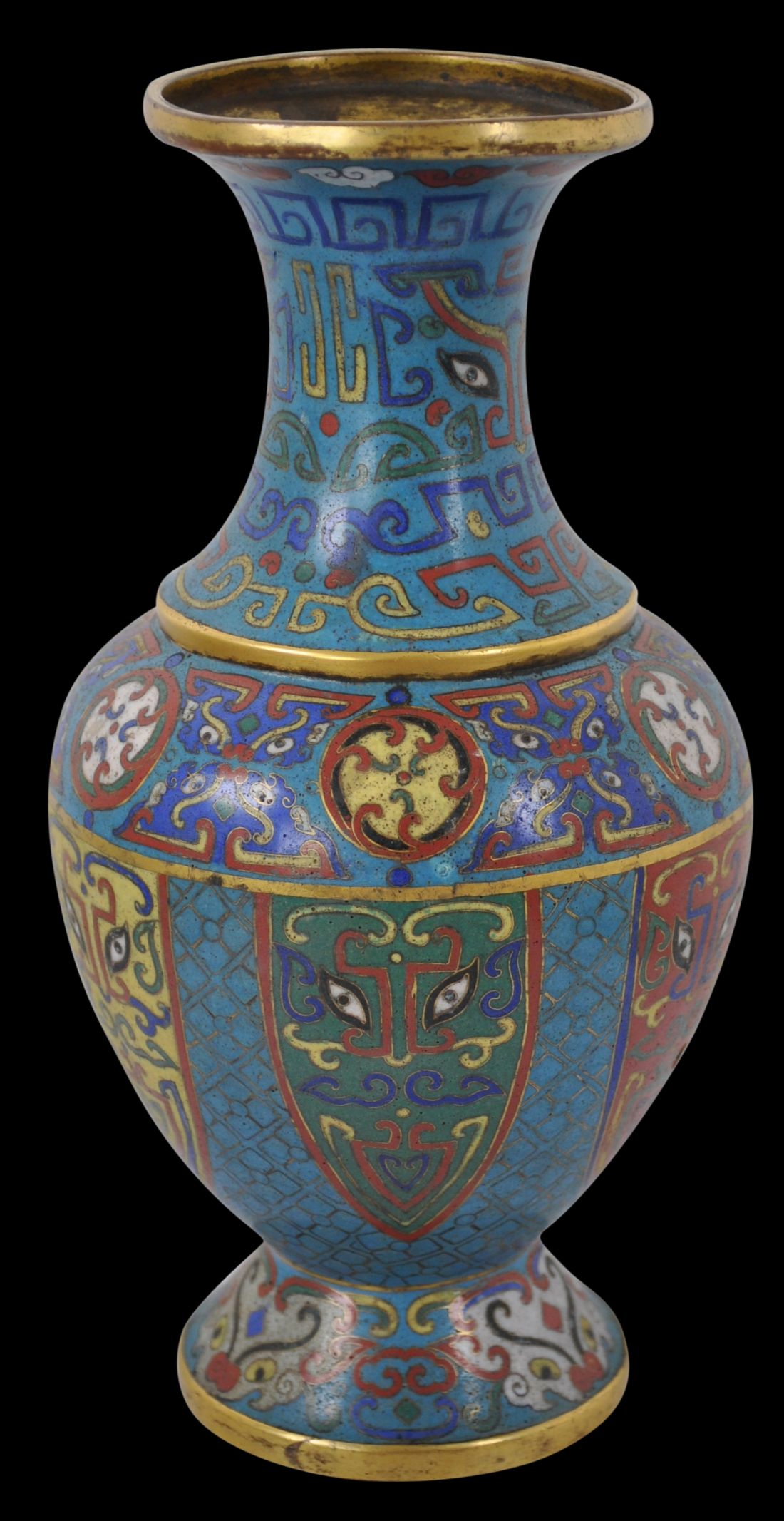
Chinese Cloisonne & Gilt Vase Decorated with Taotie Motifs
China 18th-early 19th century
height: 23.3cm, weight: 946g
Available Enquire
Provenance
acquired by the previous owner's father at Christie's London in the 1990s
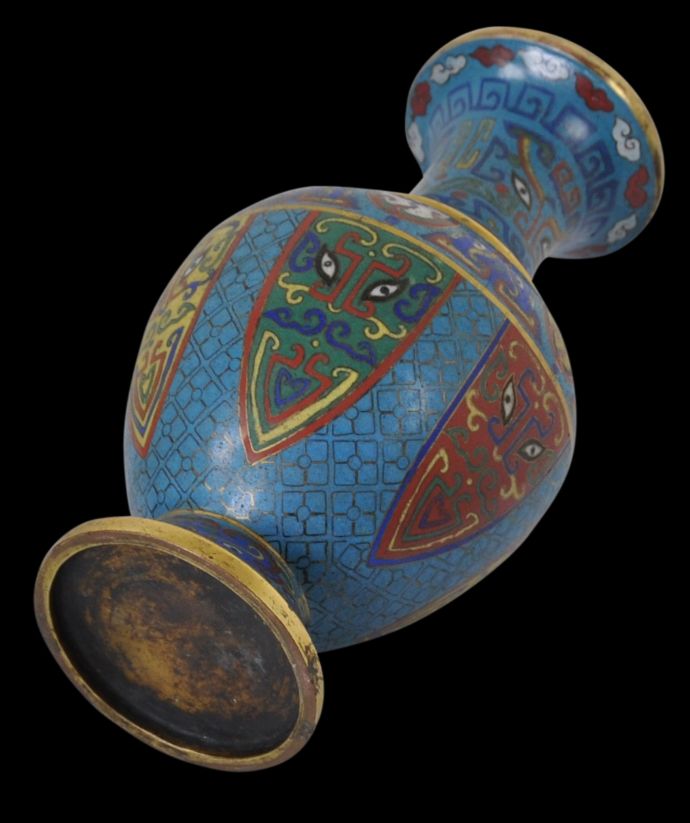
This vase of baluster-form and resting on a splayed foot is of enamelled and gilded copper.
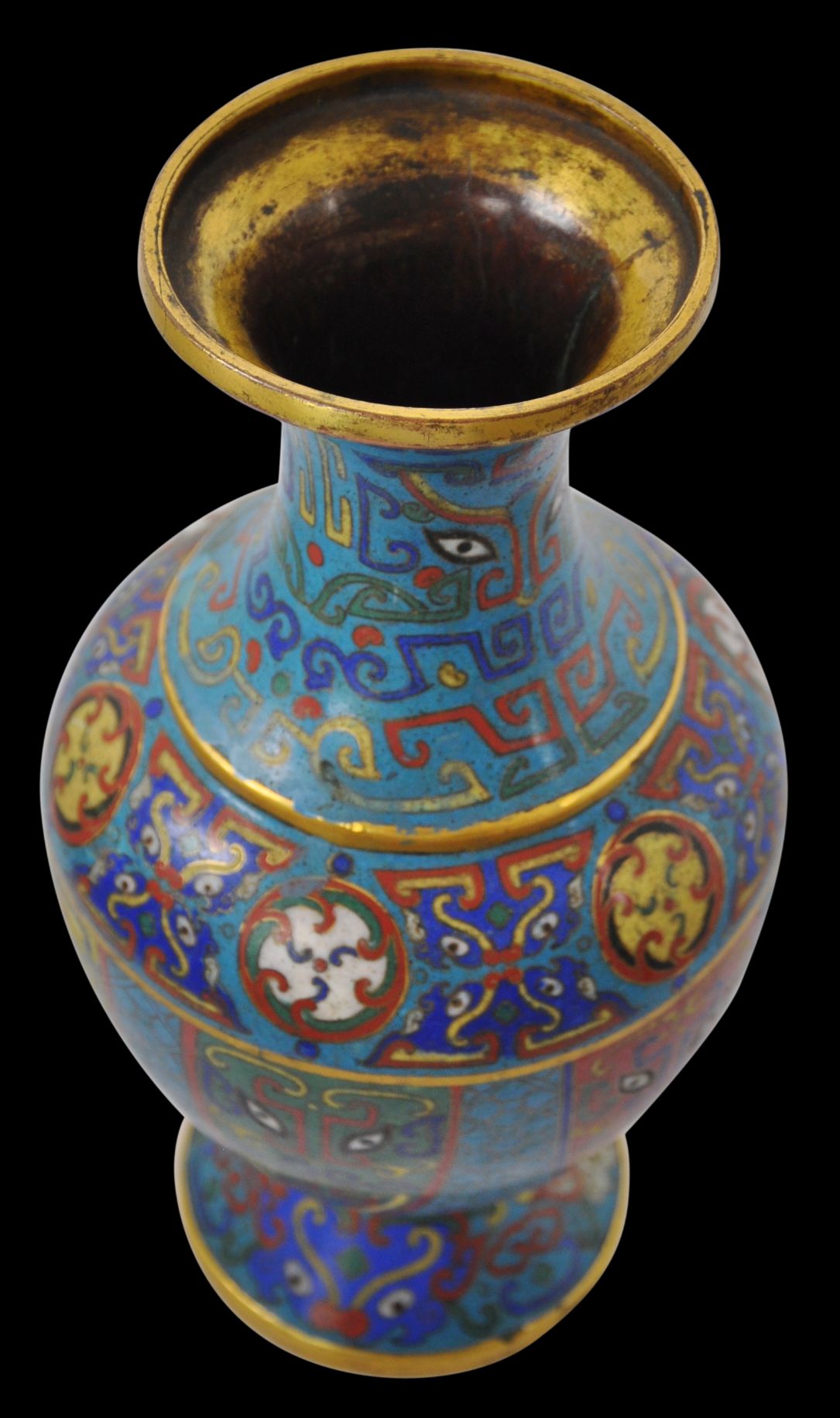
The sides are decorated with six elongated taotie masks. The shoulder is decorated with more stylised masks as is the neck.
The masks hark back to the Warring States period. The fashion for the re-use of such archaic emblems was ignited by the Qianlong Emperor who called for inspiration to be sought from antiquity
The base is unmarked. There are no obvious losses to the enamel.
References
Cosgrove, M., The Enamels of China and Japan: Champleve and Cloisonne, Dodd, Mead & Company, 1974.