Enquiry about object: 10573
Colonial South Indian Silver Tinder Tube
Trichinopoly, South India circa 1850
length: approximately 11.7cm, diameter: 1.9cm, weight: 45g
Provenance
UK art market
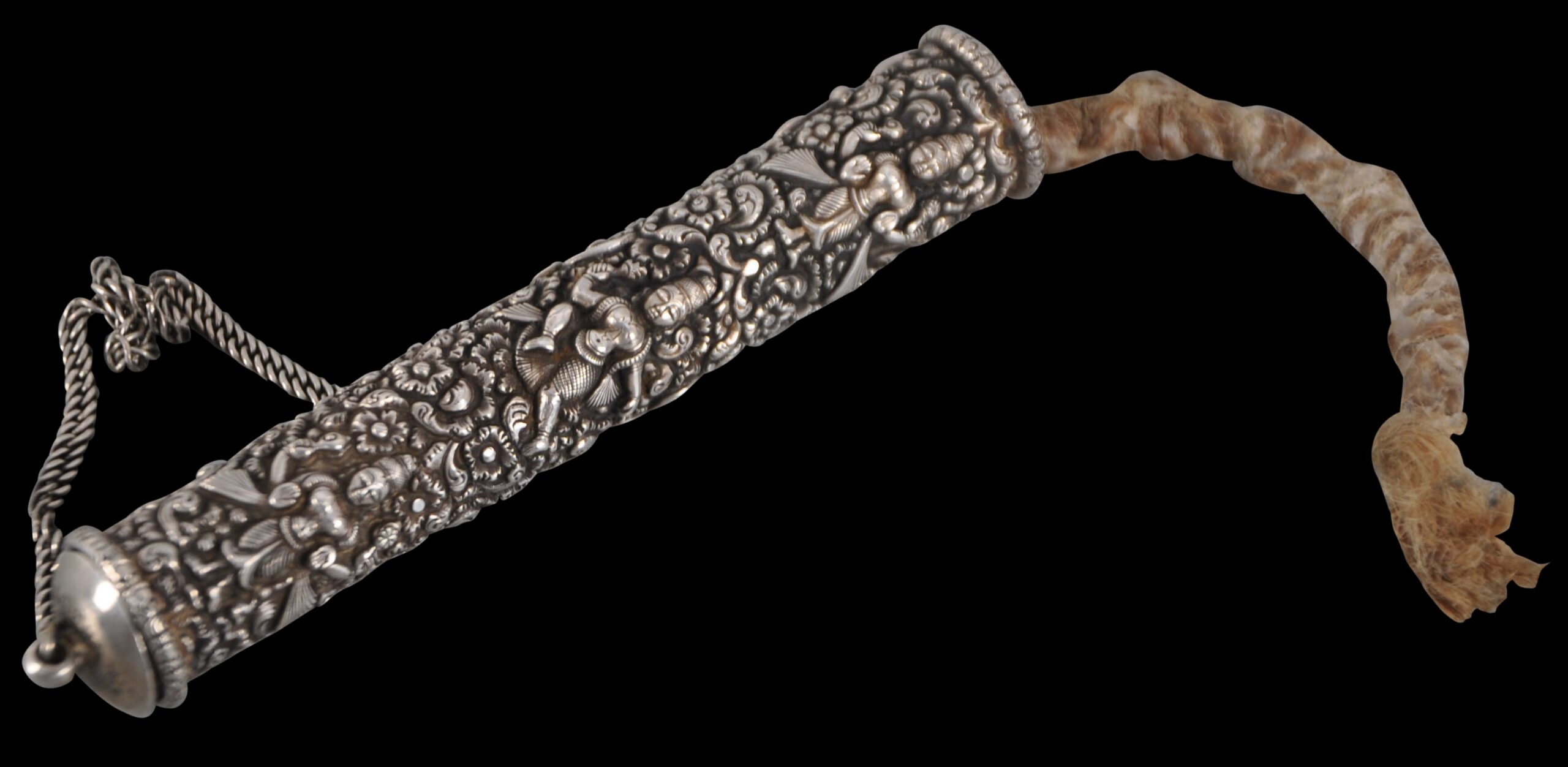
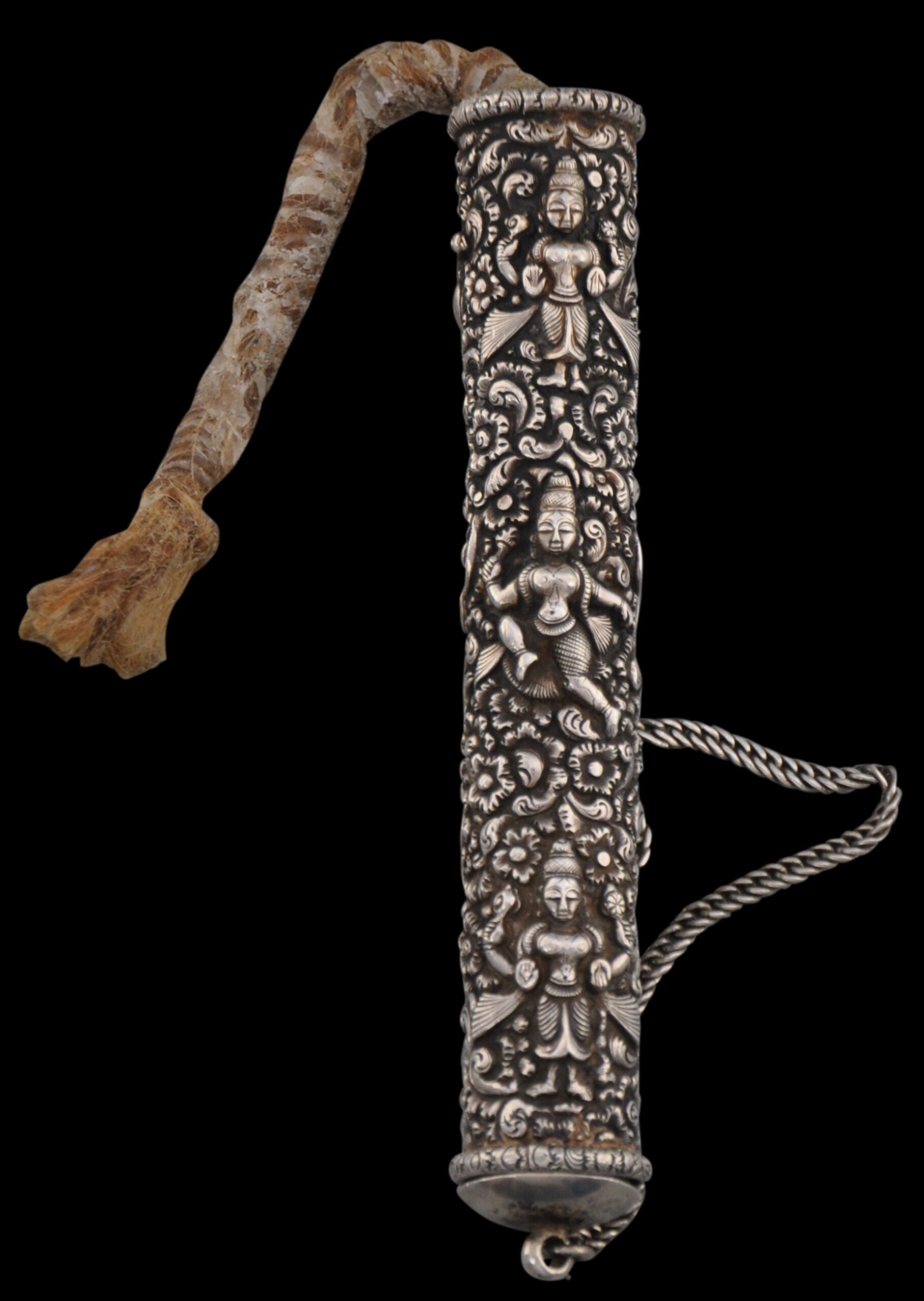
Indian silver tinder tubes are relatively rare. They were used to hold a thick textile cord that served as a wick that was used to light muskets and canons. And this example is among the finest and most complete that we have seen.
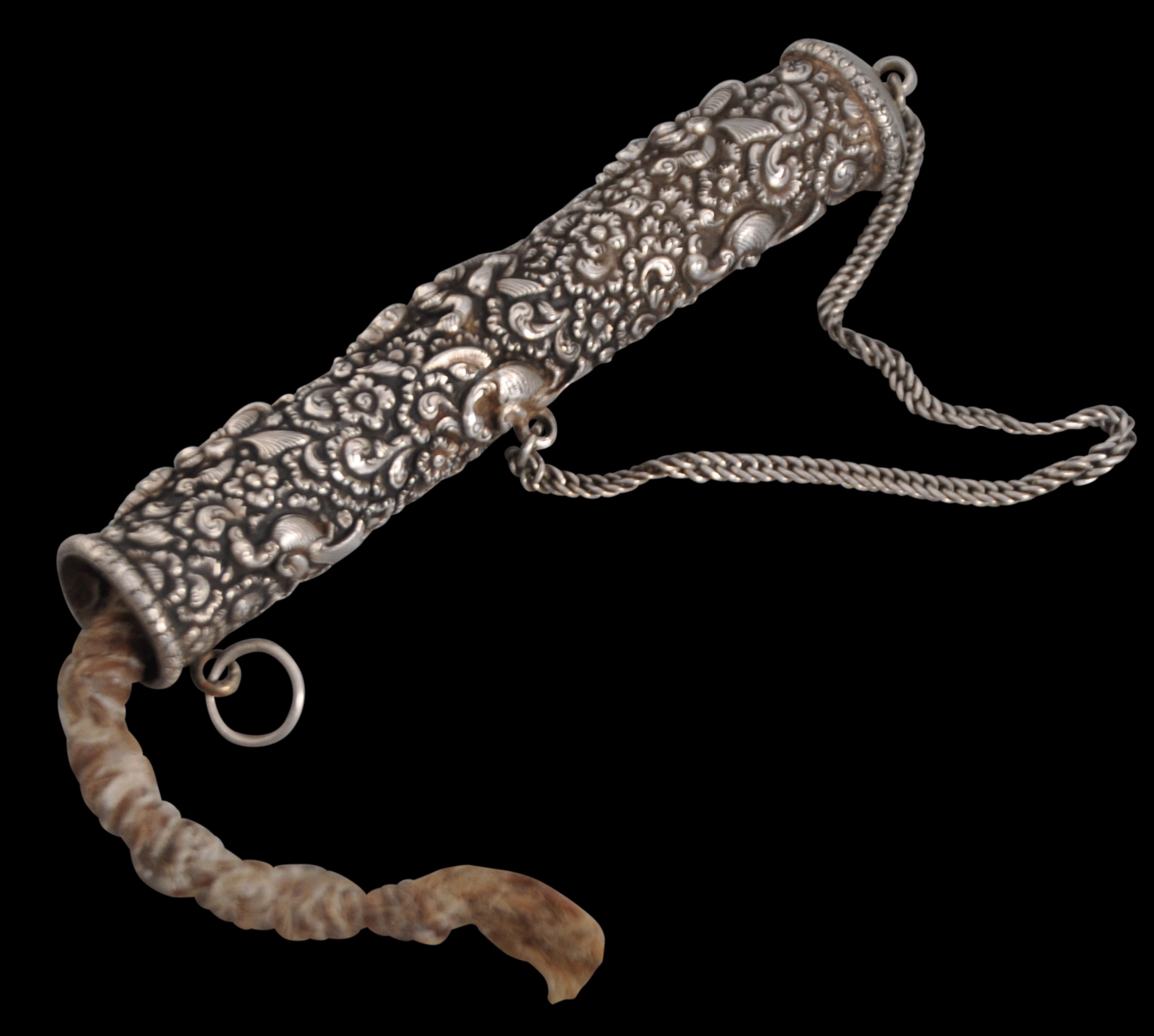
It comprises a long, silver tube decorated all over with Hindu gods and sacred birds, against a background of dense floral relief. The work is very typical of colonial Indian silverwork from Trichinopoloy.
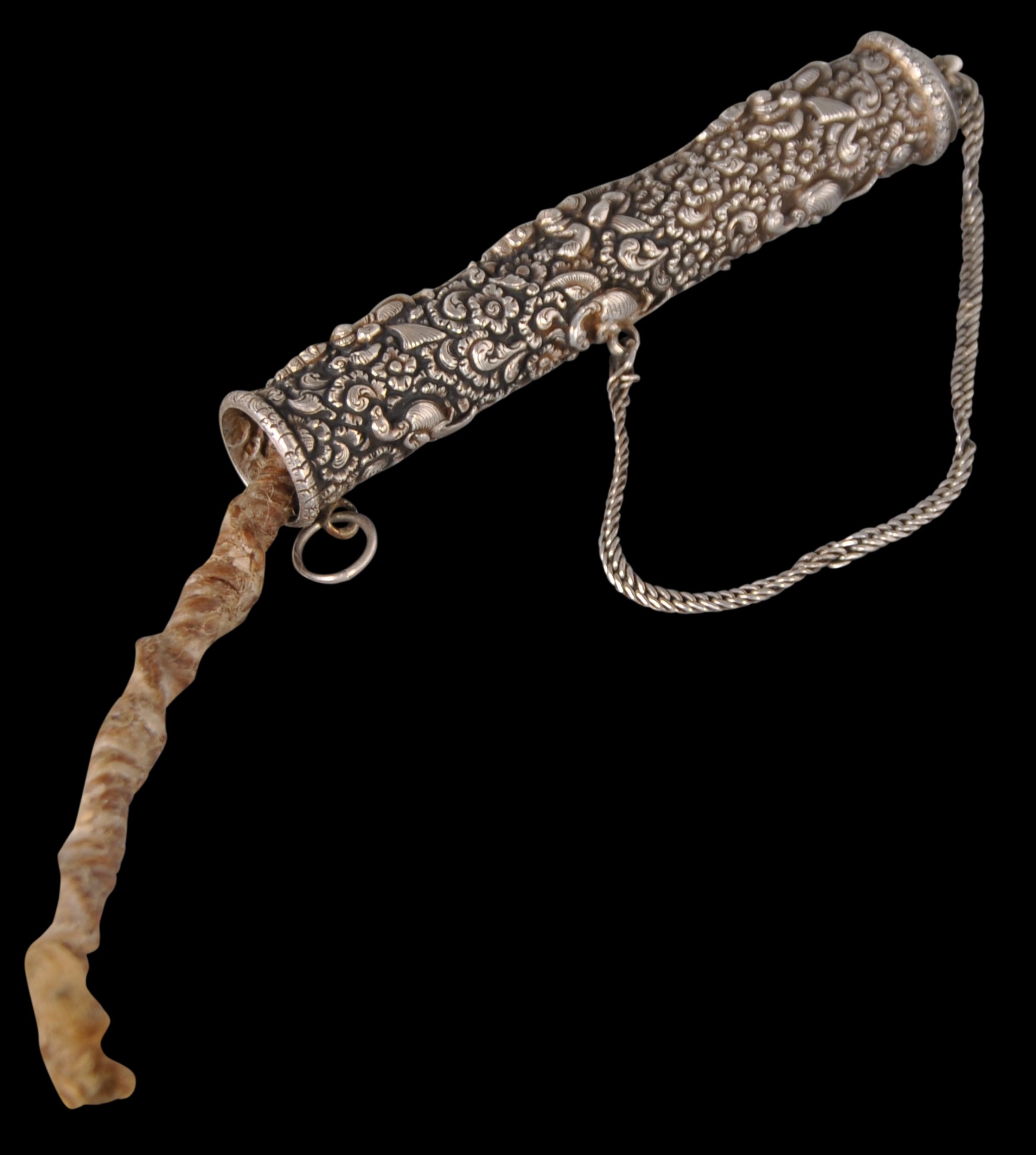
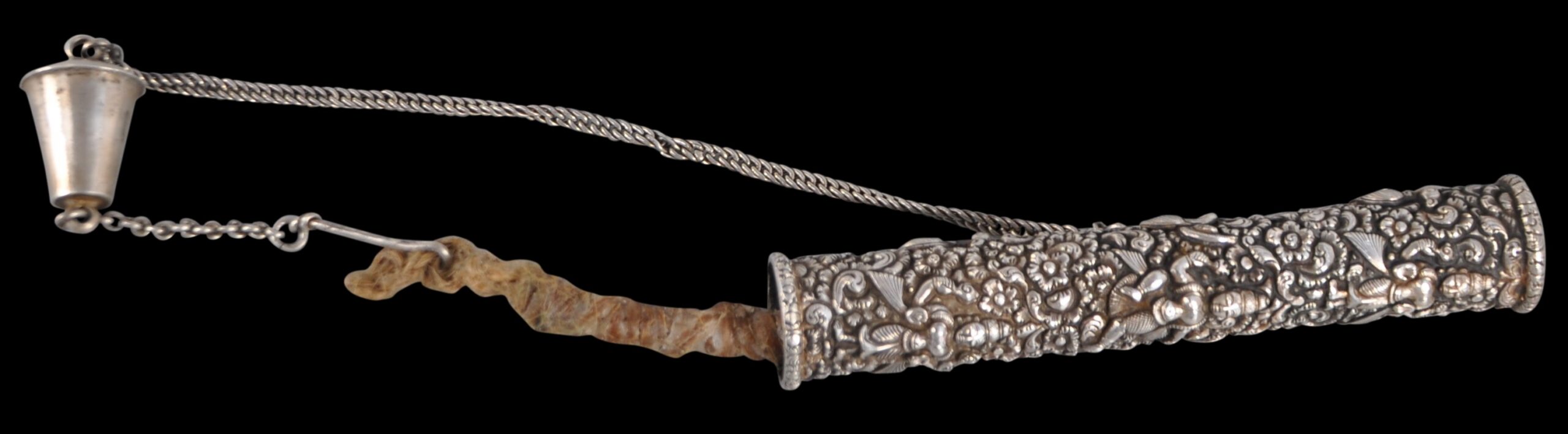
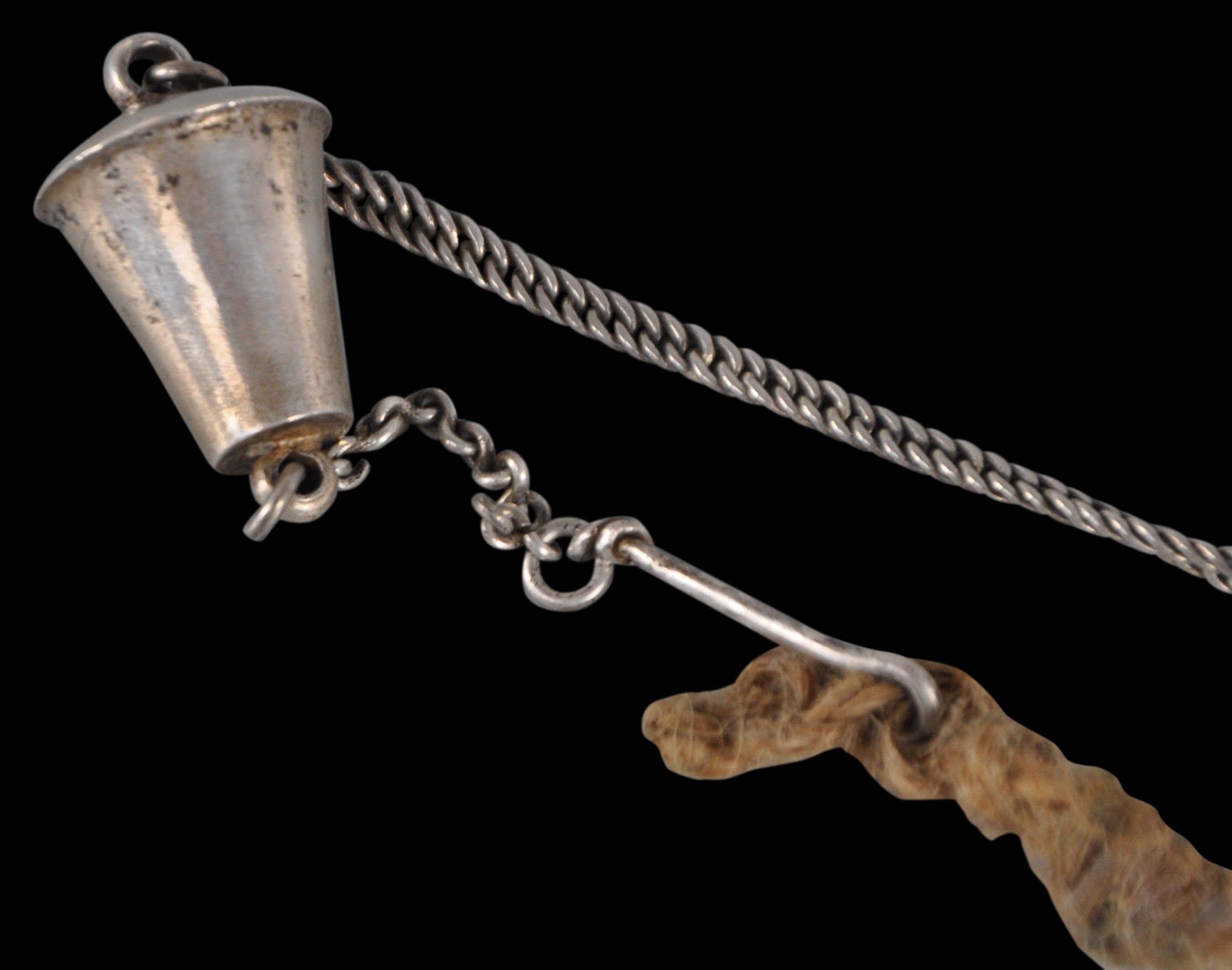
The lid has a conical silver stopper topped. A silver chain and hook is suspended from the cone. The hook is attached to the wick (usually, the original wicks no longer are present).
A silver chain links the stopper with the body of the tube.
Trichinopoloy (known as Tiruchirappalli today) is less than 350 kilometres from Madras, but under the British East India Company and later, British colonial administration, its silversmiths developed a unique style that incorporated the ‘swami’ style of Madras with incredibly dense and fine floral and foliage relief work. The silver and gold items produced in Trichinopoly tended to be small, luxurious items such as snuff boxes and perfume bottles. This tinder tube is well within that oeuvre.
Overall, this is an excellent example of an unusual and historically interesting item. There is little polishing wear; the features remain crisp and well delineated. It is unusual that it still retains the internal chain, hook and wick.
References
Dehejia, V., Delight in Design: Indian Silver for the Raj, Mapin, 2008.
Terlinden, C., Mughal Silver Magnificence, Antalga, 1987.
Wilkinson, W.R.T., Indian Silver 1858-1947, 1999.