Enquiry about object: 10566
Early Maori Greenstone Hei-Tiki
Maori people, New Zealand 17th-18th century
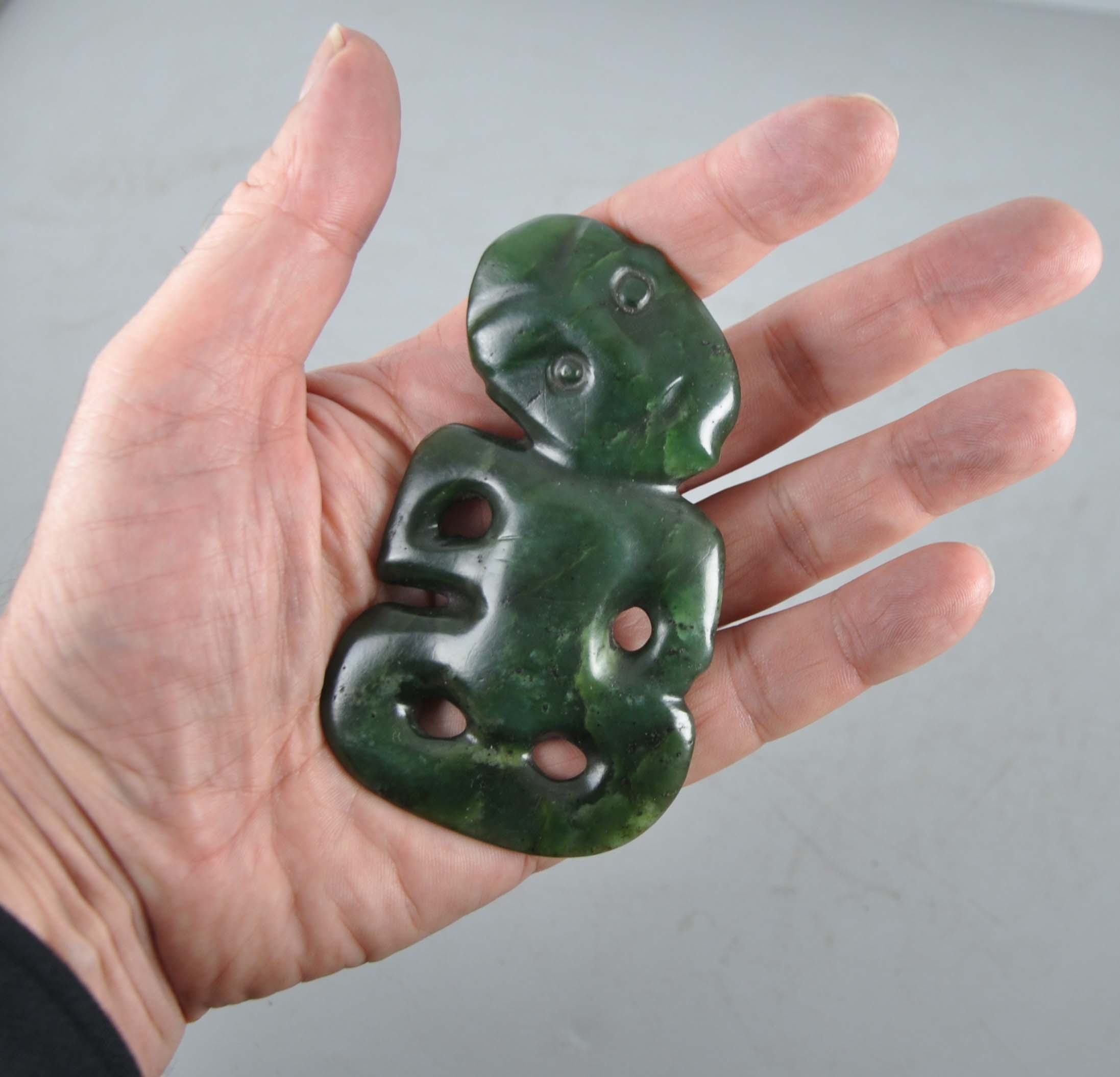
height: 9.7cm, width: 6cm, weight: 86g
Provenance
UK art market
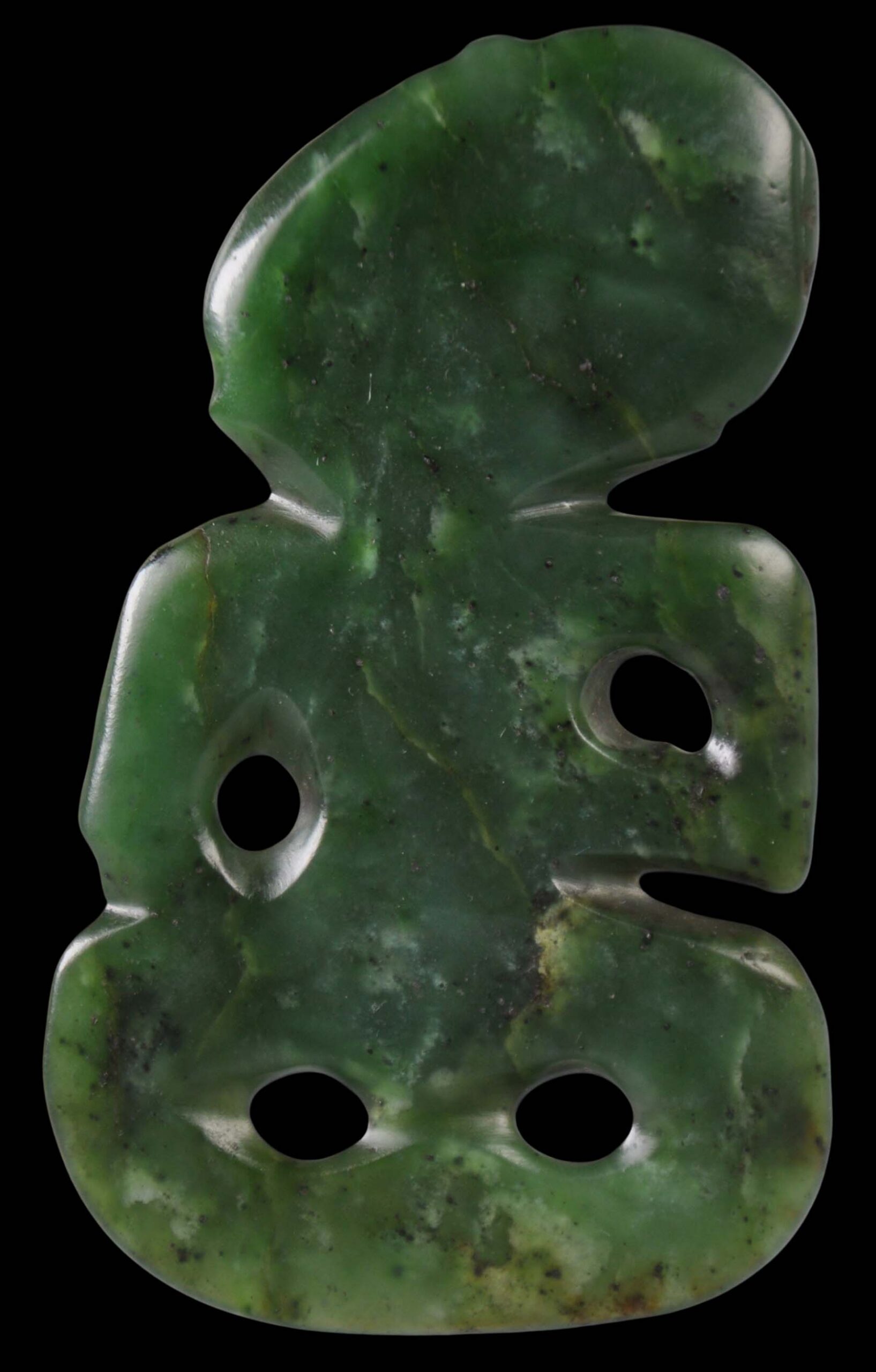
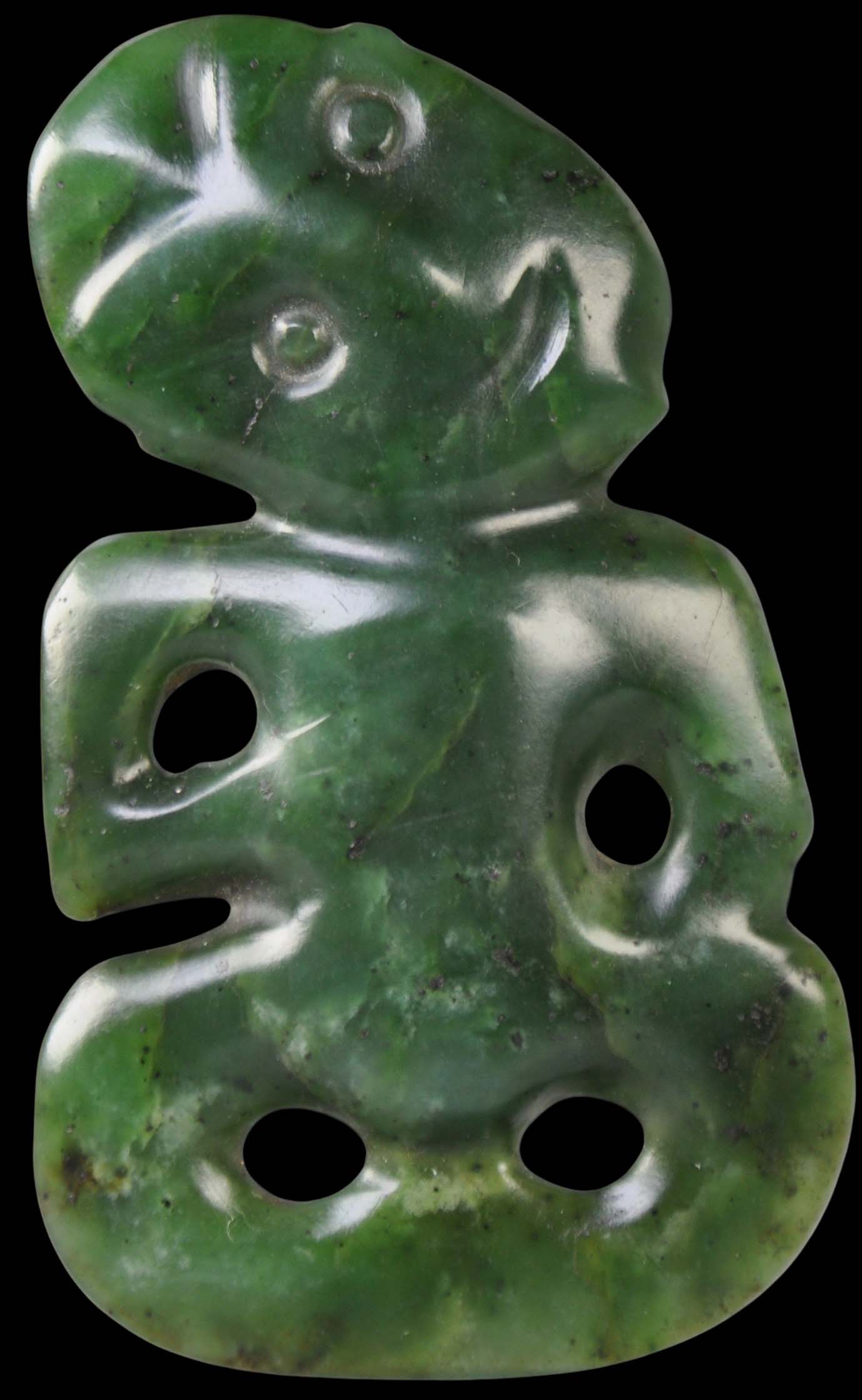
This well-worn and good-sized hei-tiki from the Maori people of New Zealand is of deep green nephrite-like greenstone, and dates to the 17th-18th century.
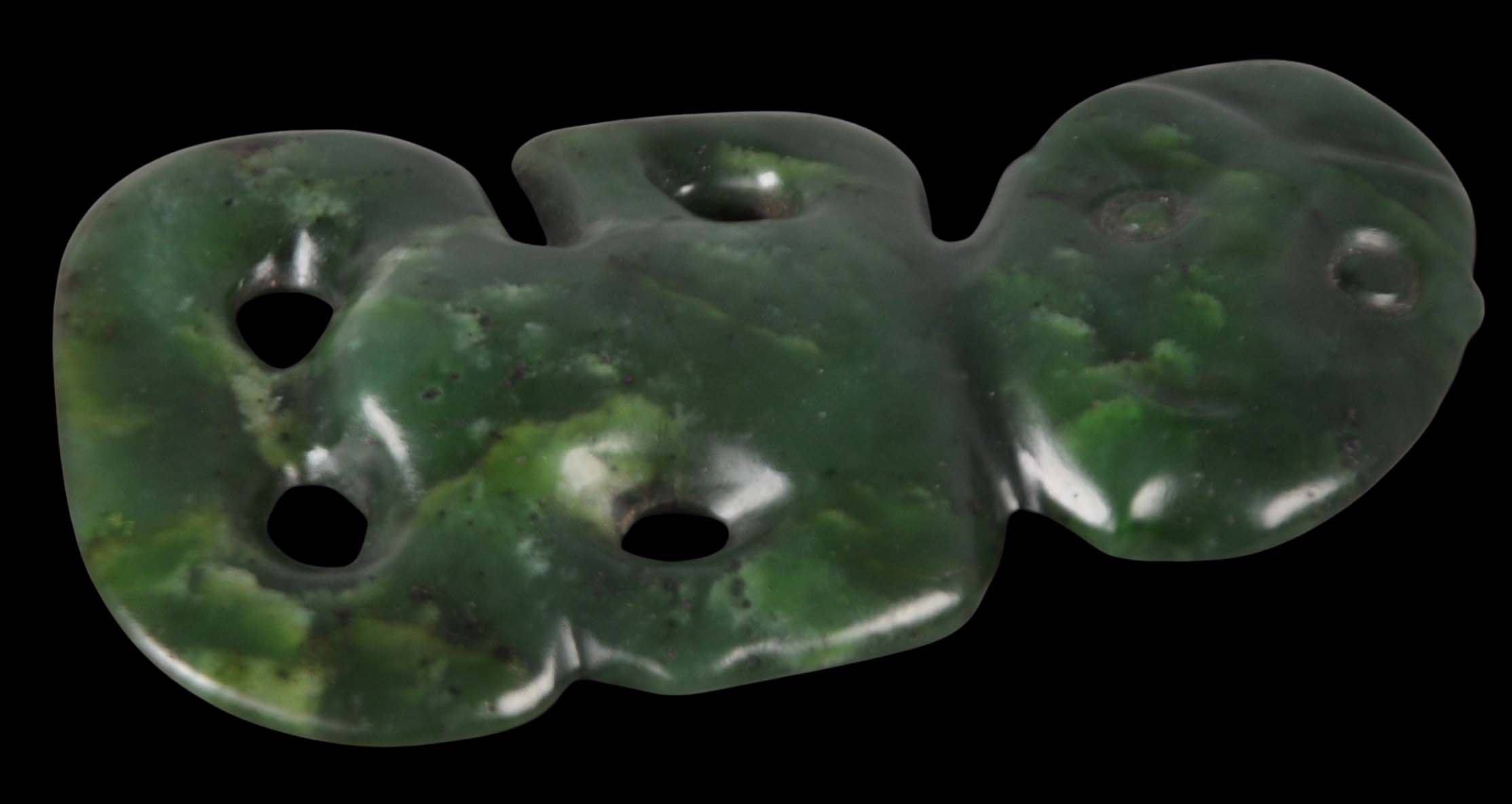
The head is inclined toward the right shoulder. The facial features are well worn. The arms rest on the hips. There is a suggestion of the right hand with several fingers that had ben engraved into the chest but which are now largely worn away. The feet are joined together. The back is flat.
There is no separate suspension hole but instead a flax cord would have been threaded through the right arm, and the hei-tiki would have been worn suspended on its side.
Precise dating is difficult but because hei-tikis almost certainly were heirloom pieces and so were passed through generations of owners. However this example, with its contours softened by wear, and the engraved detailing largely worn away, almost certainly dates to at least the 18th century and perhaps the 17th century. Indeed, a very similar (but slightly larger) example in the British Museum and illustrated in Starzecka, Neich & Pendergrast (2010, pl. 12) is said to have been collected by a sailor who accompanied Captain James Cook on his voyage to New Zealand in the 18th century. This being so, then that hei-tiki is likely to be 17th century because it was already well-worn by the time it was collected.
Hei-tiki pendants (‘tiki’ refers to the image and ‘hei’ means to suspend from the neck) carved in local greenstone (nephrite, known by the Maoris as pounamu) are among the most iconic of Maori arts. Later examples were carved from greenstone adze heads because the adzes had become redundant with the introduction of metal tools.
Hei-tiki pendants were worn by the Maoris for largely decorative reasons. Their origins might lay in ancestor worship or fertility rites, but by the time of white settlement, they were already largely decorative rather than connected to ritual. Possibly their form is based on that of a human foetus, but this is not universally agreed.
The example here is in fine condition and has much wear and evident antiquity.
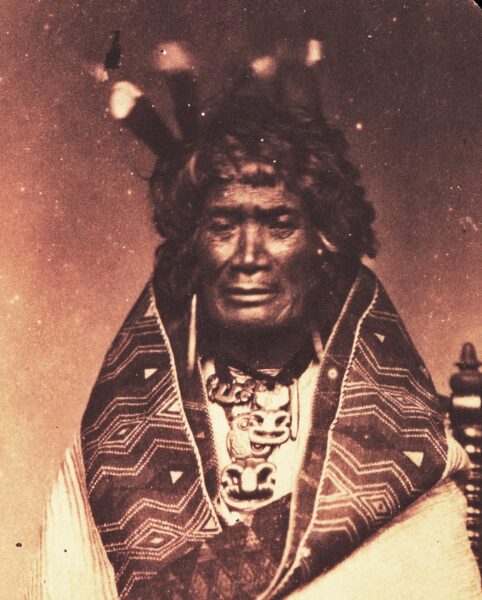
Above: This early photograph dates to around 1860 and shows the wearer with several large hei-tikis worn from the neck.
References
Austin, D., La Pierre Sacree des Maori, Musee du Quai Branly Jacques Chirac, 2017.
Starzecka, D. C., R. Neich & M. Pendergrast, The Maori Collections of the British Museum, British Museum Press, 2010.