Enquiry about object: 10569
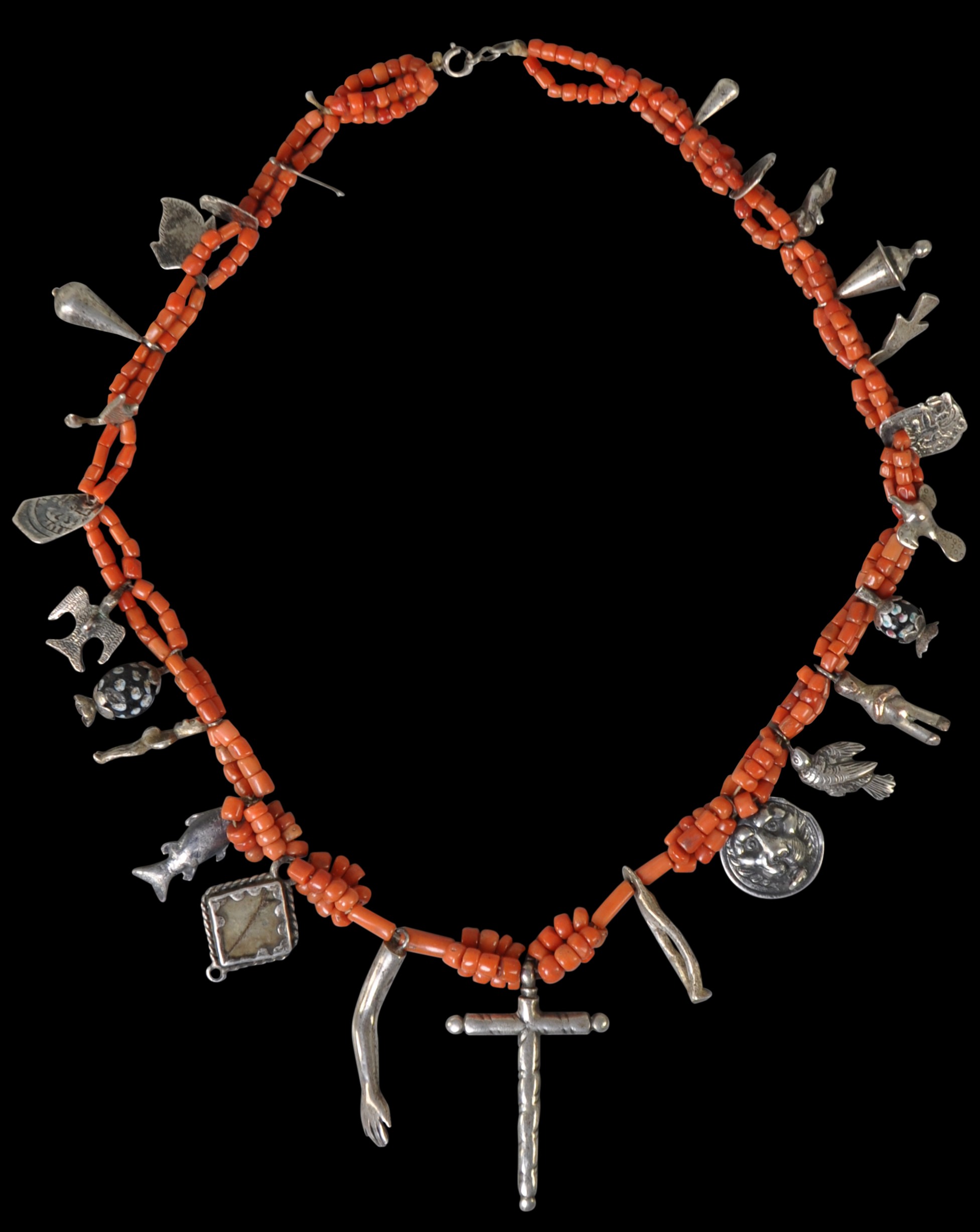
Guatemalan Coral & Silver Exvotos Necklace (Chakal)
Maya People, Guatemala 19th century
circumference: approximately 56.5cm, length of cross: 5.4cm, weight: 121g
Provenance
private collection, UK
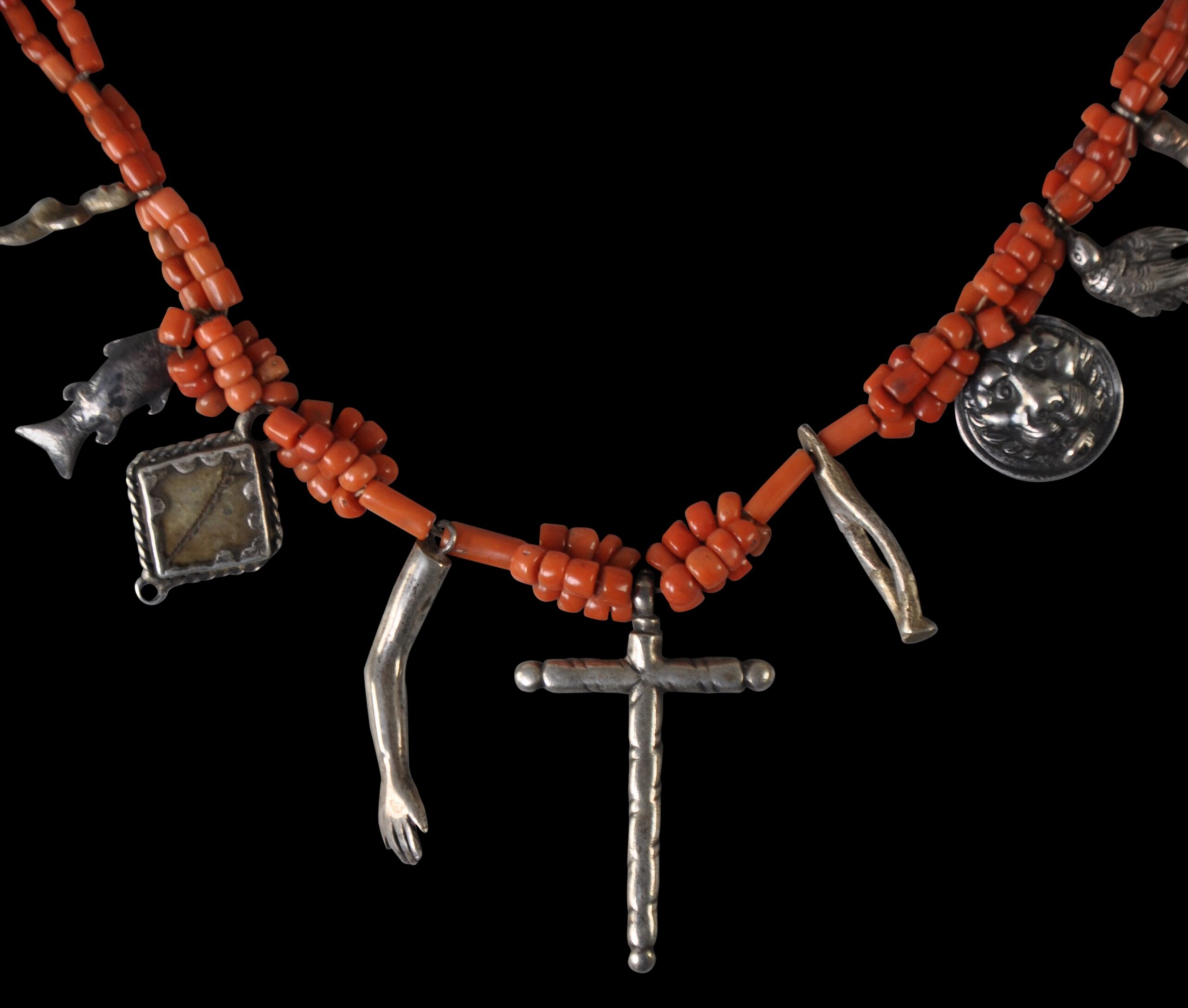
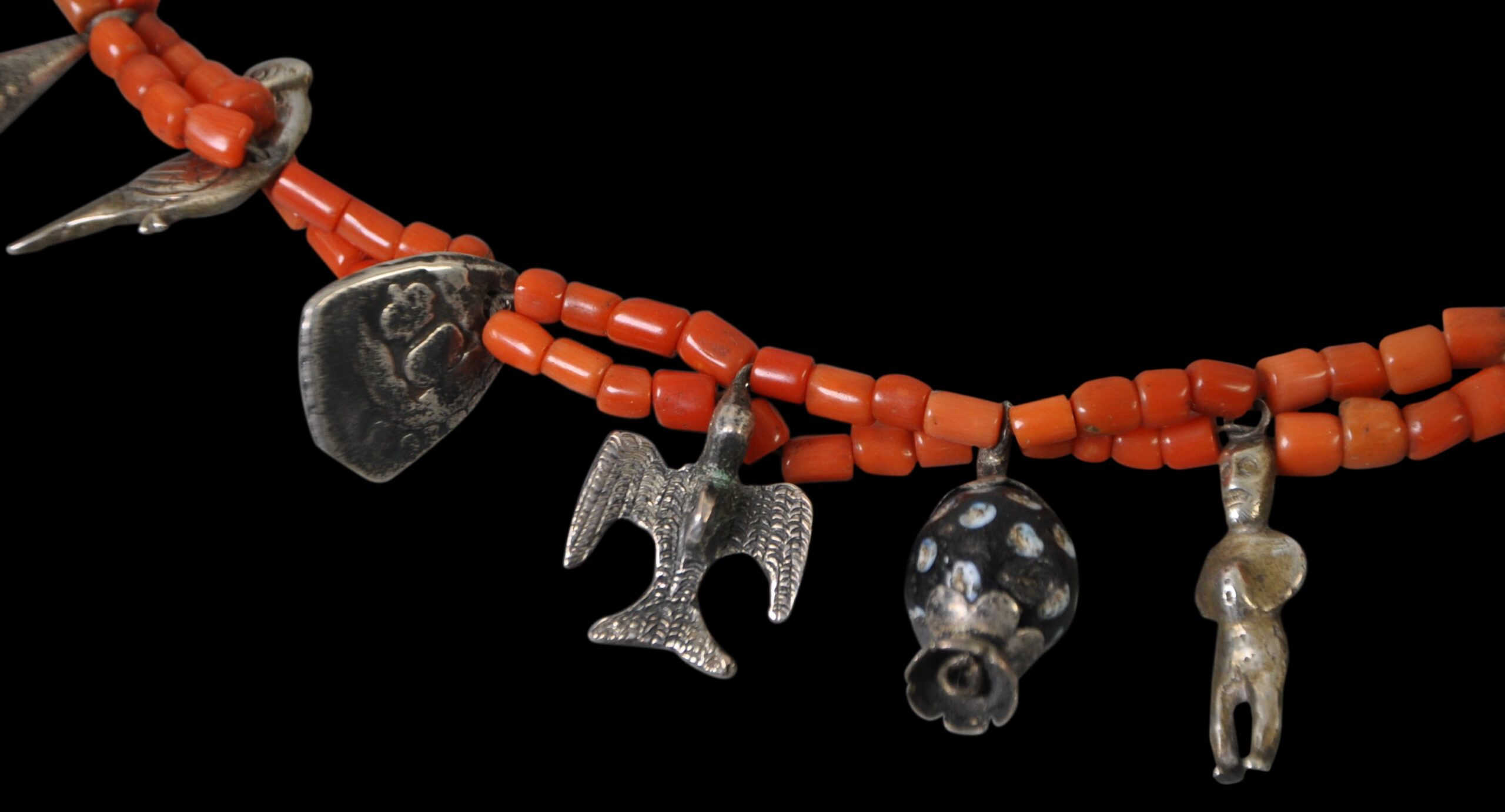
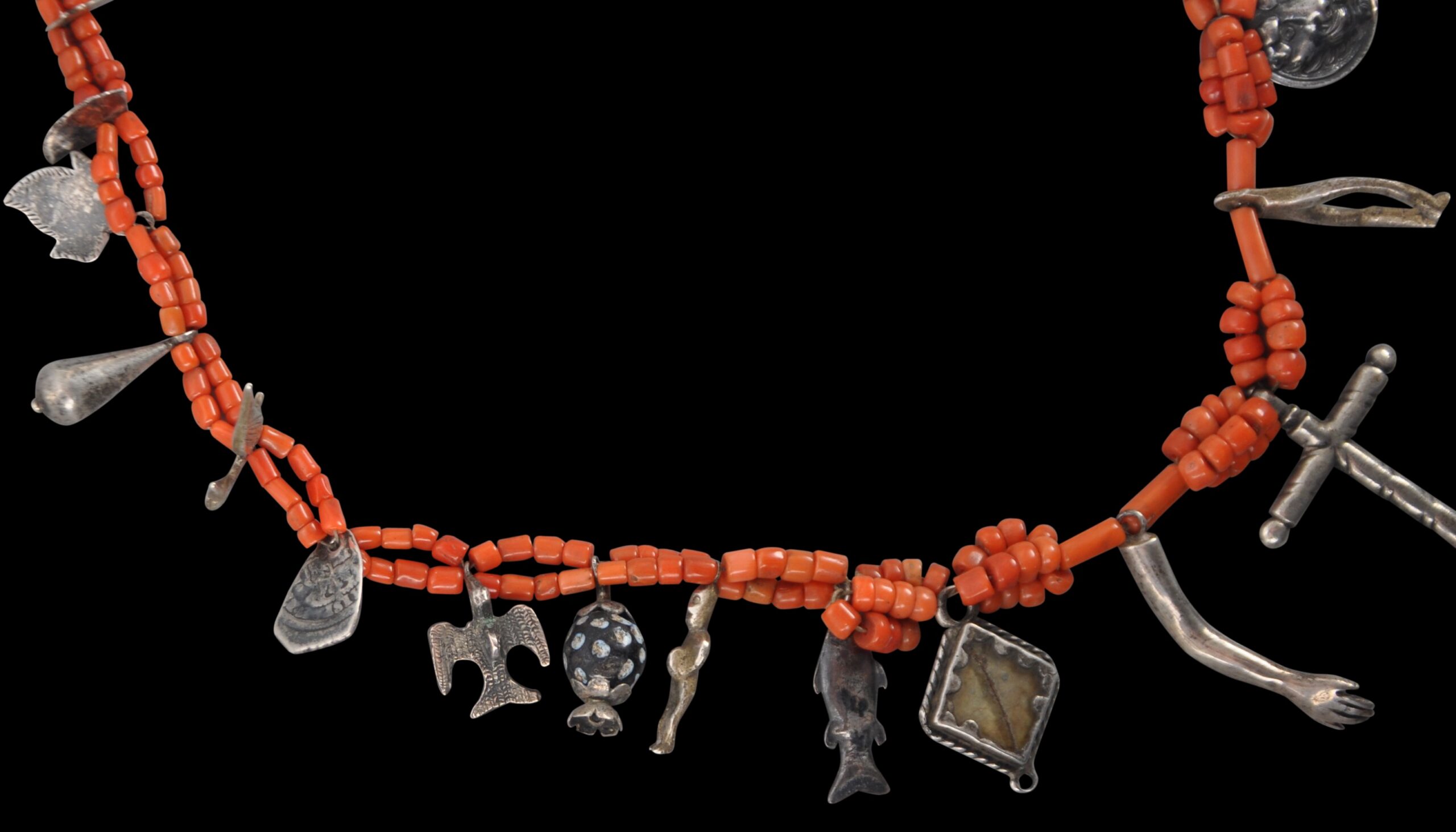
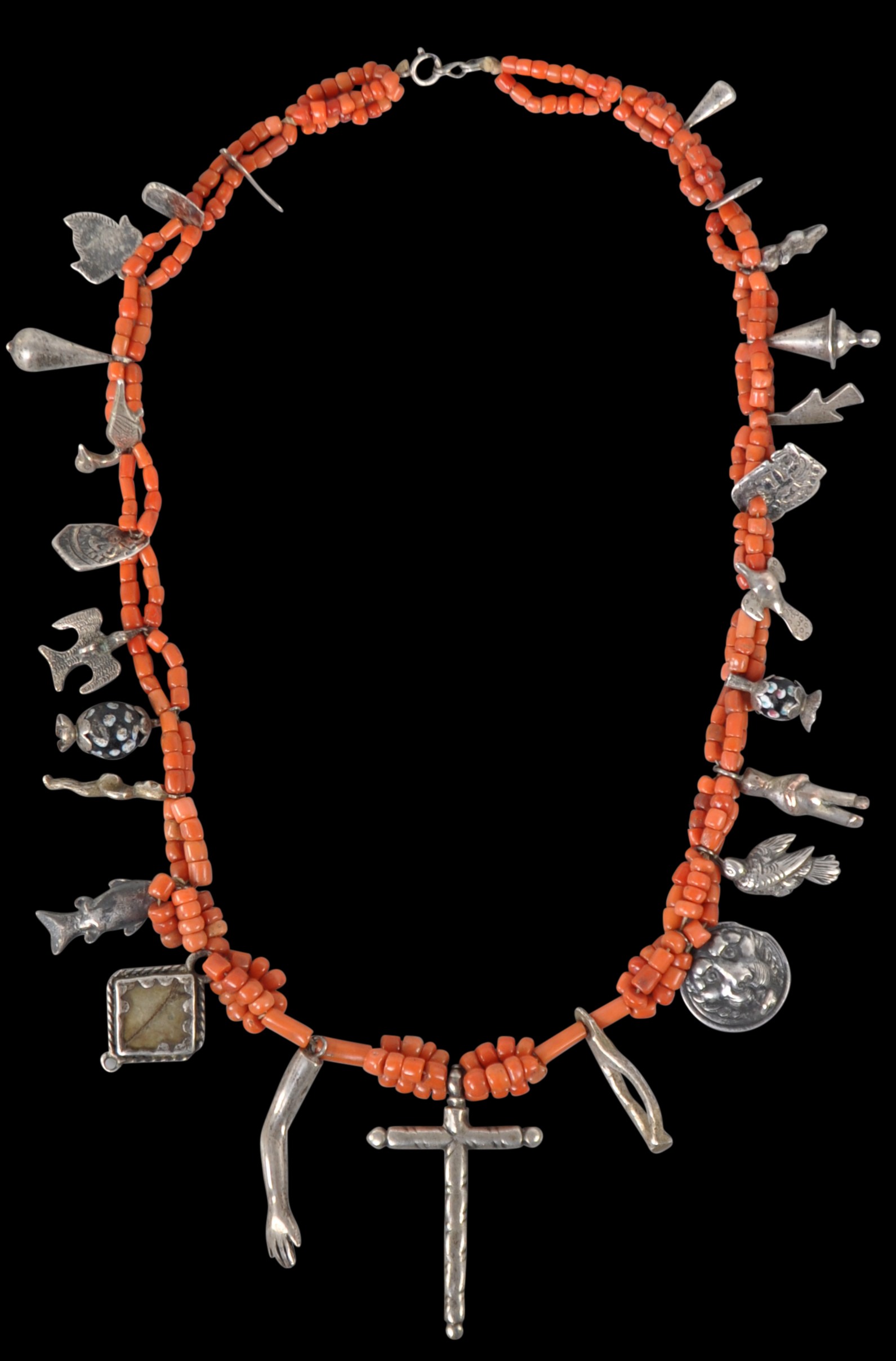
This fine traditional chakal necklace from the indigenous Maya people of Spanish colonial Guatemala comprises dozens of high-quality, natural coral beads, and multiple silver exvotos amulets and Spanish silver cobs. The necklace supports a pendant silver Cross.The Maya comprise almost half of Guatemala’s population. Traditionally, they wore necklaces of coral as a prestige, status item. After the Spanish conquest and their conversion to Christianity, silver and Christian silver elements were added. As coral became scarce, other beads were substituted, so it is important that this example uses genuine, old coral.
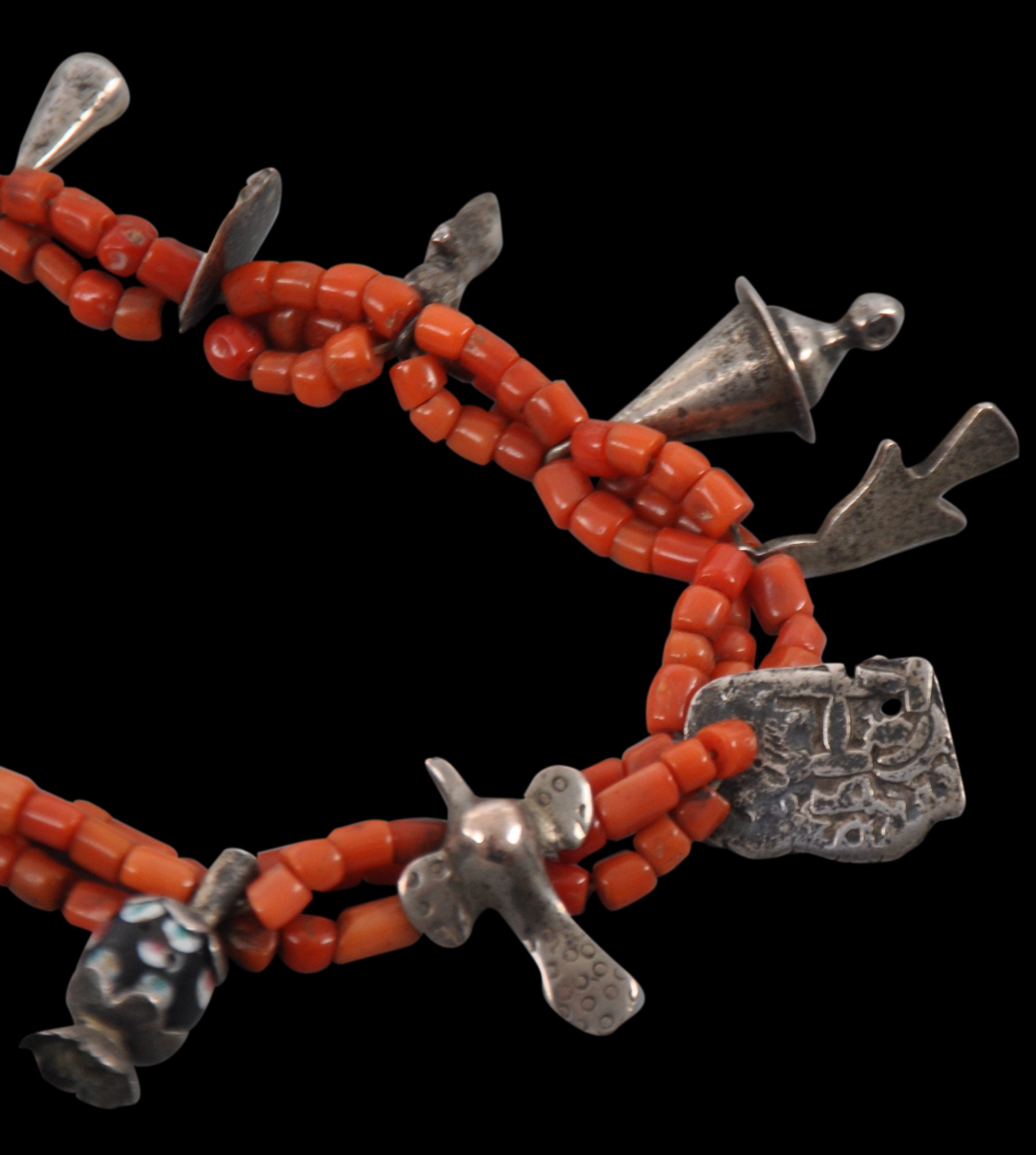
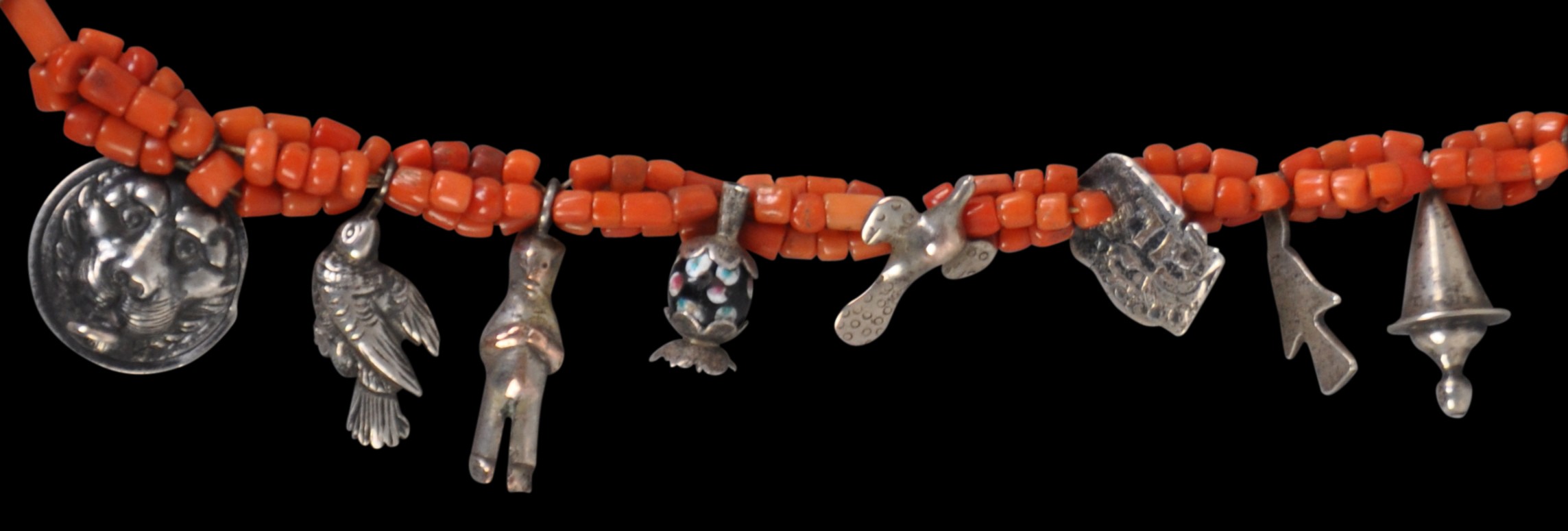
The silver exvotos amulets or milagros include an arm, a pair of legs, a silver fame with glass, a fish, a lion, human figures, birds, and a capped glass bead to emulate a pomegranate.
The Spanish silver cobs date from the 17th and 18th centuries. The cobs are hand-struck, irregular silver coins minted in the Spanish American colonies, though with the Galleon trade, they circulated in the Philippines too. The earliest examples were known as macuquinas. Typically, they have thick, chunky, irregular shapes with off-center strikes. Their thicknesses vary as is the case with those in the necklace here. They were valued for their metal content rather than appearance, and so effectively served as small silver ingots. The term ‘cob’ comes from the Spanish ‘cabo de barra’ meaning ‘end of the bar’ – cobs were sliced from silver bars. Generally, they were struck with the Spanish coat of arms (castles and lions) on one side, and a Jerusalem cross on the other, or the Pillars of Hercules with the motto Plus Ultra. However, often they are worn to the point that this detail is obscured. They were produced mostly in Mexico City, Potosí (Bolivia), Lima (Peru), and Antigua (Guatemala), and were traded across South and Central America in the 17th, 18th and early 19th centuries. They had differing denominations which included the 1/2, 1, 2, 4, and 8 reales (the famous ‘Piece of Eight’).
A related necklace but with dark glass beads rather than coral is illustrated in Leurquin (2003, p. 403).
The use of genuine coral here and silver is important. As these items grew more scarce, beads from glass and other materials were substituted and increasingly, the exvotos were cast with base metal instead of silver.
The necklace has a later catch mechanism allowing it to open and thus be more easily put on. There are three strands of coral beads for most of the necklace but then two strands for part of the way. This might be intentional (coral was valuable and sometimes their owners might sell some of their beads if they needed money), or it might represent a minor loss. The necklace is stable and wearable.
References
Leurquin, A., A World of Necklaces: Africa, Asia, Oceania, America from the Ghysels Collection, Skira, 2003.
Sierra de la Calle, B., Filipinas: Obras Selectas del Museo Oriental, Museo Oriental, Valladolld, 2004.