Enquiry about object: 10542
Rare Indian Rudraksha & Silver Shiva-Lingam Shrine
India 18th-19th century
height: 6.6cm, weight: 41.3g
Provenance
private collection, England/Spain
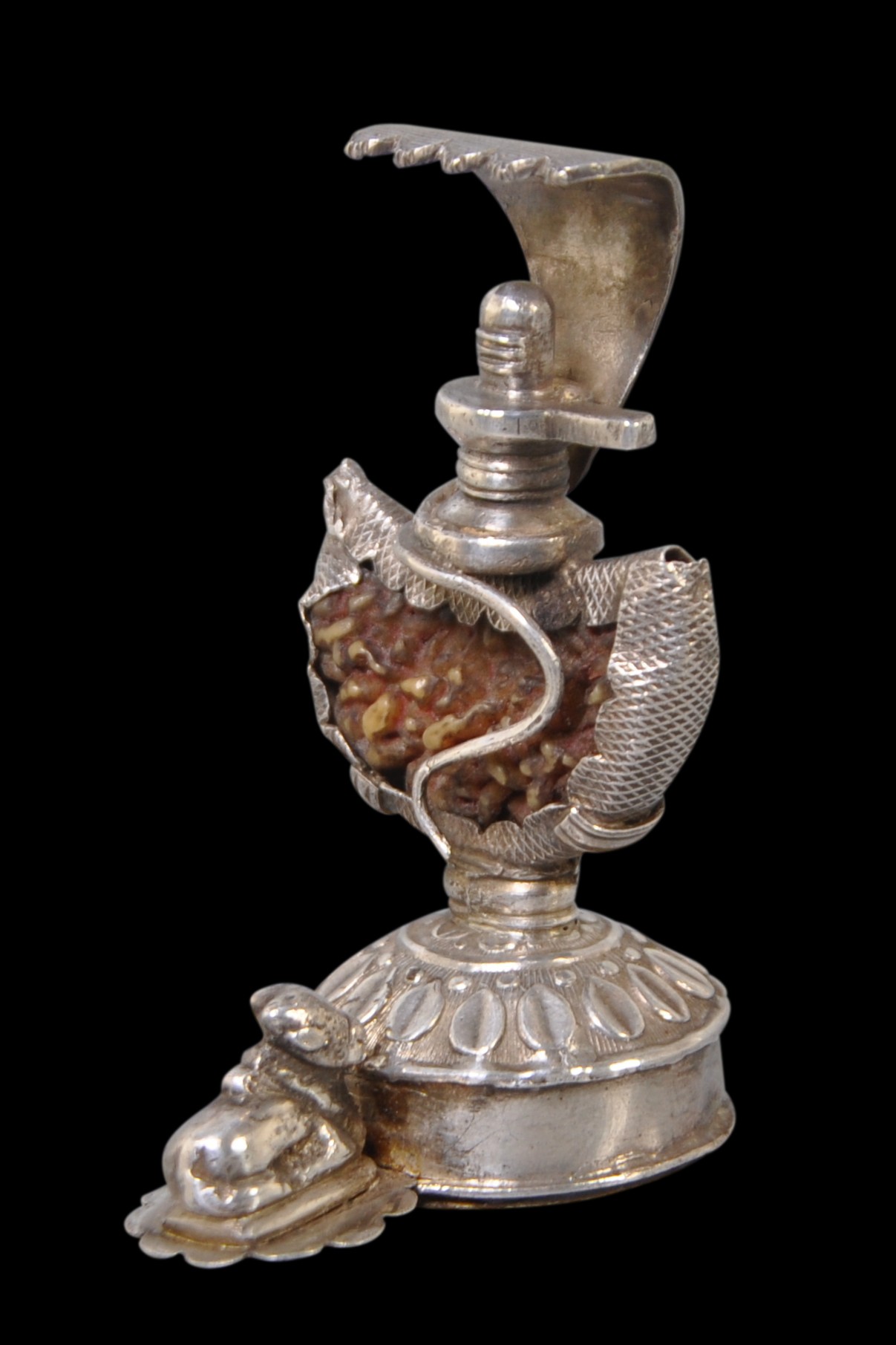
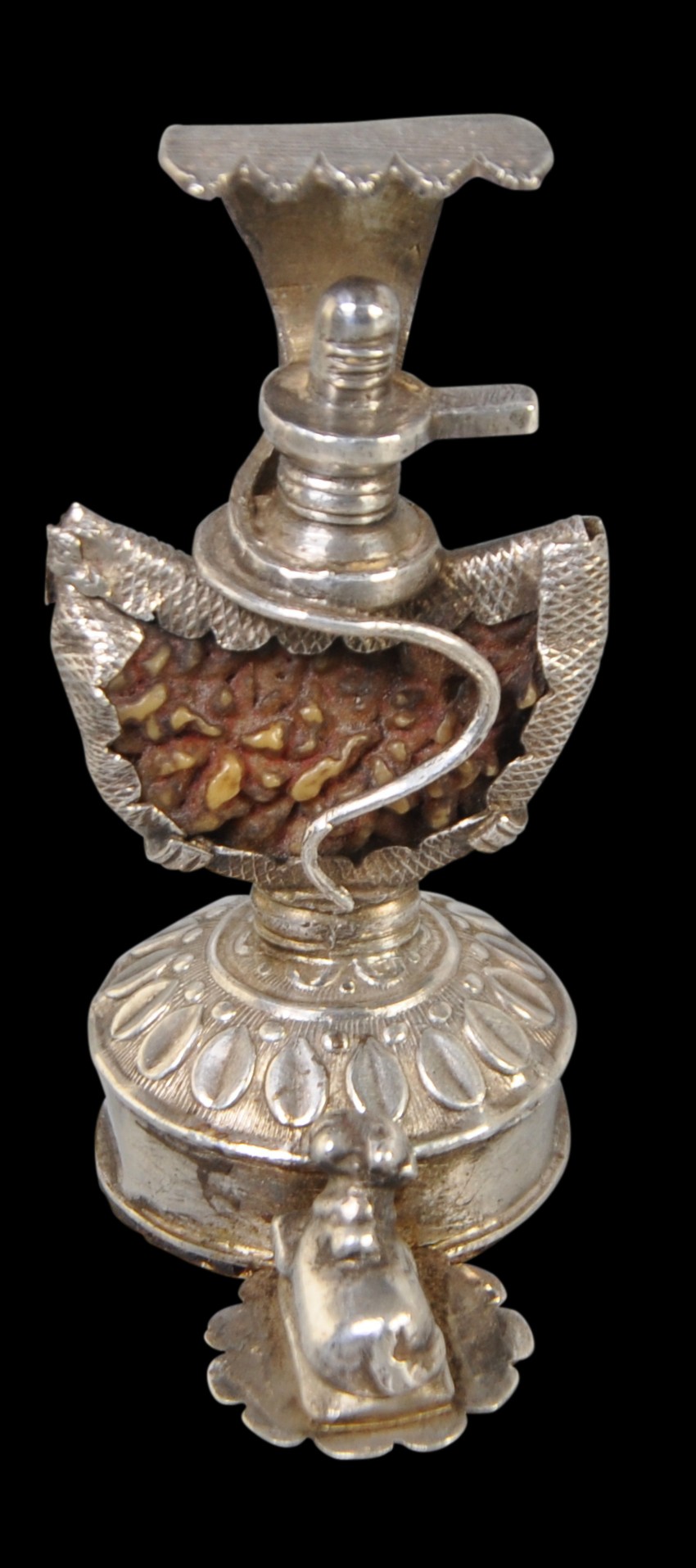
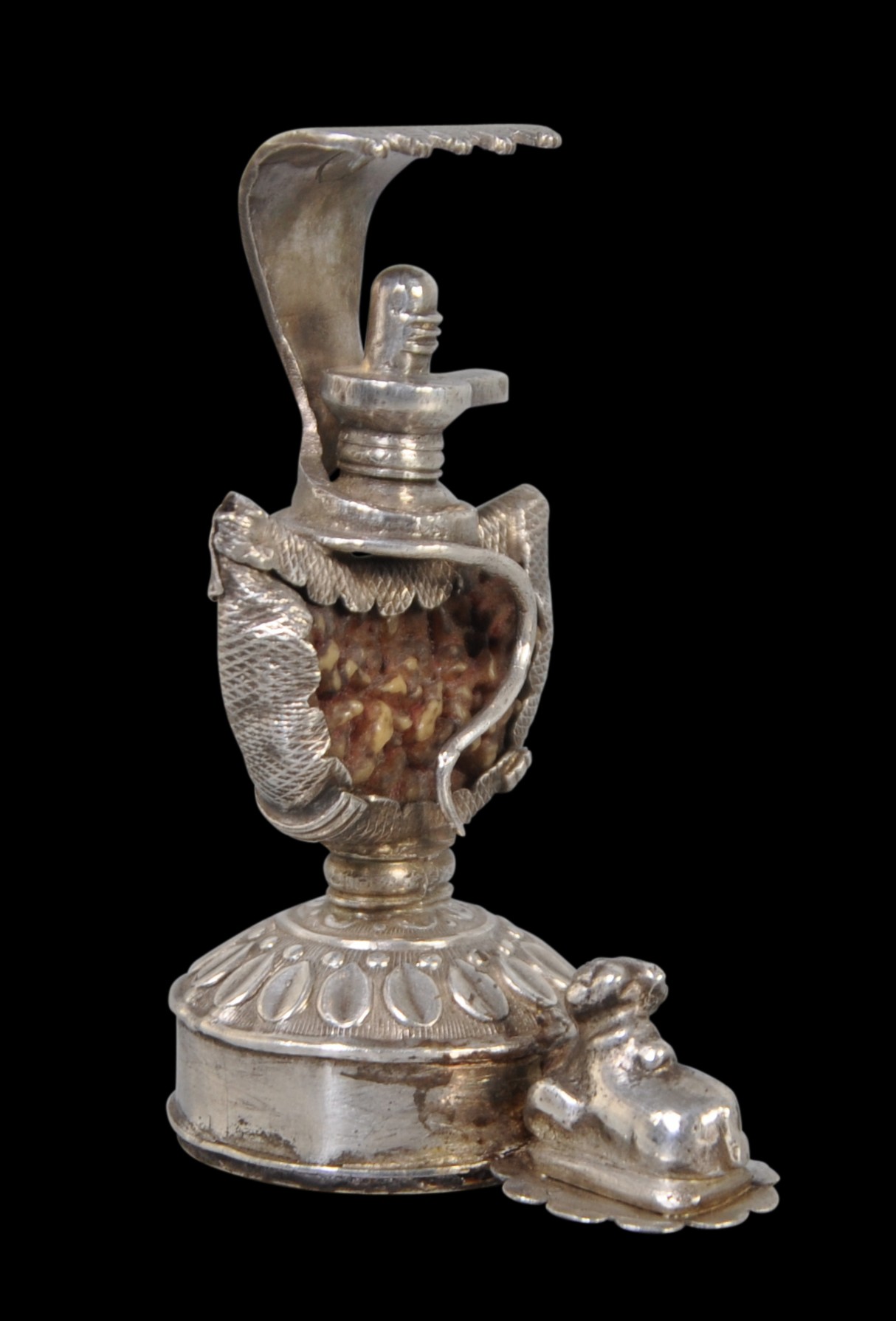
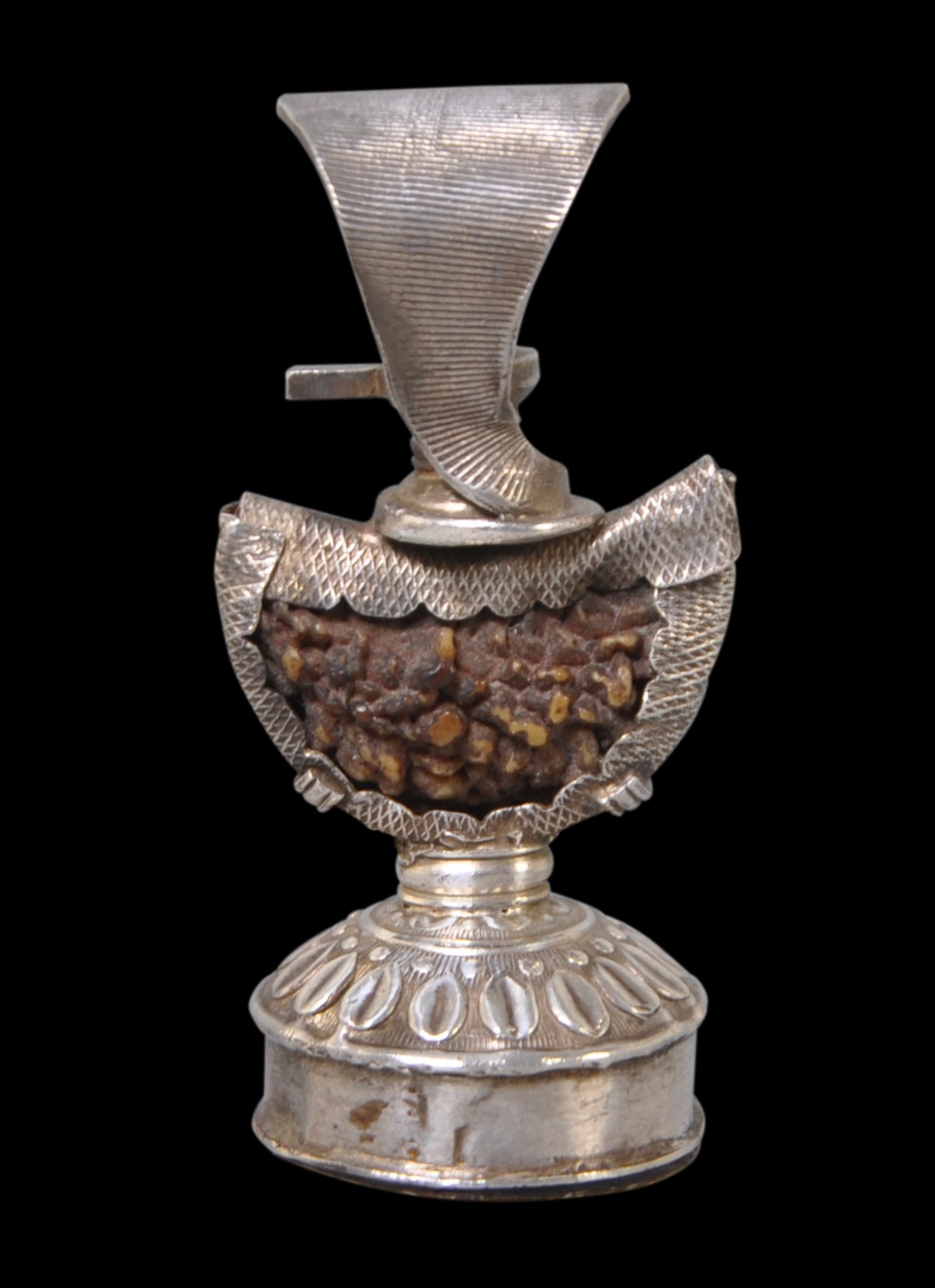
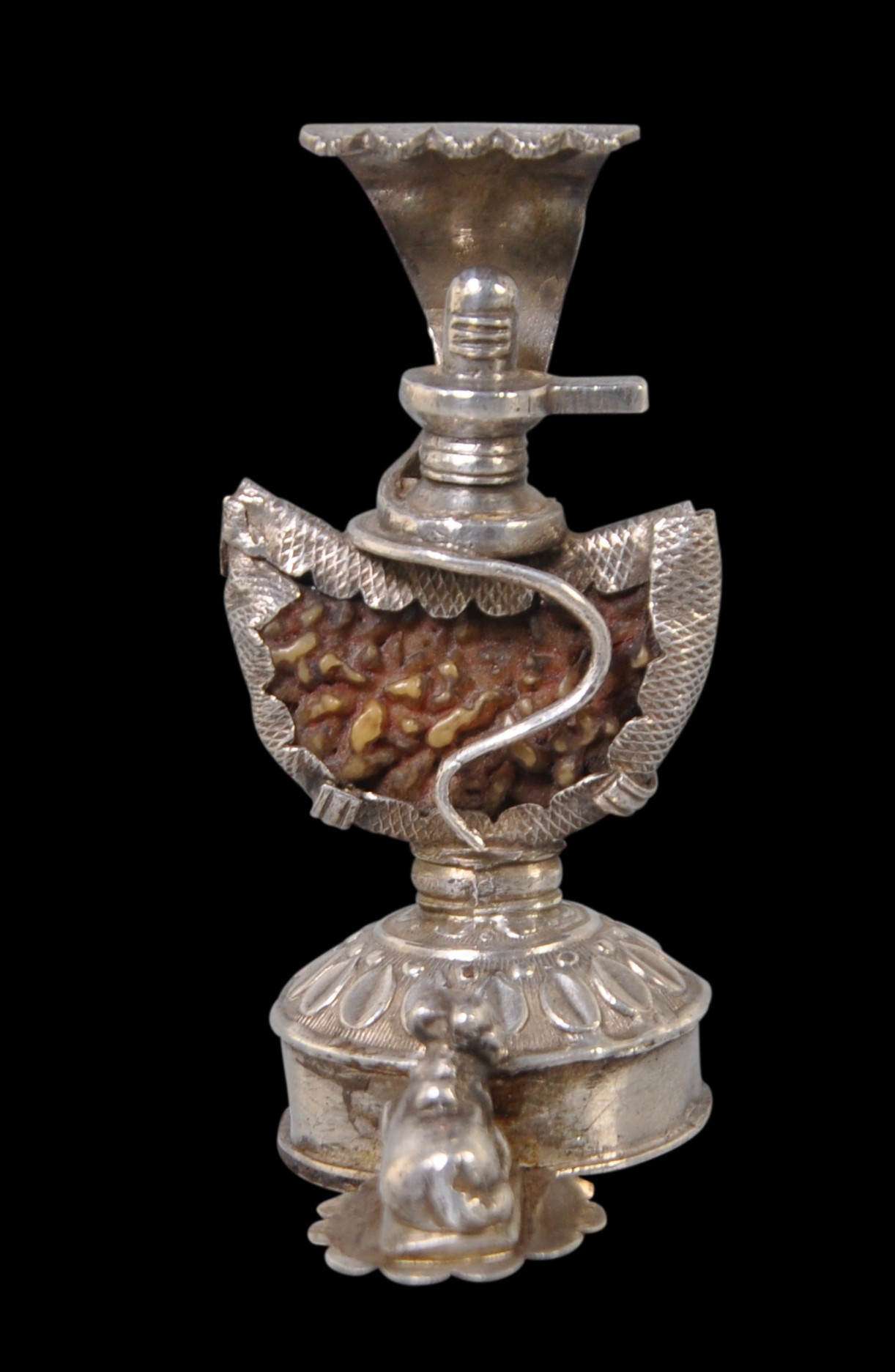
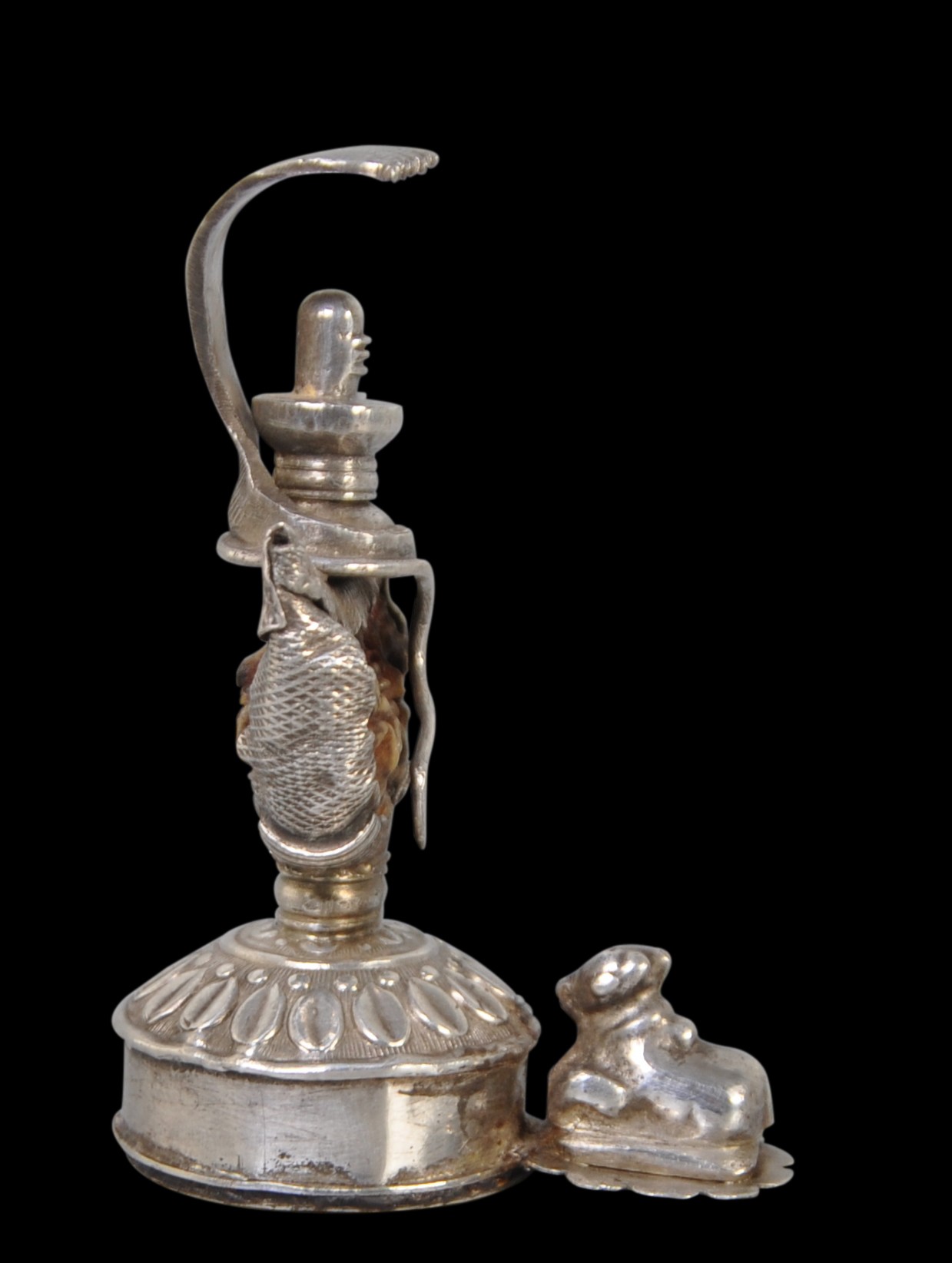
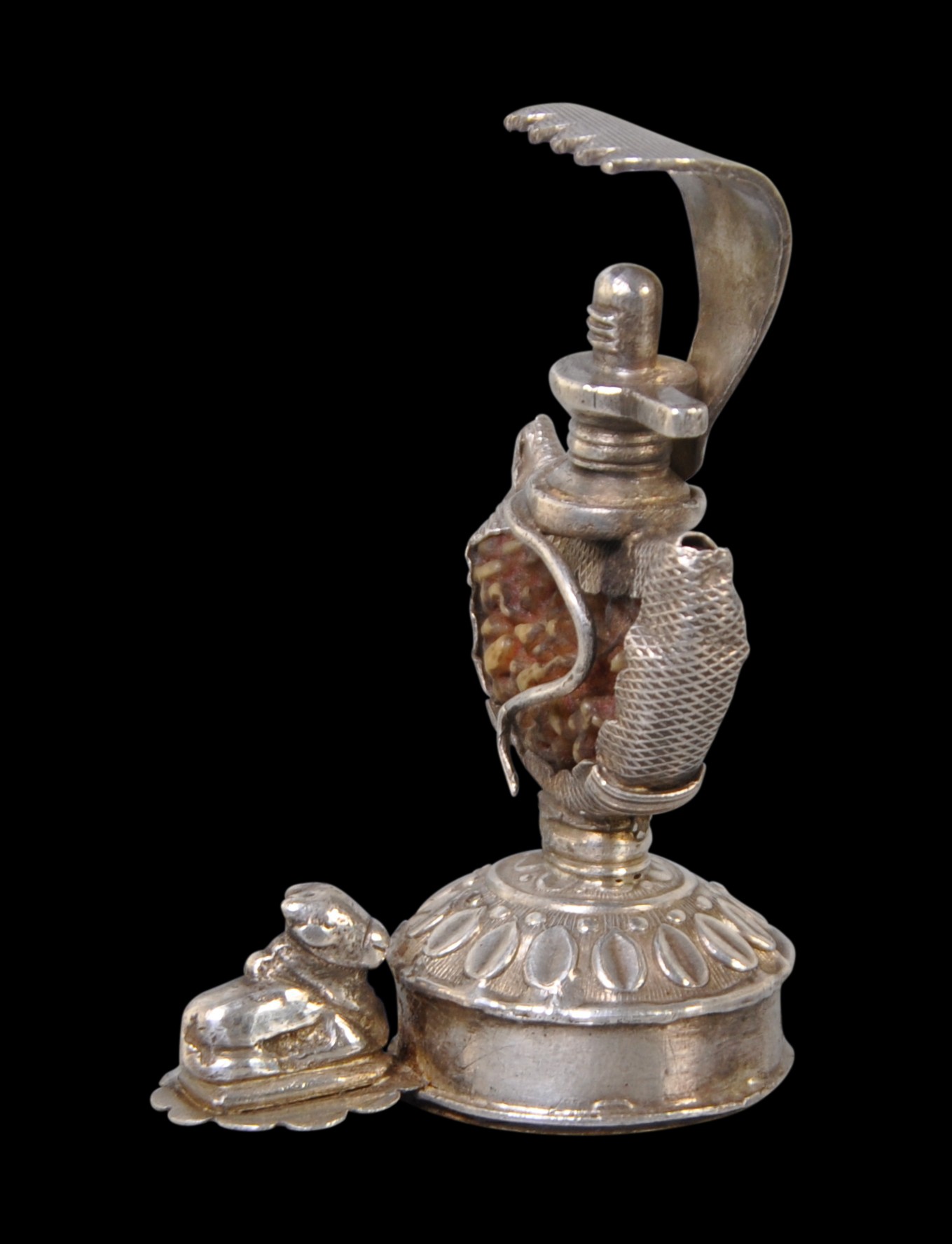
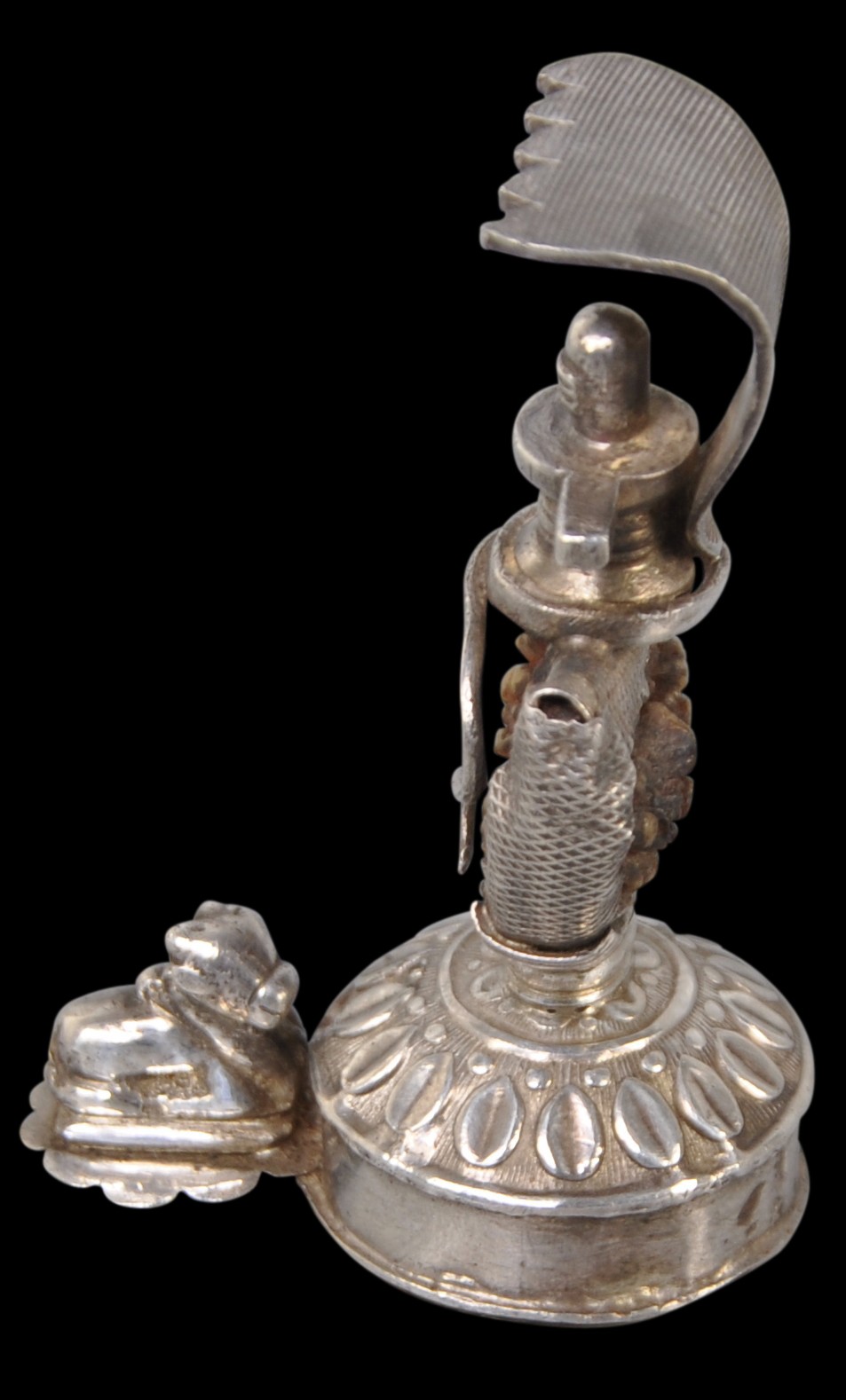
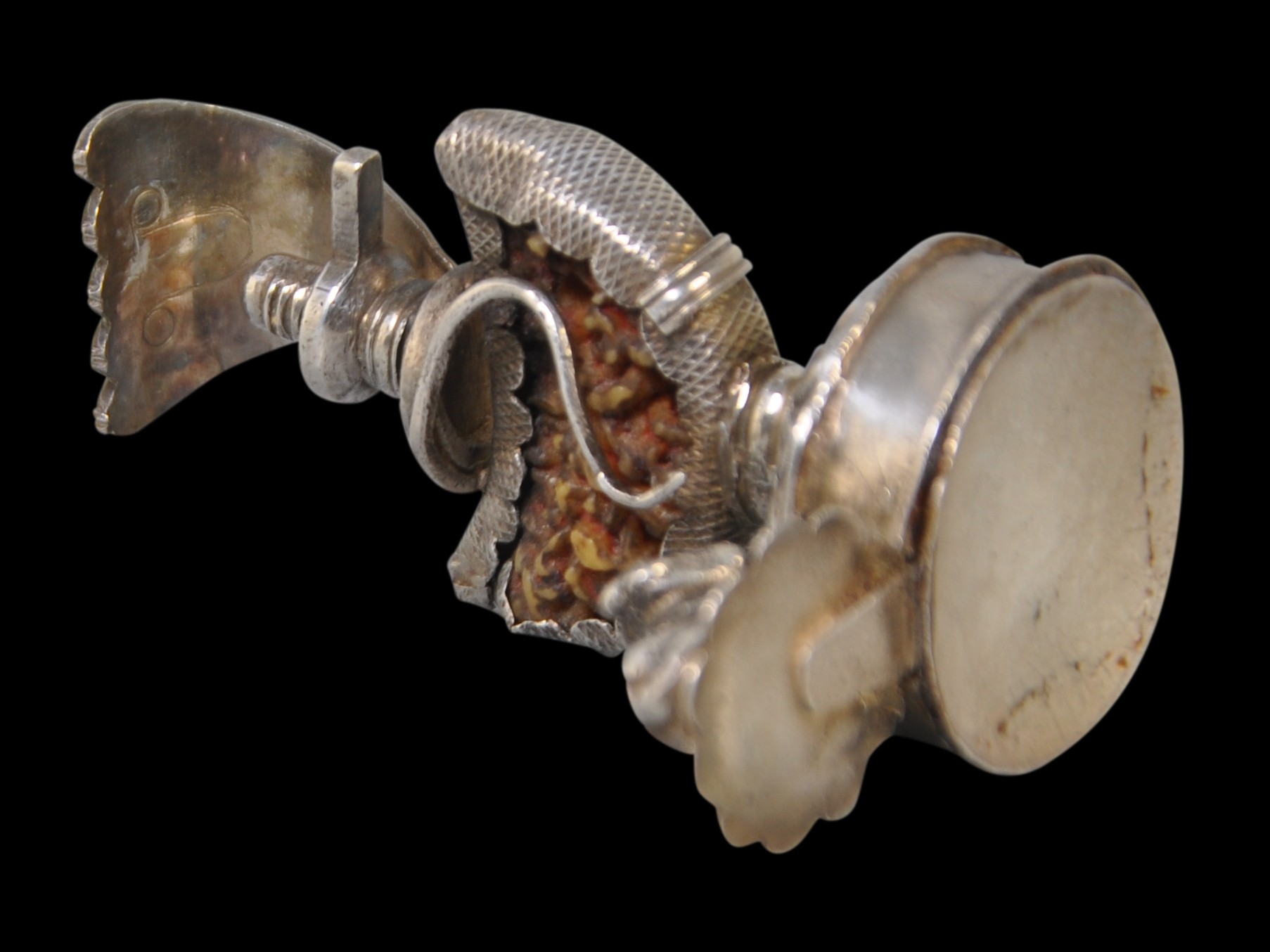
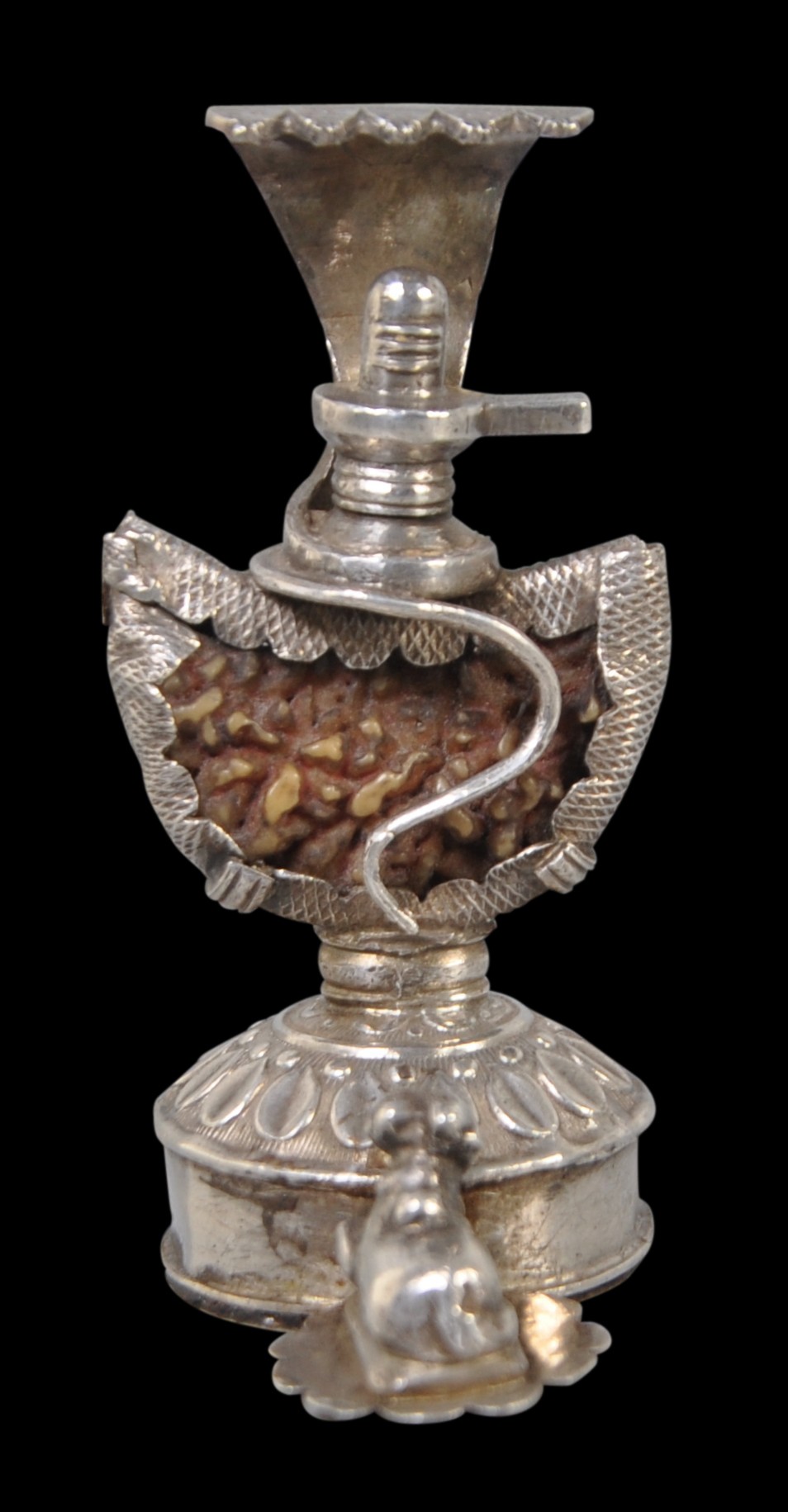
This very rare, small Shiva-lingam shrine combines a large, flattened rudraksha seed with worked silver mounts. It is mounted on a silver pedestal and surmounted by a silver Shiva-lingam over which there is a protective hooded cobra – its body and tail trail down over the rudraksha. A small silver recumbent Nandi (Shiva’s sacred cow) rests in front of the ensemble paying obeisance to both the rudraksha and the Shiva-lingam.
The rarity comes from the use of the rudraksha seed in the shrine, and its unusual size and shape.
Such a small item of personal veneration and worship might have been used for travel, and certainly for a personal shrine.
The rudraksha seed is the stone of the fruit of the utrasam tree and is believed to be sacred to Shiva. The name ‘rudraksha’ means ‘eye of Rudra’, an ancient name for Shiva. The seeds are made into beads and worn as rosaries, necklaces and bracelets by Shaivite devotees and priests. Many devotees never remove such items, considering them among their most sacred possessions.
The form of the lingam is based on the male genitalia and is an abstract representation of the Hindu deity, Shiva. Lingams are used in worship in temples and smaller shrines, including household shrines. The lingam is seen as a symbol of the energy and potential of Shiva himself.
The lingam is often represented rising from the yoni, the female symbol, the form of which is based on the female genitalia.
The physical union of a lingam with a yoni represents the indivisible two-in-oneness of male and female. Neither representations have any overt sexual meaning however. Indeed, the two are more symbols of power, fertility and prosperity than anything that is sexually charged.
The Shiva-lingam rudraksha shrine here is in excellent condition.
References
Bala Krishnan, U.R. et al, Icons in Gold: Jewelry of India from the Collection of the Musee Barbier-Mueller, Somogy, 2005.
Untracht, O., Traditional Jewelry of India, Thames & Hudson, 1997.