Enquiry about object: 7452
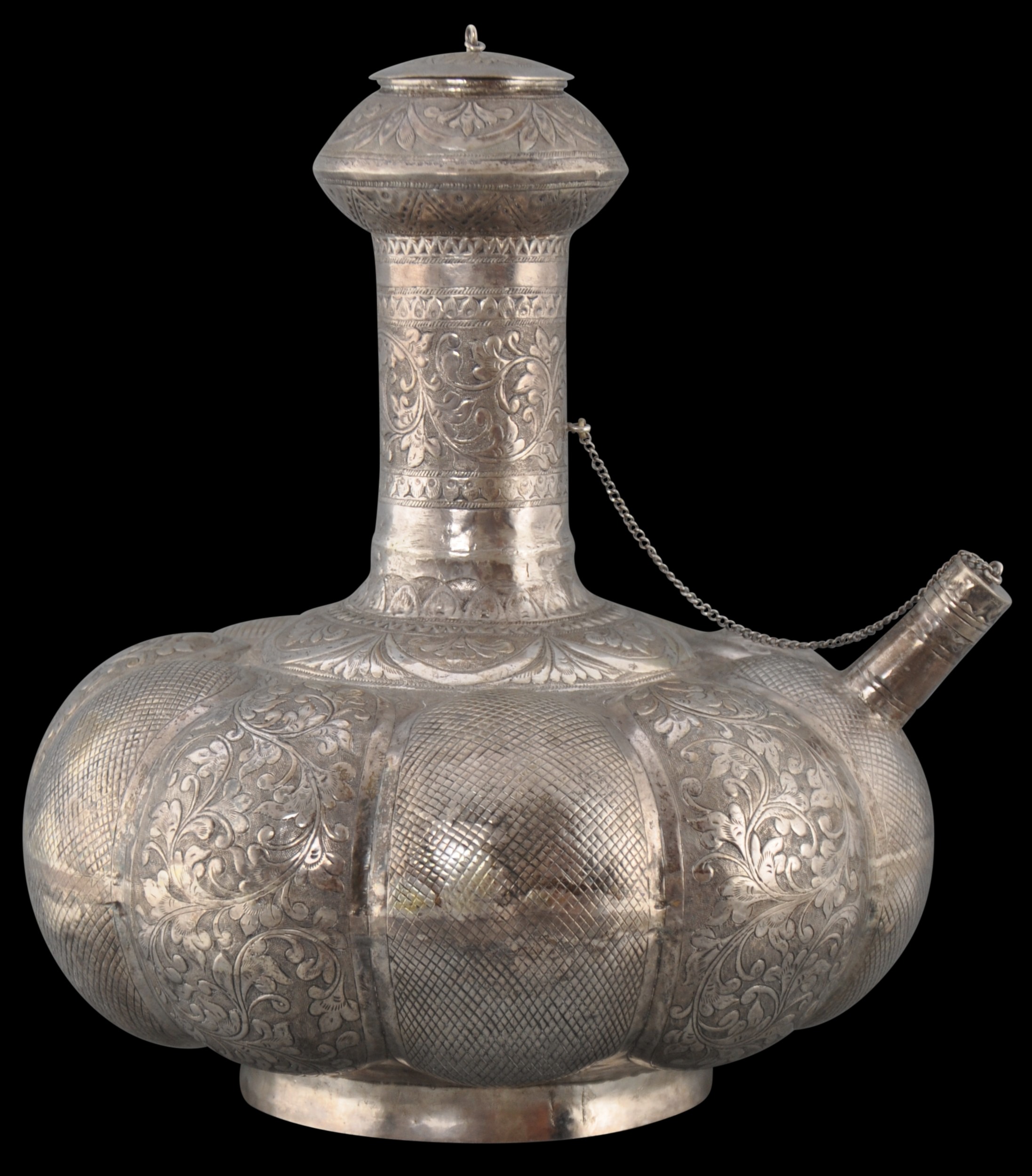
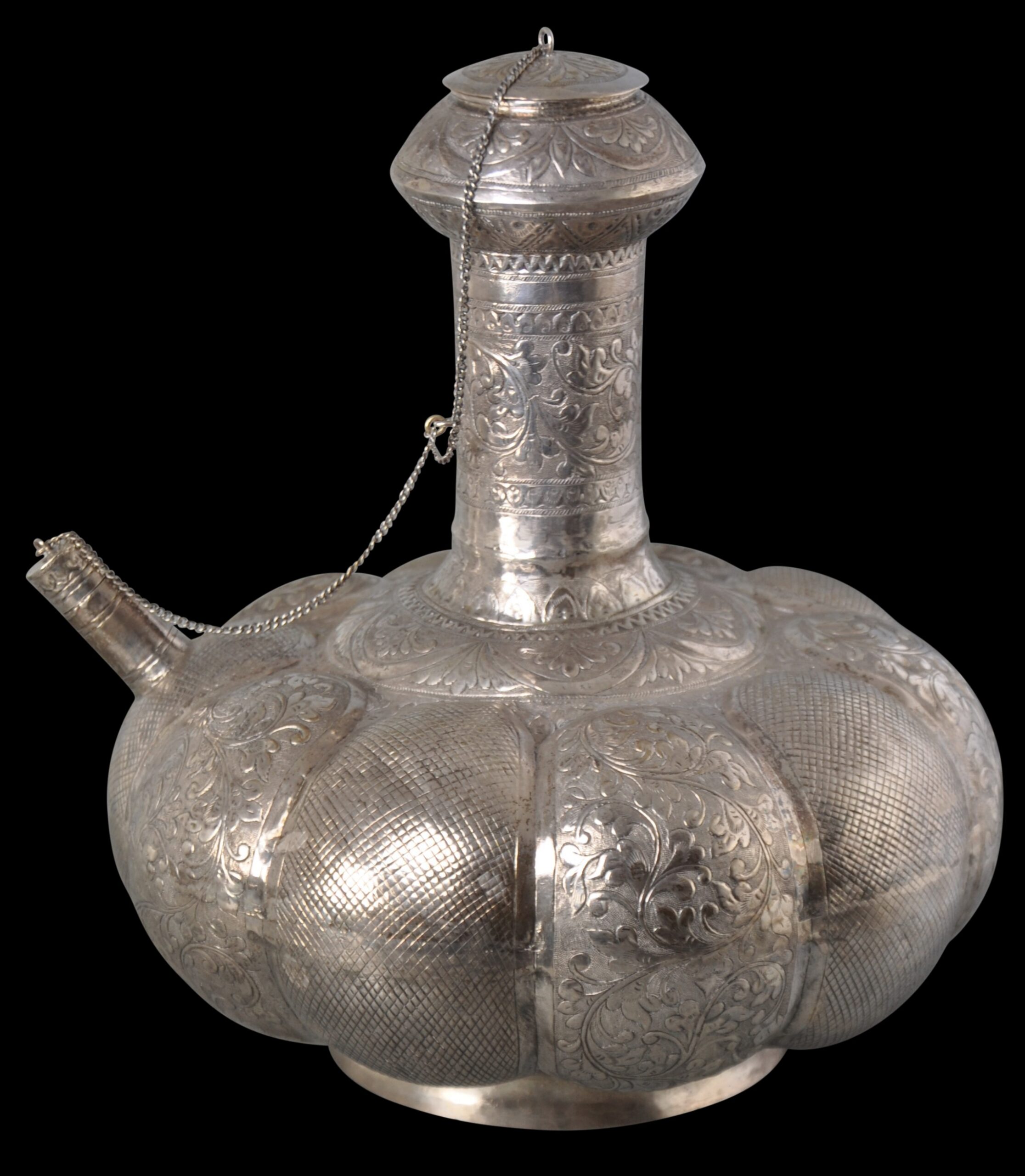
Large Malay-style Silver Water Vessel or Kendi
Singapore circa 1920
height: approximately 25.5cm, width (including spout): approximately 23cm, weight: 394g
Provenance
private collection, London
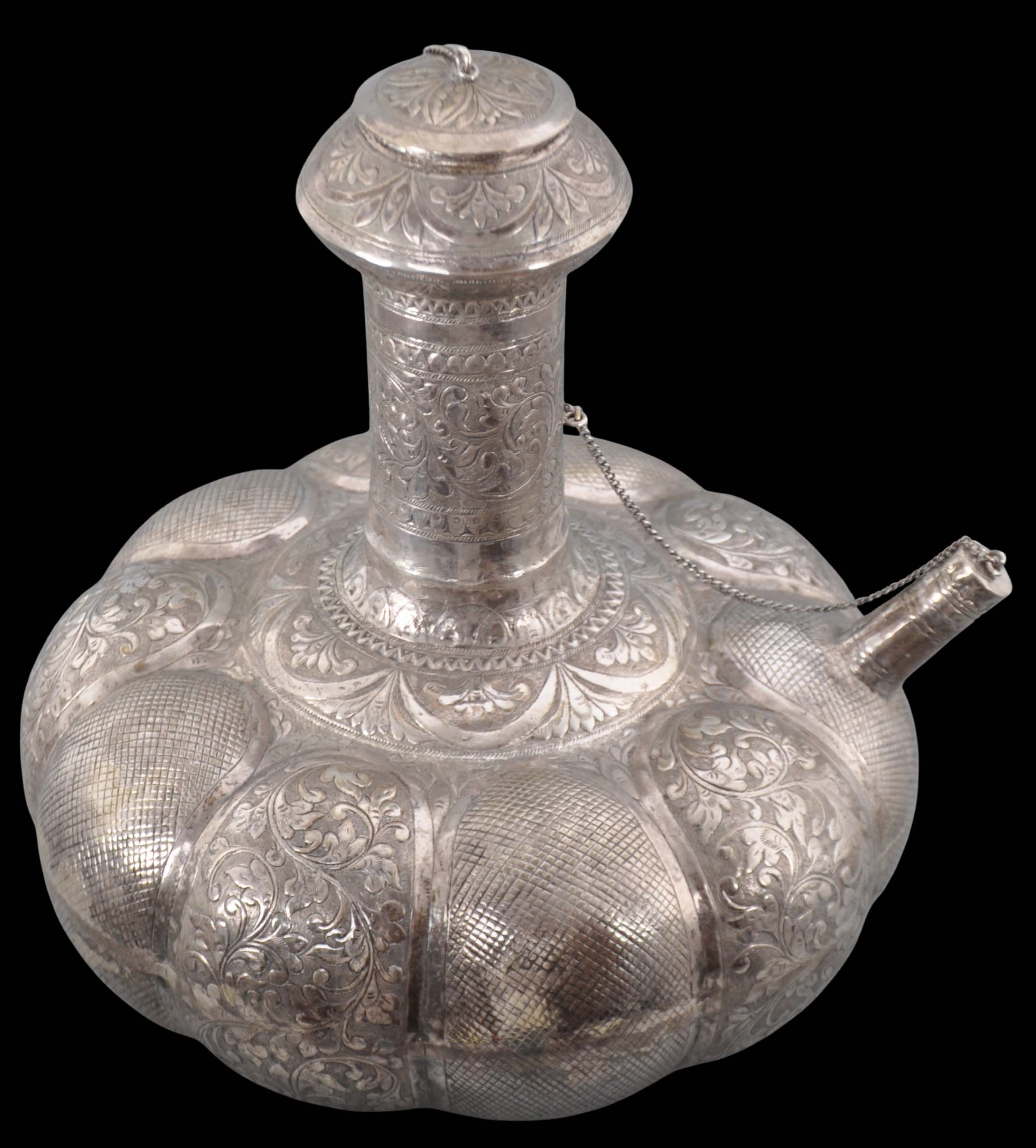
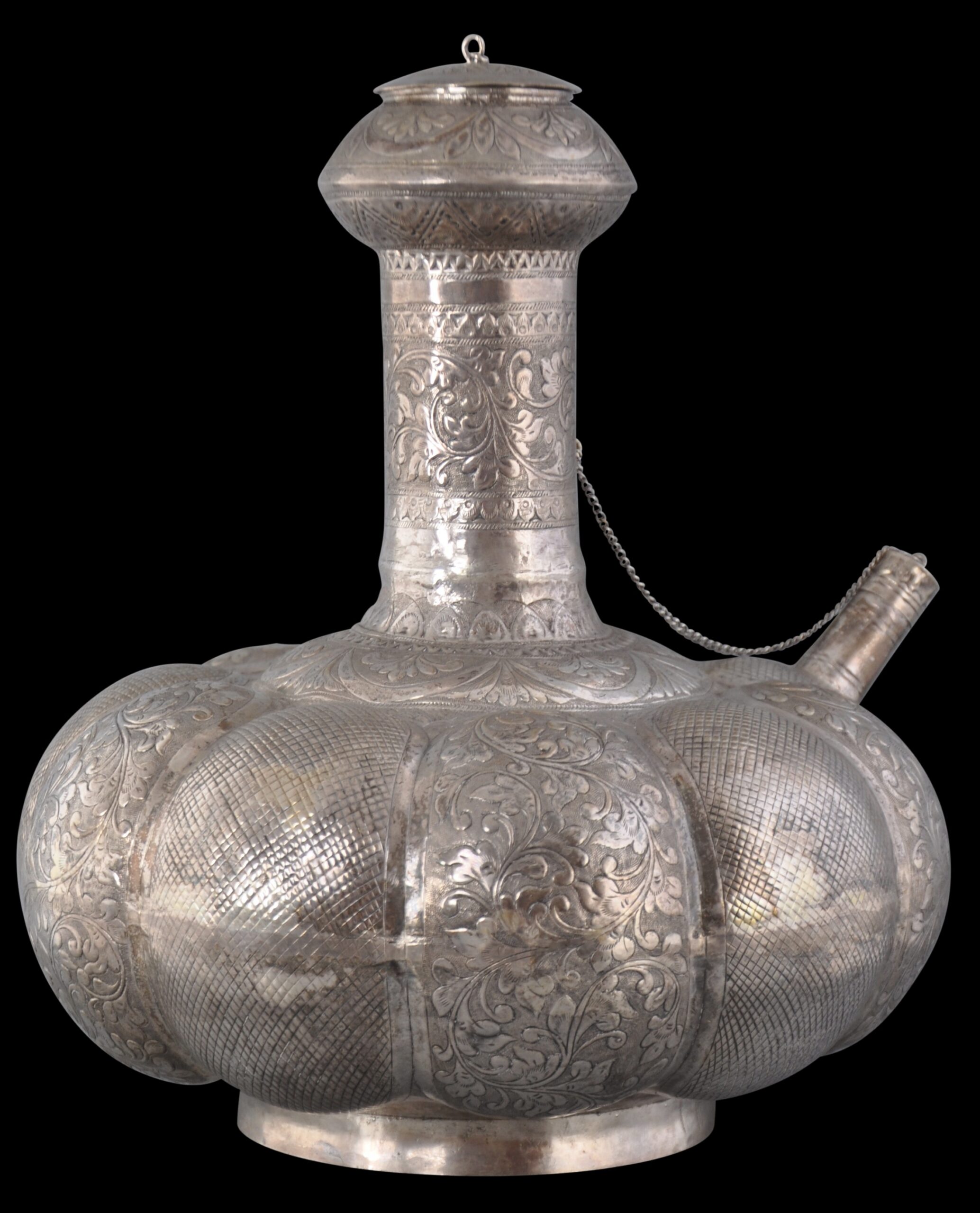
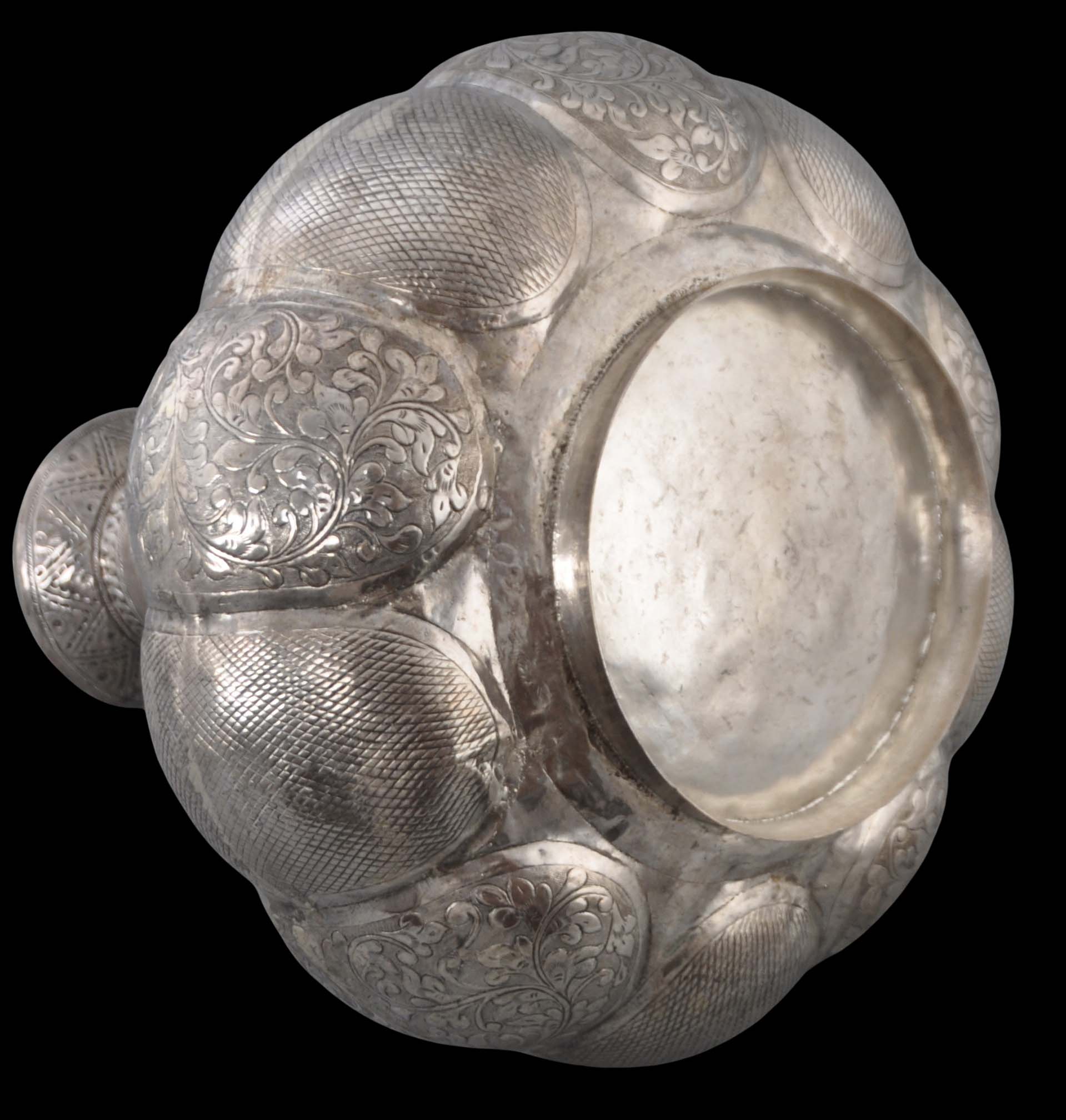
This large, fine, silver-alloy vessel based on a Malay water flask or kendi has a flattened pumpkin form with lobed sides, and a thin, cylindrical neck, with a domed stopper attached to the neck by a fine silver chain. It sits on a low ring foot. A thin, cylindrical spout rises from the body. It too has a stopper attached to the neck by a silver chain.
The lobed body is engraved with foliate motifs alternating with cross-hatching. The neck is similarly engraved with foliate motifs.
The vessel is large but weighs little – it is a feat of silversmithing to make an object as large as this with only a modest amount of metal.
It is almost certainly is the product of local Chinese silversmiths working to Malay designs in Singapore around 1920 for a local European clientele.
In the past, such silver has been ascribed either to Riau or Sumatra but such large pieces of finely hammered silver alloy sheet only started to appear in collections from the 1920s-30s onwards, some decades after it was widely reported that Malay silversmiths had largely ceased working, the consequence of changing tastes, colonisation, and the decline of the power and thus wealth of the Malay sultans in Sumatra and the Malay Peninsula.
A local report at the time mentions workshops in Singapore where local silversmiths were producing large items of light-weight silver in a Malay style to satisfy local European demand (Backman, 2024, p, 33). As such, this stand is a fine example of one of the first types of handicrafts unique to Singapore.
That such items were intended for the European market is attested to by the fact that today, such items are found in Europe and not in the Malay world. Those that are now in Malaysia or Singapore today usually were acquired in Europe recently and brought back to the region by local collectors.
As mentioned, the vessel is an intriguing part of Singapore’s material culture story, though not necessarily a part of the story of Malay silversmithing.
The vessel is free of dents, breaks or repairs. The sides have remnants of soldering from when the item was made.
This actual item is illustrated in Backman (2024, p. 31).
References
Backman, M., Malay Silver and Gold: Courtly Splendour from Indonesia, Malaysia, Singapore, Brunei and Thailand, River Books, 2024.
Evans, I.H.N, ‘Forgeries of Malay silverware’, Journal of Federated Malay States Museums, Vol. VII, 1925.
Sheppard, M., Taman Indera: Malay Decorative Arts and Pastimes, Oxford University Press, 1972.