Enquiry about object: 10537
Massive, Superb South Indian Gold Ear Pendants (Kathila)
South India, probably Kerala 19th-early 20th century
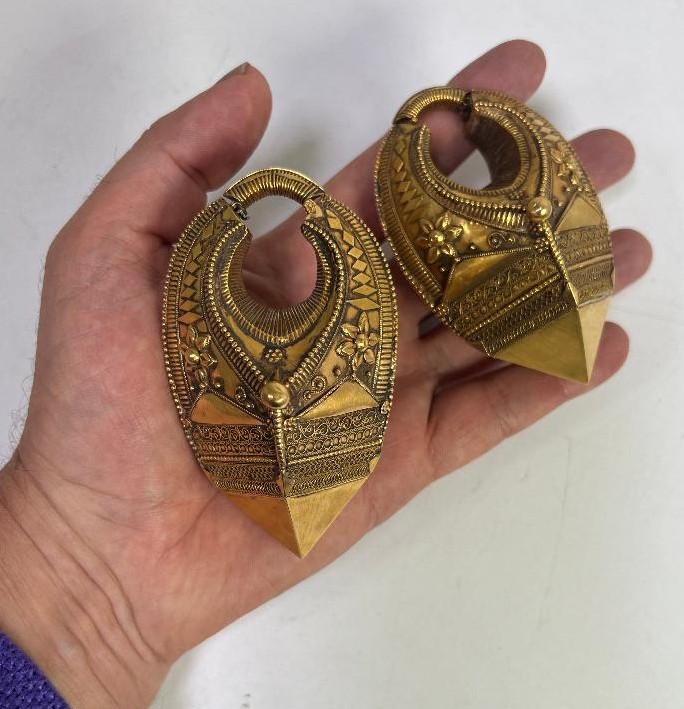
heights: each approx. 10cm, widths: approx. 5.5cm, combined weights: 204g
Provenance
UK art market
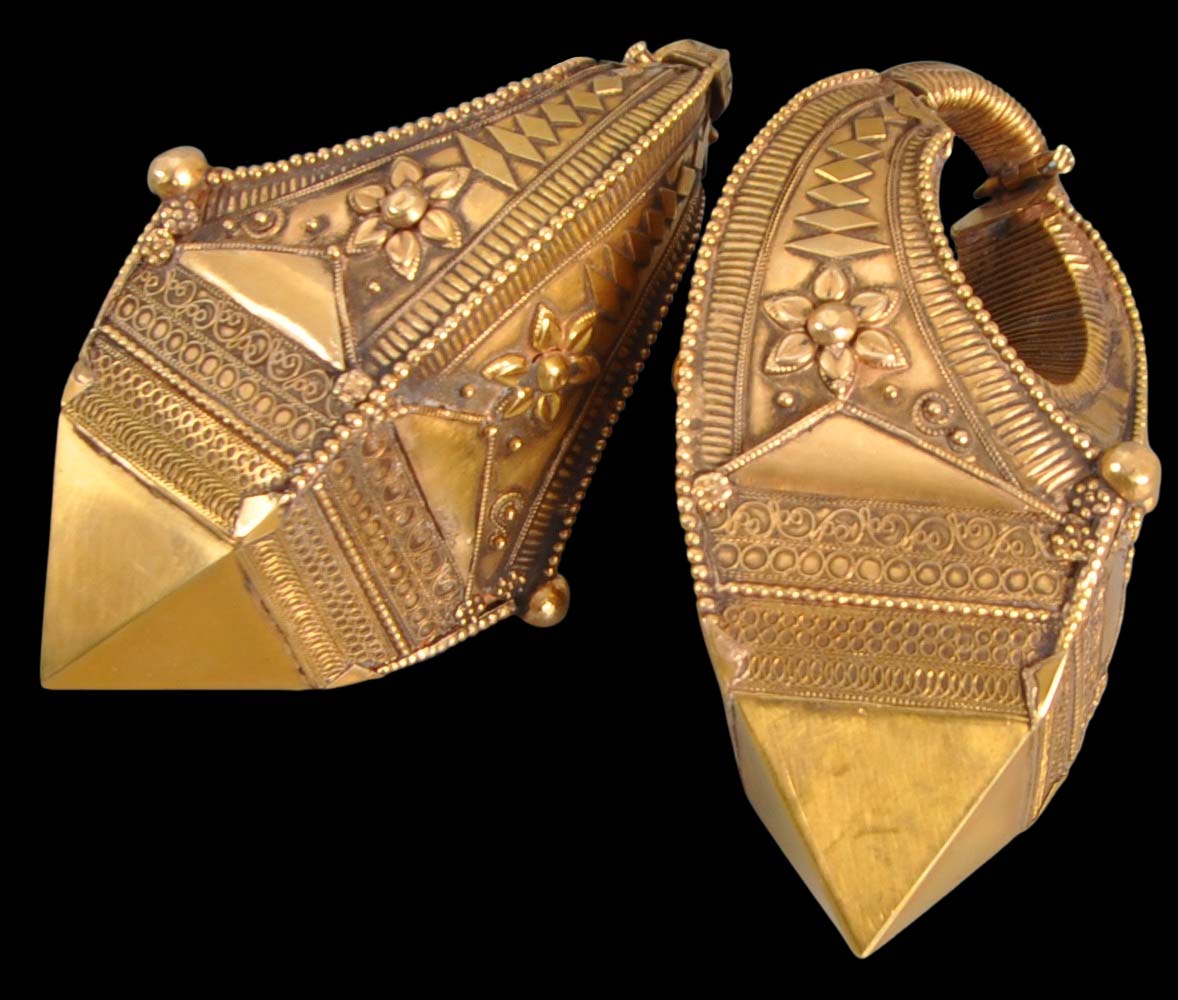
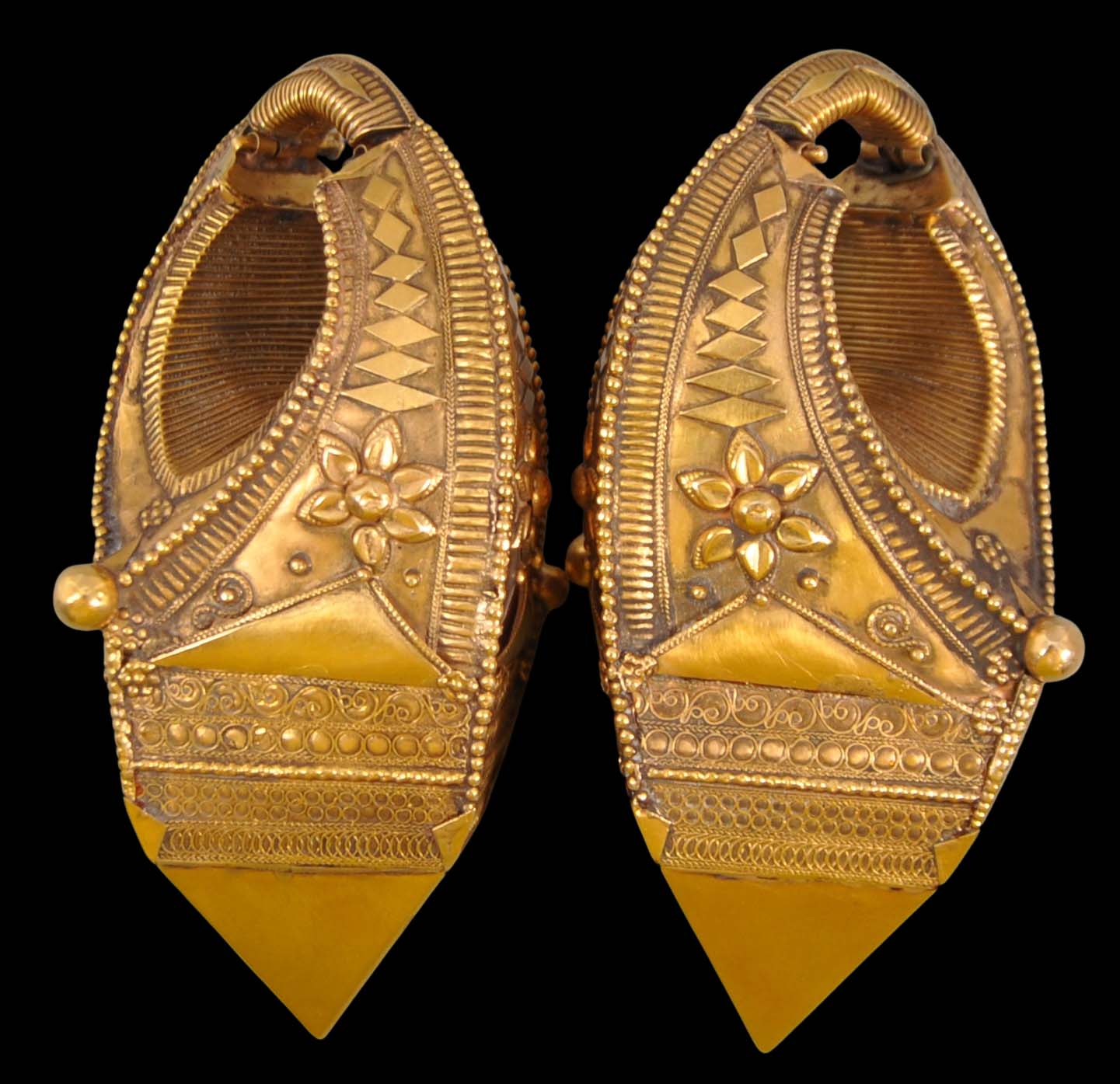
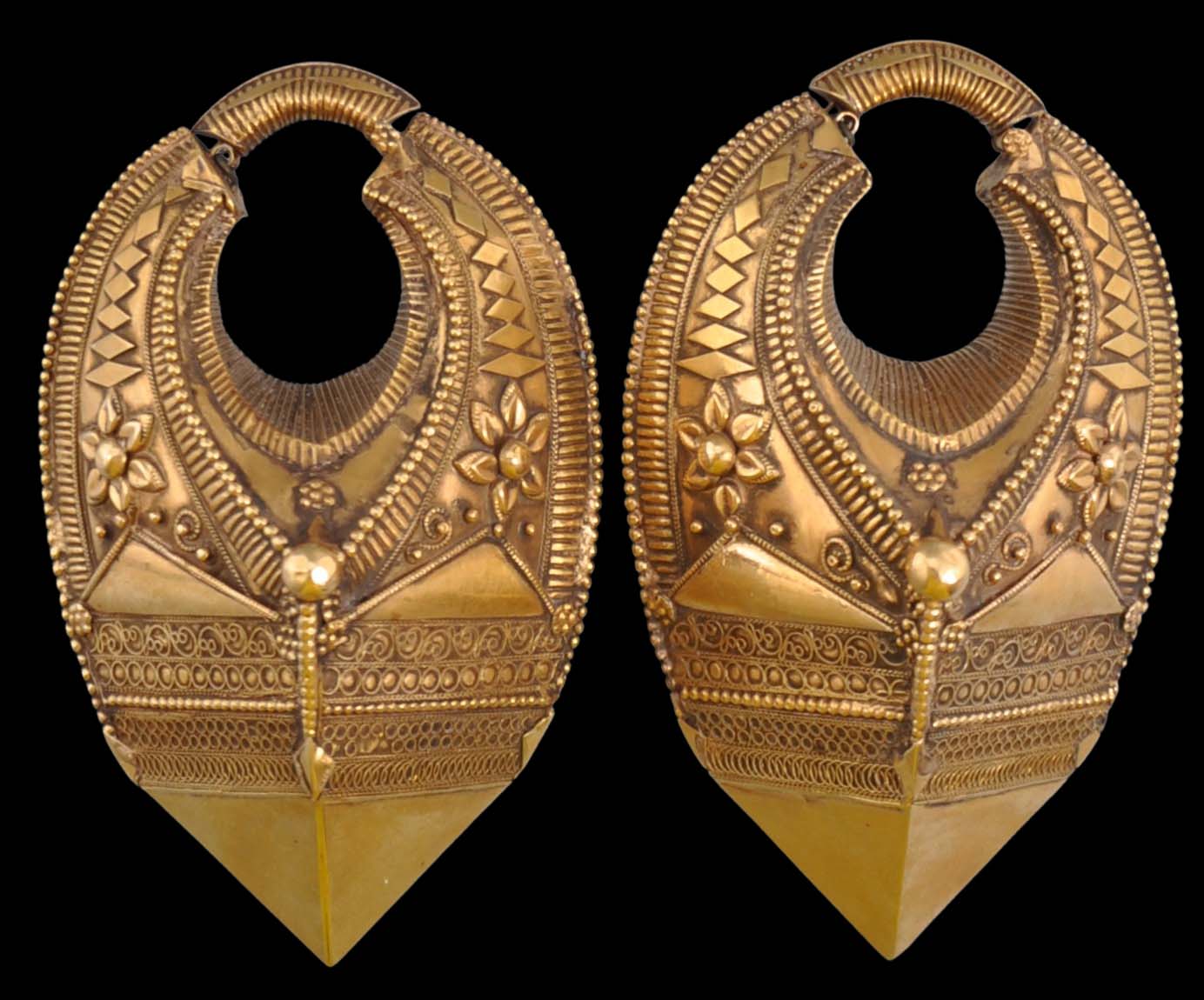
This monumental pair of gold earrings is notable for their incredible size, the quality of the work. The comprise thick gold sheet over a lac core. They are also notable for their weight – they are more massive than smaller examples in that their weight is proportionately greater. It is unlikely that a similar pair with these proportions and dating to the 19th-early 20th century will come onto the market.
A near identical pair is in the collection of the Barbier Mueller Museum, Geneva, and are illustrated in Bala Krishnan (2005, p. 116-117).
This pair, and the Museum’s pair, almost certainly are by the same maker. Both are of the same size. It is likely that the two pairs were special commissions.
They are of inverted pyramidal form, and are known as kathila. They come from Kerala state on the western side of India’s southern tip. They are decorated with applied gold filigree, gold flowers and lozenges, and granulation work.
The fine ribbing inside the hoop of each is itself remarkable.
The shape appears to be based on a fruit or perhaps the banana flower.
They were worn in Kerala by Mappila Muslim women but made by Hindu goldsmiths. The Mapilas grew wealthy from their trade with Arab merchants from the Gulf.
The tops of the ear ornaments open with a hinge mechanism.
The pair here is in excellent condition. There are no losses, no dents and no repairs. They are superb.
References
Aitken, M.E., When Gold Blossoms: Indian Jewelry from the Susan L. Beningson Collection, Asia Society & Philip Wilson Publishers, 2004.
Bala Krishnan, U.R. et al, Icons in Gold: Jewelry of India from the Collection of the Musee Barbier-Mueller, Somogy, 2005.
Ganguly, W., Earrings: Ornamental Identity and Beauty in India, B.R. Publishing Corporation, 2007.