Enquiry about object: 10481
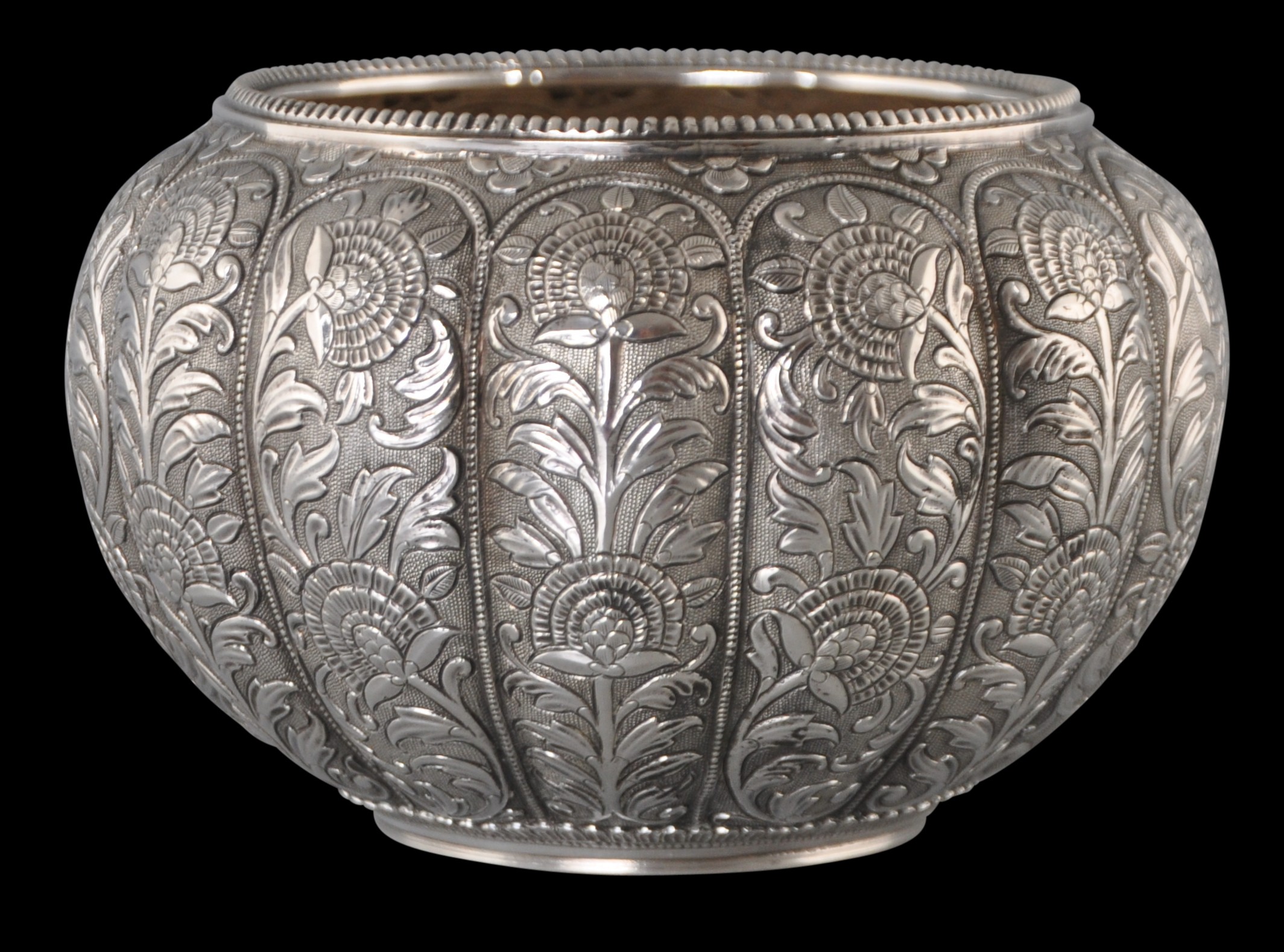
Exceptional Mughal-Style Indian Silver Bowl
India, probably Madras (Chennai) late 19th century
height: 7.8cm, width: approximately 11.6cm, weight: 342g
Provenance
private collection, England
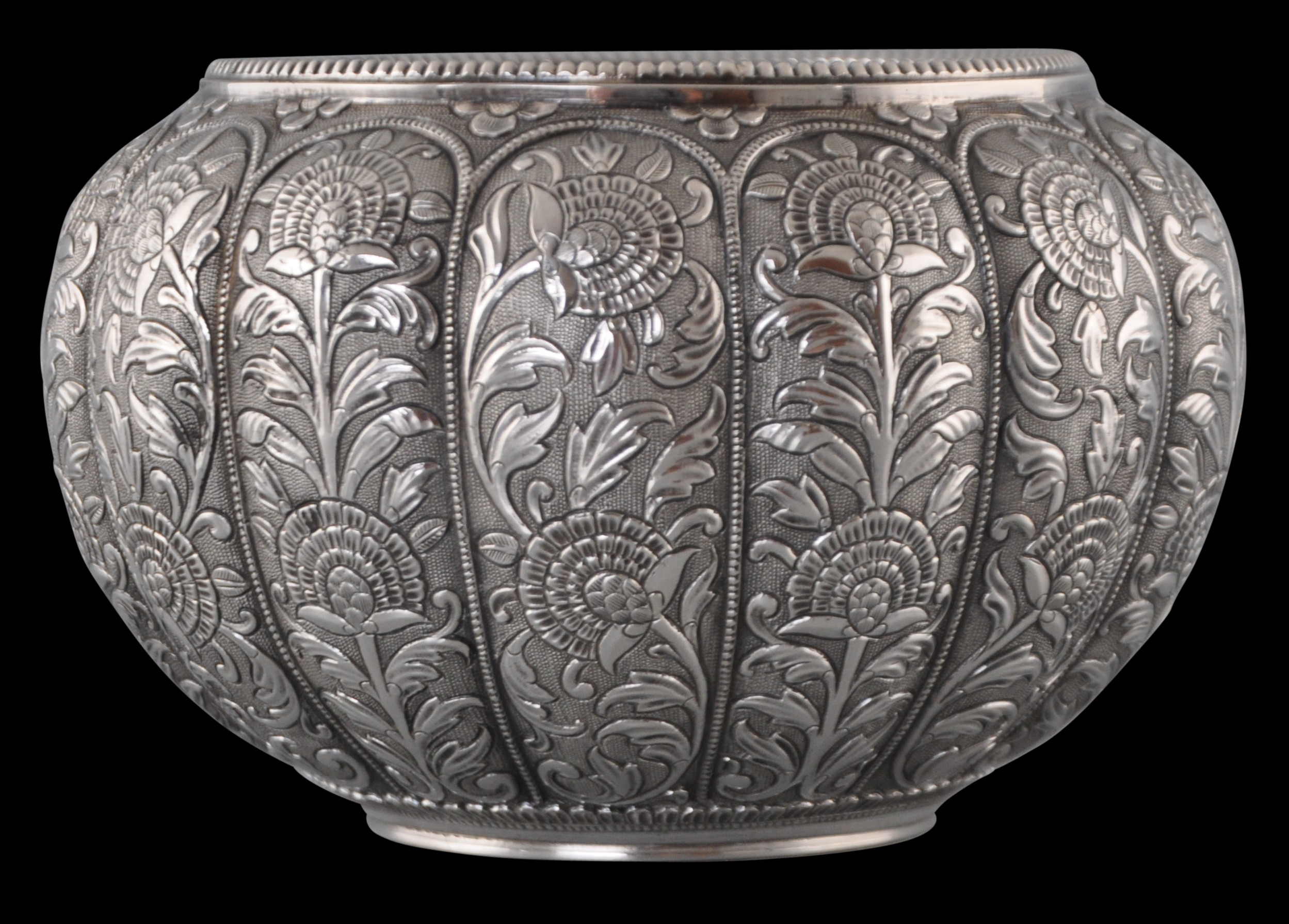
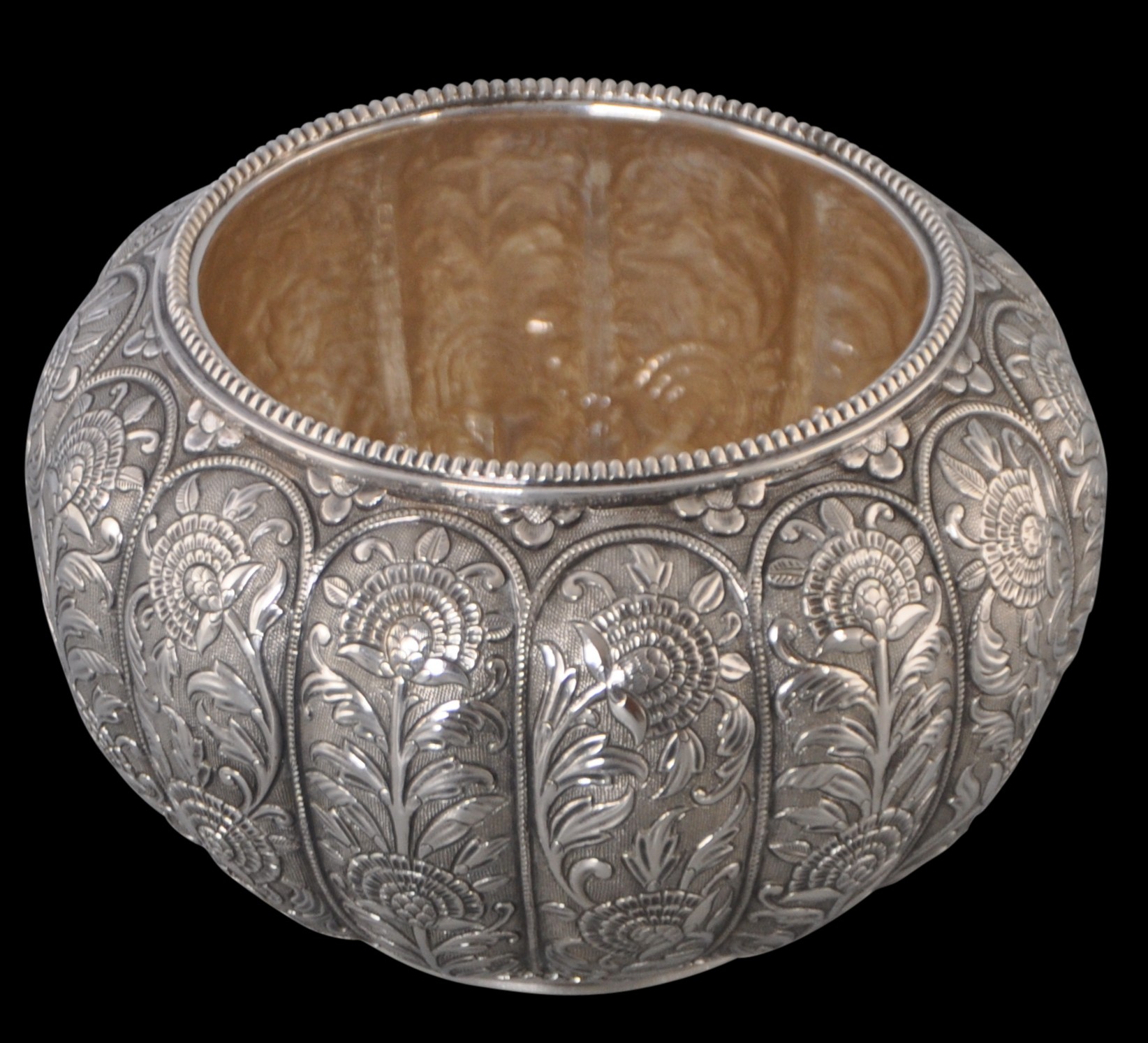
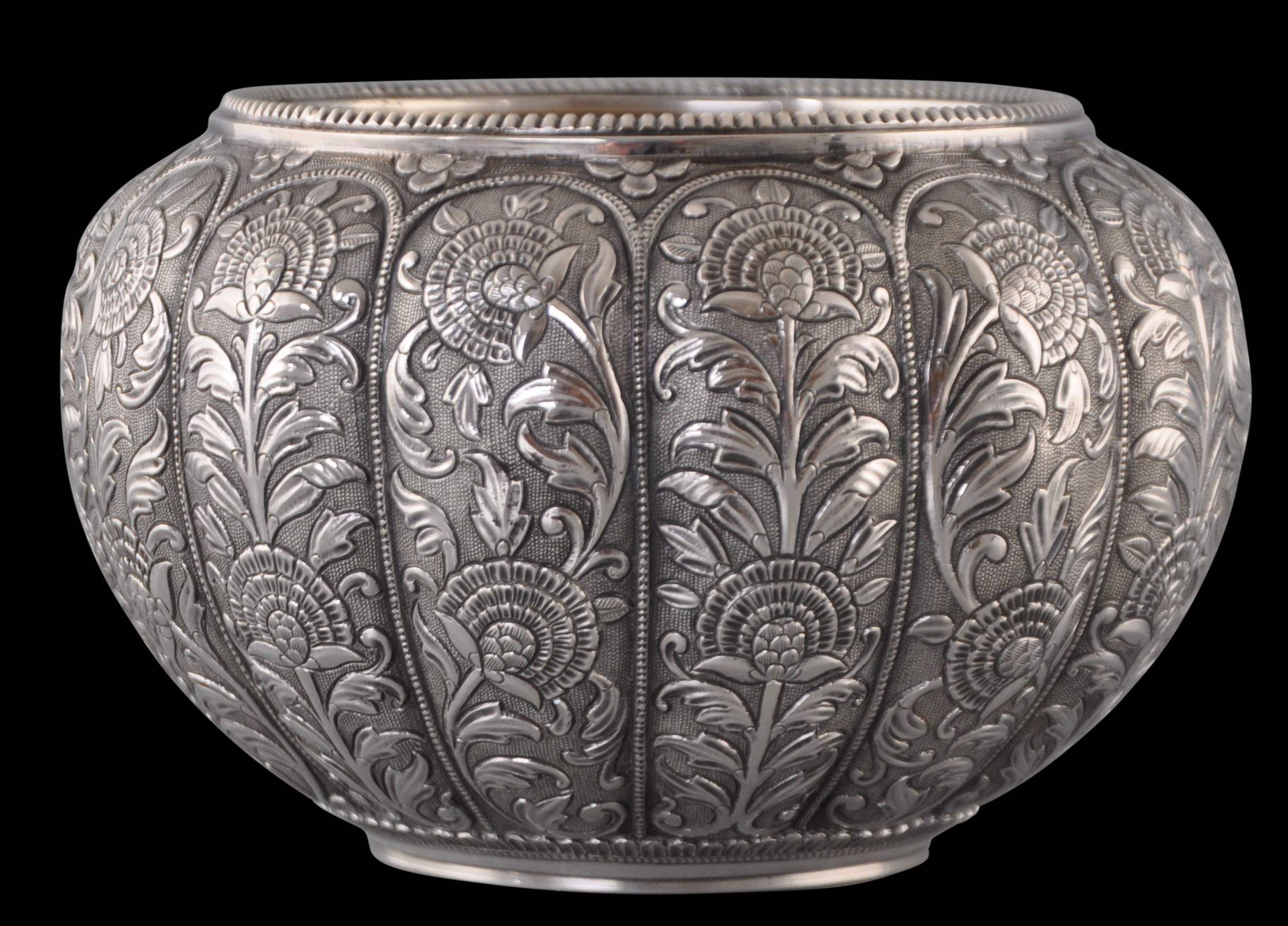
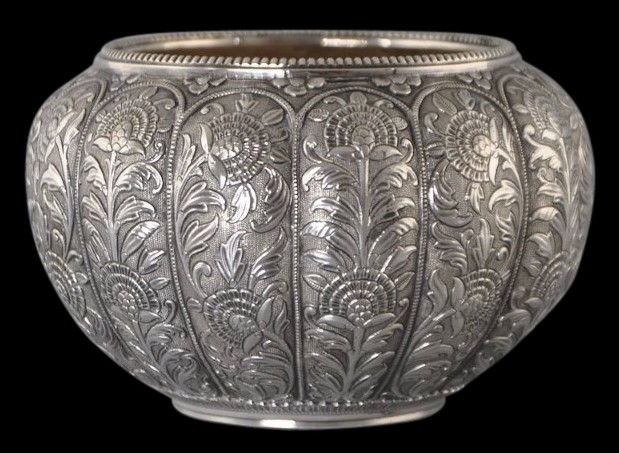
This extremely well-made bowl of high-grade silver and a lightly gilded interior has been chased and engraved in a manner showing much Mughal influence. Of flattened spherical form, it sits on a low ring foot and has a mouth with a pearled edging rim.
The sides are gadrooned with fourteen raised panels each of which is decorated with two Mughalesque flower booms on stalks and with leaves, all against a finely tooled background.
The bowl has no maker’s mark, but has similar motifs to which appear on a large platter known as the Viceroy’s Cup, 1883 Plate, produced in Madras (Chennai) by the firm P. Orr & Sons. This plate is illustrated in Wilkinson (1999, p. ii). Wilkinson notes that the Madras firm based its plate on a gold plate that was produced in Mysore and presented to the Prince of Wales during his visit to India in 1875-1876. That plate is now in the Royal Collection, UK, and illustrated in Meghani (2017, p. 118-119).
It seems likely that this bowl was produced in Madras based on a Mysore prototype in terms of motifs, which in turn had northern Indian and Mughal influence!
The bowl is a superb example of the silversmith’s art. It is in perfect condition.
References
Meghani, K., Splendours of the Subcontinent: A Prince’s Tour of India 1875-6, Royal Collection Trust, 2017.
Wilkinson, W.R.T., Indian Silver 1858-1947, 1999.