Enquiry about object: 10540
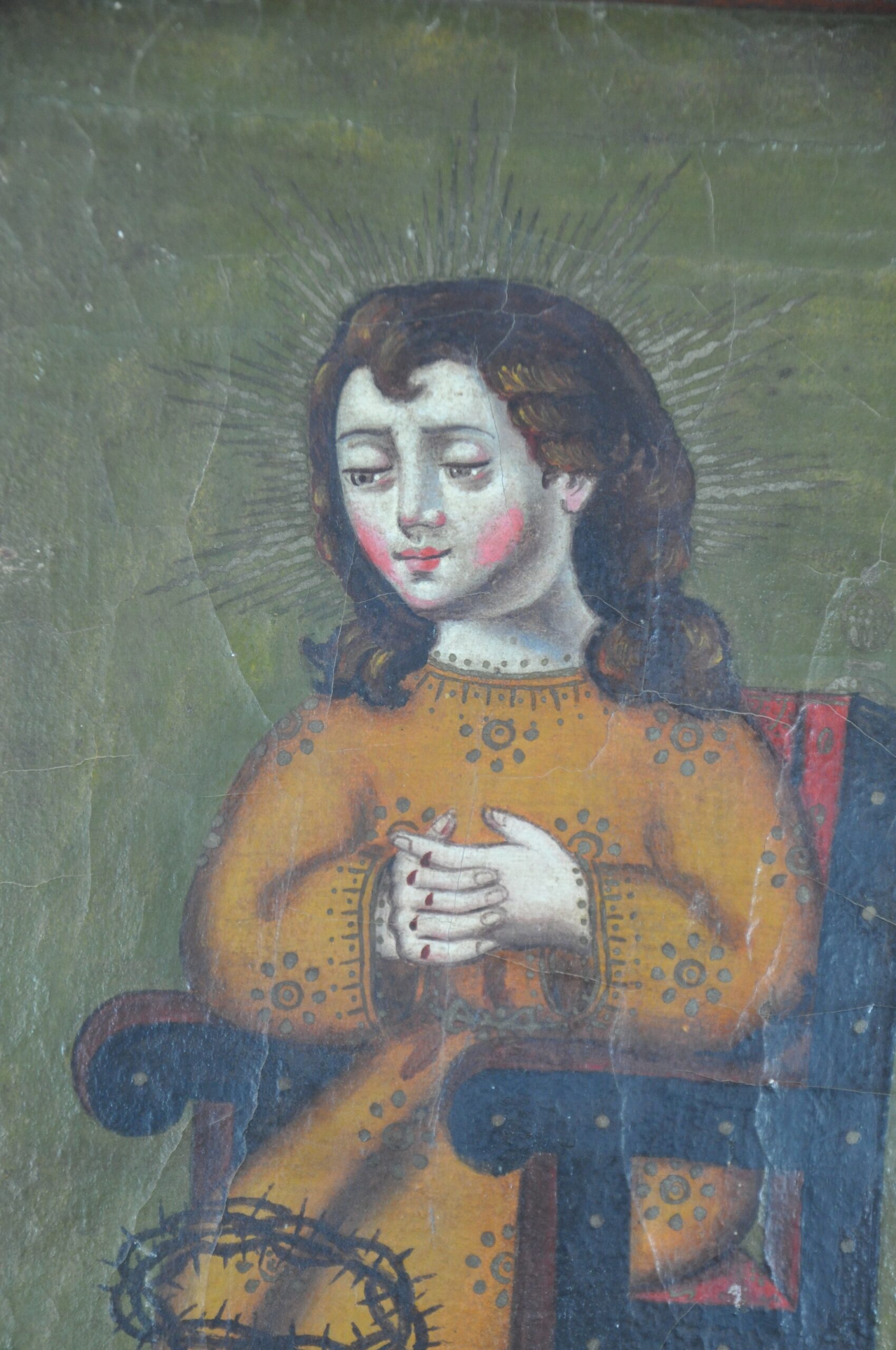
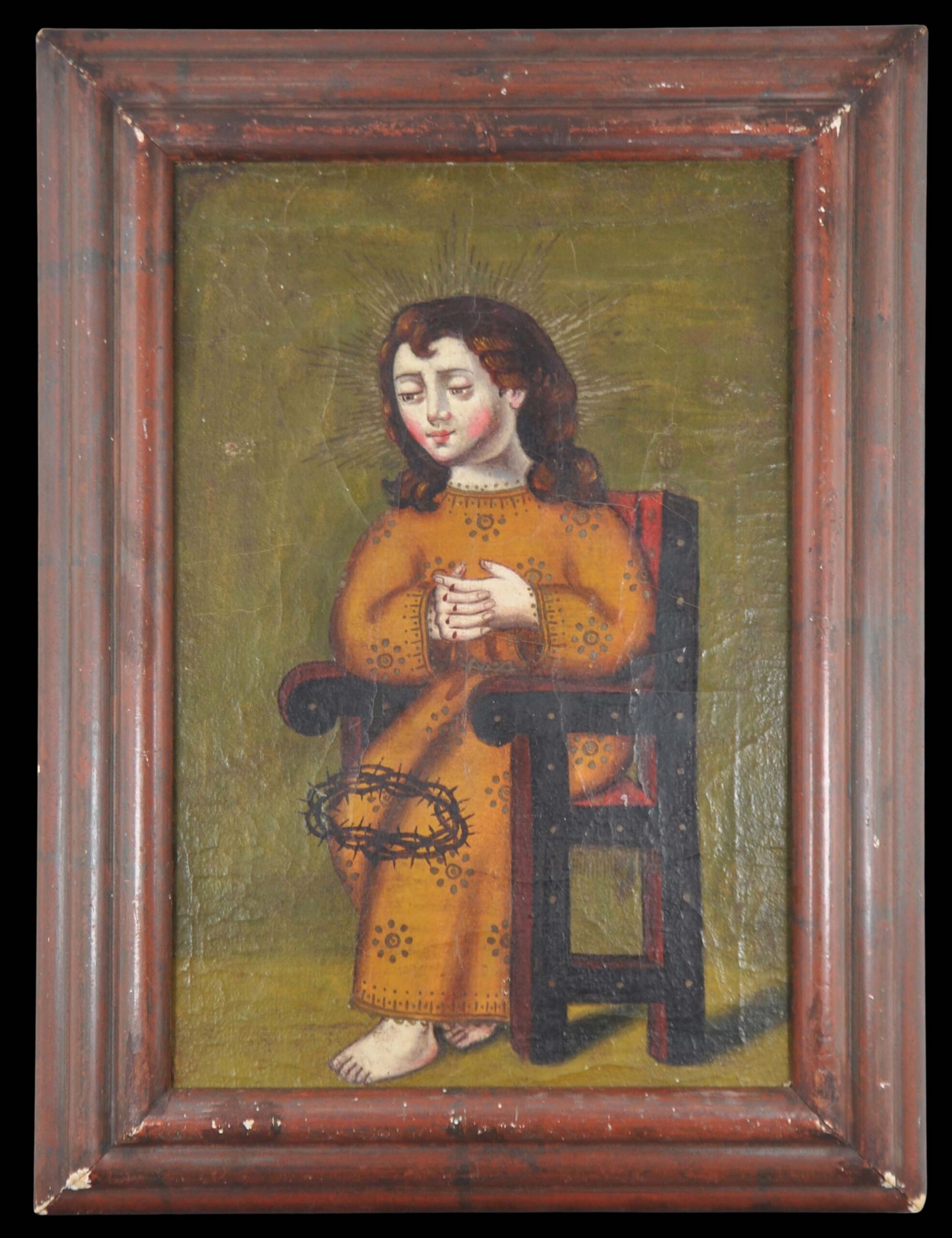
Spanish Colonial Cuzco School Painting of ‘El Niño de la Espina’
Spanish Colonial Peru late 18th century
height: 46.5cm, width: 31.4cm, height of frame: 58.2cm, width of frame: 43.2cm, weight (including frame): 1,970g
Provenance
UK art market
The oil painting on canvas shows Christ as a child who pricks his finger on a thorn foretelling his Crucifixion in later life. A crown of thorns rests on his knee. Such a rendering is known in Spanish as ‘El Niño de la Espina’ (‘the boy with the thorn’). The painting shows the infant seated on a child-sized chair. When in sculptural form, an actual child or doll-sized chair is used – see an example here.
The rendering of the young Christ as ‘El Niño de la Espina’ was popular in Spanish colonial South America, most particularly in Peru. Indigenous artists in Cusco were among those who produced such images.
The Cuzco or Cusco school was a Christian artistic tradition with its origins in Cusco, Peru, during the Spanish colonial period in the 16th-18th centuries. From there the tradition spread to other Andean locations such as Bolivia and Ecuador. Local artists interpreted religious paintings imported from Europe, allowing them to reach wider audiences. Many are rendered in charming and naive ways such as the painting here.
Such a painting might have been for a small, local church or a private home.
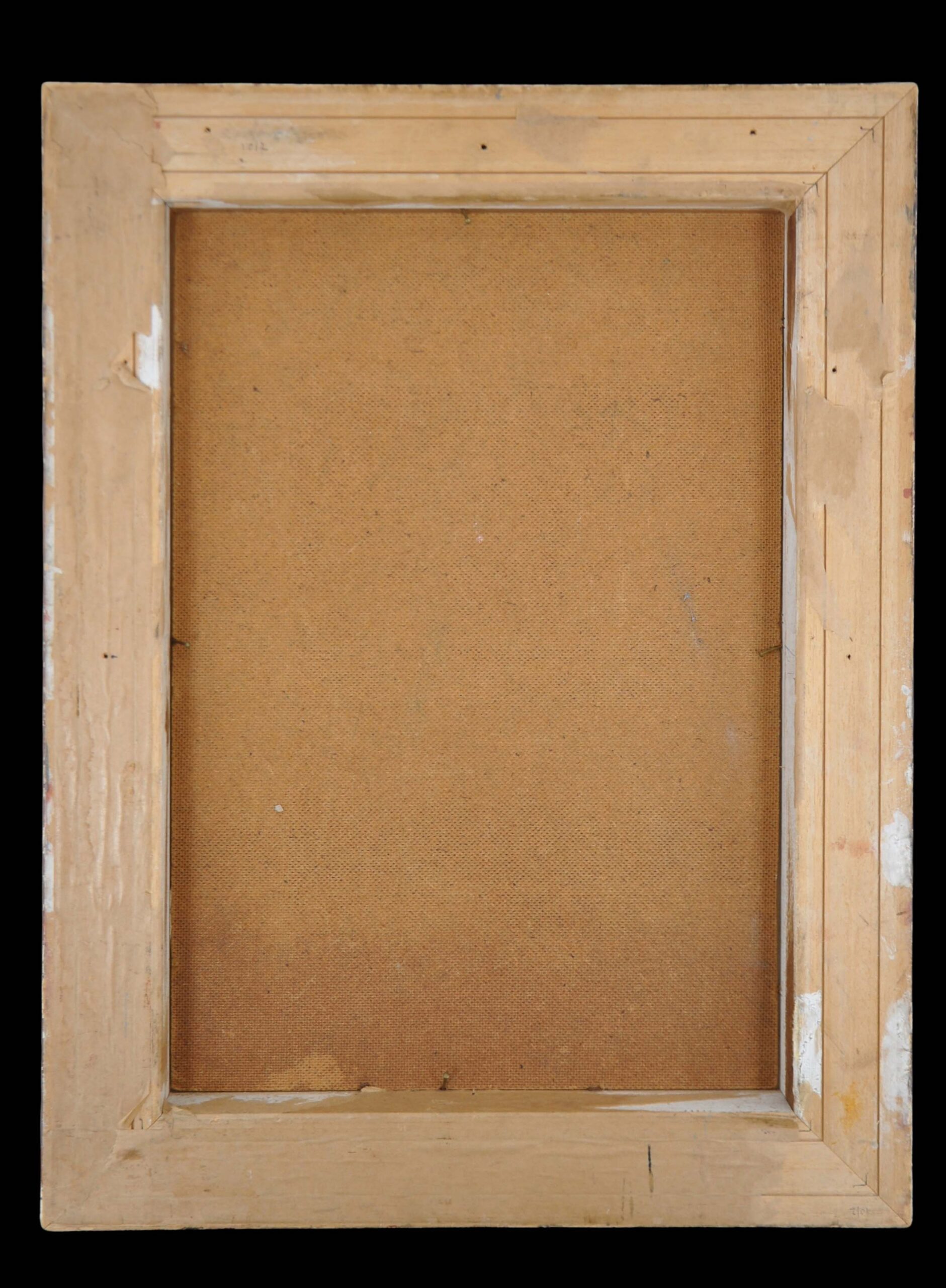
The painting is on canvas, laid on board, and with a later but not recent frame.
References
Rishel, J.J. & S. Stratton-Pruitt, The Arts in Latin America 1492-1820, Yale University Press, 2006.
Stratton-Pruitt, S., et al., The Virgin Saints and Angels: South American Paintings 1600-1825 from the Thoma Collection, Skira, 2006.